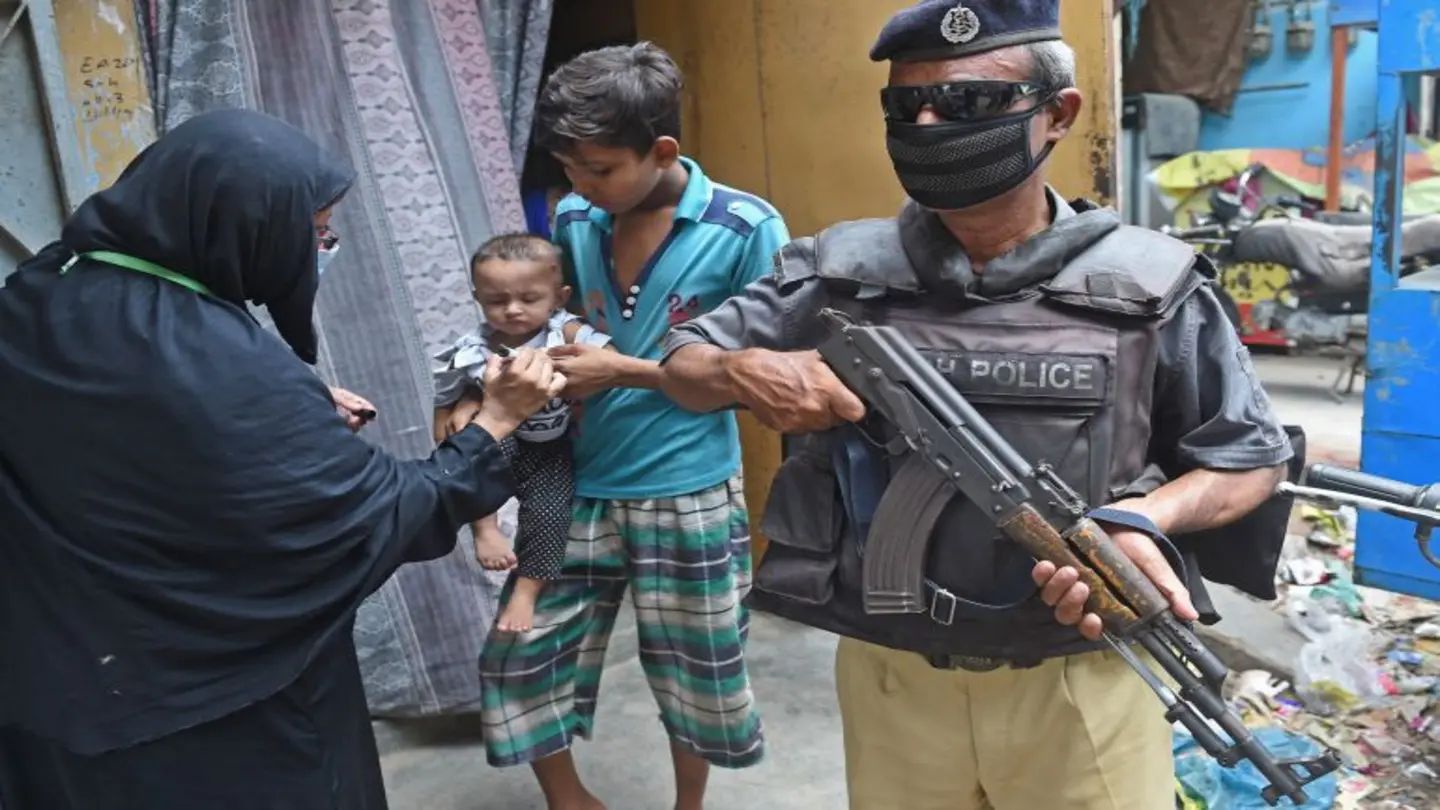
The World Health Organization (WHO) has initiated a large-scale polio vaccination campaign in Pakistan, deploying 400,000 health workers to immunize 45 million children. This effort is part of the Global Polio Eradication Initiative, launched in 1988, which has reduced polio cases by over 99% worldwide.
Pakistan and Afghanistan remain the only countries with endemic wild poliovirus. In Pakistan, the virus circulates in resistant pockets due to security challenges, vaccine refusal, and mobile populations. The campaign aims to overcome these barriers through intensified outreach.
National Scale and Strategy
The campaign covers all districts, with special focus on high-risk areas in Khyber Pakhtunkhwa, Balochistan, and the tribal regions. Workers, including many women, are trained in vaccination techniques and community dialogue. They visit households, often multiple times, to ensure coverage of every child under five.
Technology plays a key role: workers use smartphones for data entry, and supervisors monitor coverage in real-time. Cold chain equipment maintains vaccine potency from storage to administration.
Security and Community Trust
Security remains a concern, with past attacks on health workers. This time, police and military support are provided in volatile zones. Community engagement is equally important: local leaders, imams, and teachers are mobilized to promote vaccination and dispel myths.
Efforts include media campaigns and school programs to build trust. Religious endorsements have been crucial in areas where vaccines are falsely linked to infertility or Western agendas.
International Collaboration
The campaign is funded by governments, the Gates Foundation, Rotary International, and others. UNICEF supplies vaccines and aids in social mobilization. CDC provides laboratory support for virus detection.
Cross-border coordination with Afghanistan ensures synchronized campaigns to block transmission routes along the porous border.
Surveillance and Response
Beyond vaccination, environmental surveillance monitors sewage for poliovirus. Genomic sequencing tracks virus origins and movement. Rapid response teams investigate any suspected cases or outbreaks.
This integrated approach aims to detect and contain the virus swiftly, preventing its spread to new areas.
Global Implications
Eradicating polio in Pakistan would be a historic achievement, leaving only Afghanistan as a reservoir. It would demonstrate the effectiveness of global health partnerships and the feasibility of eliminating a formidable disease.
However, experts emphasize that eradication requires sustained efforts: high immunization coverage must be maintained even after campaigns end, and surveillance must continue to detect any reintroduction.
A Hopeful Future
The 400,000 workers are the backbone of this drive, often working in difficult conditions for modest pay. Their commitment inspires hope that polio can be consigned to history, saving future generations from paralysis.
As children receive the drops, they are not just protected from polio but are also part of a global victory against a common enemy. This campaign underscores that with solidarity and science, humanity can overcome even the most persistent health threats.
Image Source: Google | Image Credit: Respective Owner