A high-profile traffic collision on Kanpur’s VIP Road has culminated in the arrest of Shivam Mishra, son of prominent tobacco industrialist KK Mishra, four days after the incident. The late-night crash involving a Lamborghini Aventador has sparked widespread debate over road safety, VIP privilege, and the equitable application of law in India’s urban centers. Mishra, 28, fled the scene initially but was apprehended following a police manhunt leveraging digital evidence and informants.
Crash Details and Initial Response
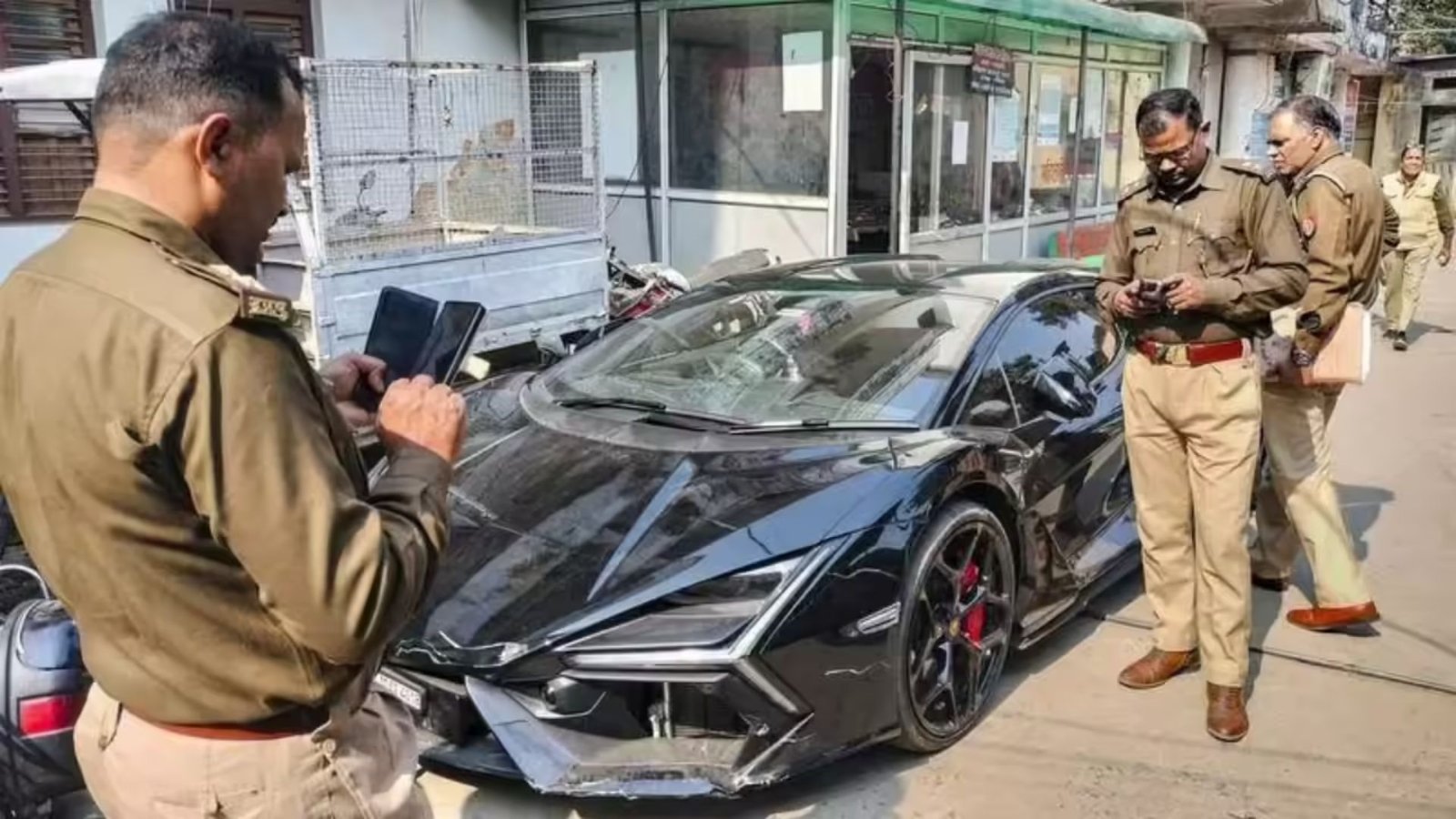
At approximately 2:30 AM on Tuesday, the black Lamborghini, registered to the Mishra family, was observed speeding erratically along VIP Road, a congested thoroughfare. Eyewitnesses reported the car weaving through traffic before striking a concrete divider with tremendous force, causing the vehicle to spin across multiple lanes. The impact dislodged parts of the barrier and scattered debris, though no other vehicles were directly hit. Shivam Mishra, suffering minor injuries, reportedly abandoned the car and escaped on foot before police arrived, leaving behind a scene of shattered glass and torn metal. Emergency services documented the damage, but the driver’s absence complicated immediate legal action.
Investigation and Breakthrough
Kanpur police launched an investigation based on the vehicle’s ownership, which traced back to KK Mishra’s business empire. Reviewing CCTV footage from adjacent properties and traffic cameras, detectives identified Mishra as the driver entering and exiting the car. Forensic analysis confirmed excessive speed through skid marks spanning over 50 meters. After 96 hours, tracking digital footprints and tips from associates, officers located Mishra concealed at a family-owned property in Kalyanpur. He was arrested without resistance and remanded to judicial custody, with authorities seizing the vehicle for further examination.
Public and Political Reactions
The delayed arrest ignited public outrage, amplified on social media with comparisons to cases involving ordinary citizens arrested promptly for similar offenses. KK Mishra, a figure with significant clout in Uttar Pradesh’s tobacco trade, issued a public apology via legal counsel, stating, “We are committed to ensuring that justice takes its course.” However, opposition parties criticized the state government for perceived laxity, alleging undue influence. Citizen groups organized silent protests near VIP Road, demanding accountability and systemic reforms to prevent VIP impunity in traffic violations.
Legal Charges and Proceedings
Shivam Mishra faces charges under Sections 279 (rash driving), 338 (causing hurt by endangering life), and potentially 120B (criminal conspiracy) of the Indian Penal Code, alongside violations of the Motor Vehicle Act for over-speeding and hit-and-run. His bail plea is slated for next week, with prosecutors opposing release citing flight risk and the gravity of the offense. Legal experts emphasize that the case will test judicial independence, given the Mishra family’s political and business connections. The court has ordered a forensic report on the vehicle’s condition and Mishra’s medical examination post-arrest.
Societal Implications and Road Safety
This incident underscores chronic issues in Indian traffic management, where luxury vehicles and VIP convoys frequently bypass norms. Urban planners advocate for enhanced surveillance, such as automated speed cameras on VIP Road, and stricter penalties for repeat offenders. Beyond legalities, the case reignites discourse on equality before the law, as perceived disparities in enforcement erode public trust in institutions. The Mishra family’s regional influence adds complexity, with monitors warning against any interference in the probe.
As the investigation advances, police have assured transparency, while the state government pledges audits of safety measures on key roads. The trial will likely focus on Mishra’s actions post-crash—abandoning the scene—as an aggravating factor. For victims, though none were severely injured, the psychological trauma of near-misses resonates. Ultimately, the Kanpur Lamborghini crash serves as a catalyst for broader introspection on whether India’s legal framework can consistently hold all citizens accountable, regardless of status, in an era of burgeoning wealth and road congestion.
Image Source: Google | Image Credit: Respective Owner