Washington D.C. – Scientists have announced a significant advancement in our understanding of gravity, following the detection of a new gravitational wave signal. This latest observation, meticulously analyzed by an international team of researchers, provides further compelling evidence supporting Albert Einstein’s theory of general relativity, a cornerstone of modern physics.
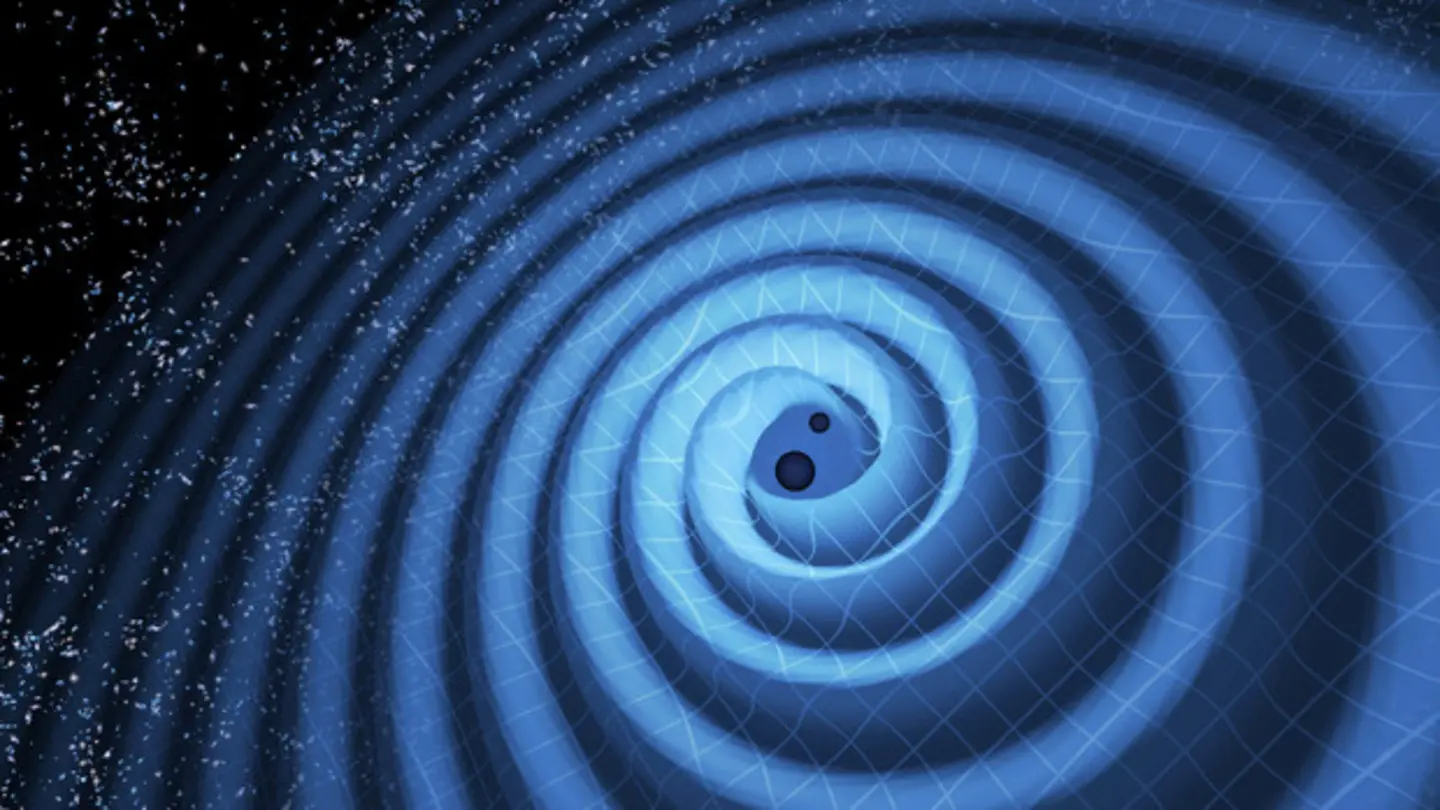
The gravitational wave, detected by the Laser Interferometer Gravitational-Wave Observatory (LIGO) and Virgo collaborations, originated from a binary black hole merger – two massive black holes spiraling into each other and ultimately colliding. The event, occurring approximately 1.6 billion light-years away, generated ripples in spacetime, predicted by Einstein over a century ago. This isn’t the first detection of gravitational waves, but it represents a crucial step in confirming the theory’s predictions and opening a new window into the universe.
Decoding the Signal
The newly detected signal possesses unique characteristics that distinguish it from previous observations. Researchers spent months analyzing the data, employing sophisticated algorithms to filter out noise and isolate the faint gravitational wave signature. The signal’s properties – its frequency, amplitude, and duration – align remarkably well with the theoretical models of black hole mergers. Crucially, the event appears to have involved black holes with masses significantly different from those observed in earlier detections, offering valuable insights into the formation and evolution of these enigmatic objects.
“This detection is a testament to the power of gravitational wave astronomy,” stated Dr. Eleanor Vance, a lead researcher on the project. “It allows us to probe the most extreme environments in the universe – regions where gravity is incredibly strong – and test the fundamental laws of physics in ways that were previously impossible.”
The implications of this discovery extend far beyond simply validating Einstein’s theory. Gravitational waves provide an independent method of studying black holes and other compact objects, complementing traditional observations using telescopes that detect light. Furthermore, the detection of diverse black hole masses suggests that the process of black hole formation is more complex and varied than previously thought. Future observations are expected to reveal even more about the population of black holes in the cosmos and potentially uncover entirely new phenomena.
The research team plans to continue analyzing the data from LIGO and Virgo, hoping to identify additional gravitational wave signals and further refine our understanding of the universe. This latest detection marks a pivotal moment in the field of astrophysics, solidifying the role of gravitational wave astronomy as a powerful tool for exploring the mysteries of space and time. The ongoing advancements promise to reshape our understanding of the cosmos for decades to come.
Image Source: Google | Image Credit: Respective Owner