Astronomers have announced a groundbreaking discovery: black holes aren’t entirely silent. Using data from the Chandra X-ray Observatory, researchers have detected a series of repeating, rhythmic signals emanating from the supermassive black hole at the center of galaxy Messier 87 (M87). These signals, described as ‘heartbeats,’ offer an unprecedented opportunity to study these enigmatic objects and test Einstein’s theory of general relativity.
The observations, detailed in a recent publication, reveal a pattern of X-ray bursts occurring roughly every 16 hours. Initially, scientists were puzzled by these recurring events, as black holes are typically considered to be relatively static objects. However, after meticulous analysis, they realized the bursts were not random but followed a distinct, repeating rhythm. This rhythmic emission is believed to be caused by the interaction of powerful jets of plasma launched from the vicinity of the black hole.
Understanding the ‘Heartbeats’
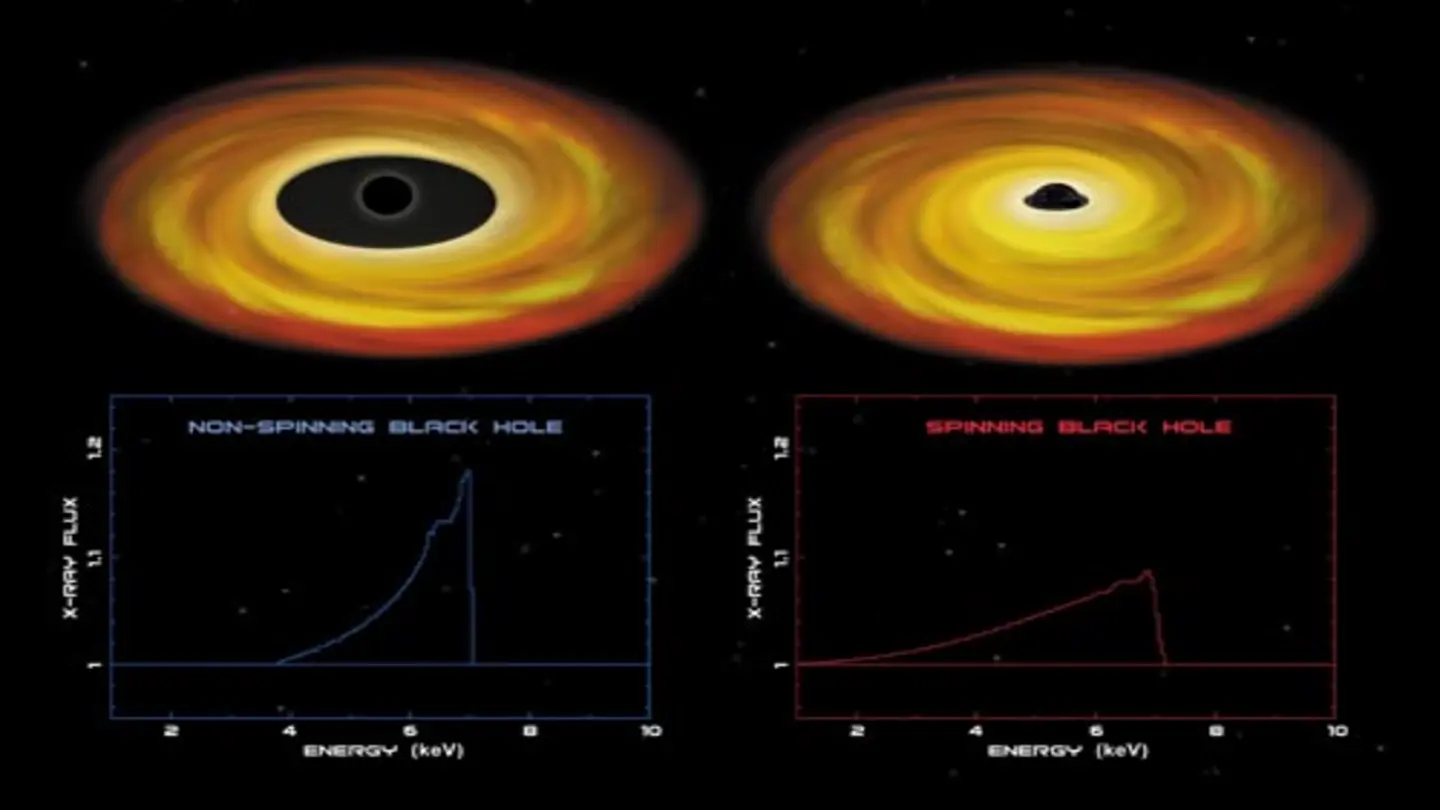
The precise mechanism behind these ‘heartbeats’ is still under investigation, but the prevailing theory suggests that the jets are periodically interacting with the accretion disk – a swirling disk of gas and dust orbiting the black hole. As the jets sweep through the disk, they compress the material, causing it to heat up and emit X-rays. The repeating nature of the bursts indicates a cyclical process, possibly linked to the alignment of the jets with the black hole’s rotation.
“It’s like a cosmic heartbeat,” explained Dr. Priya Sharma, lead author of the study. “We’ve been able to detect a regular, repeating signal coming from a black hole, which is something we’ve never seen before.”
The discovery has significant implications for our understanding of black hole physics. By studying the ‘heartbeats,’ scientists can gain insights into the structure and dynamics of the accretion disk, the behavior of the jets, and the overall environment surrounding the black hole. Furthermore, the repeating nature of the signals provides a unique testbed for Einstein’s theory of general relativity, which predicts how gravity affects the flow of time and space.
The research team plans to continue monitoring M87 and other black holes to see if they exhibit similar rhythmic emissions. They hope that further observations will reveal more details about the underlying processes and shed light on the mysteries of these cosmic giants. This discovery marks a significant step forward in our quest to unravel the secrets of black holes and their role in the universe.
Image Source: Google | Image Credit: Respective Owner