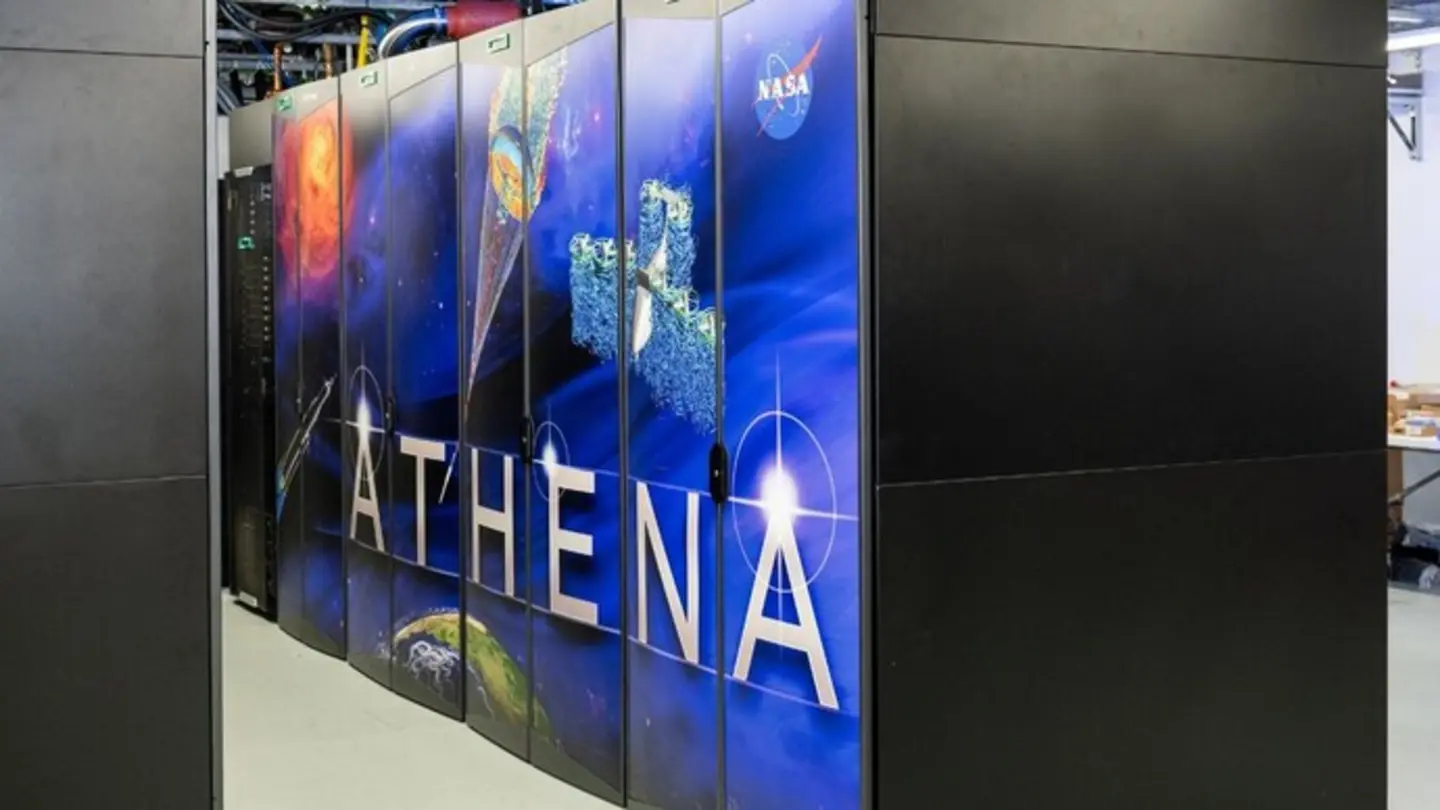
Washington, D.C. – NASA’s groundbreaking Athena supercomputer has officially come online, marking a significant leap forward in the agency’s ability to analyze vast datasets and accelerate scientific discovery. The supercomputer, developed in collaboration with Intel and Hewlett Packard Enterprise, is designed to tackle some of the most complex challenges in astrophysics and cosmology, promising to revolutionize our understanding of the universe.
Athena’s primary mission is to process data from the upcoming Roman Space Telescope, a successor to the Hubble Space Telescope. This telescope will generate an unprecedented volume of images and spectroscopic data, far exceeding the capacity of previous instruments. The sheer scale of this data necessitates a supercomputer of Athena’s caliber to effectively sift through it, identify key patterns, and extract meaningful insights.
Key Capabilities and Specifications
The system boasts an impressive 1.5 exaflop performance, meaning it can perform 1.5 quintillion calculations per second. This immense processing power is achieved through a combination of Intel’s Ponte Vecchio processors and HPE’s Slingshot interconnect technology. The architecture is specifically optimized for scientific workloads, prioritizing data-intensive simulations and analysis. Furthermore, Athena incorporates advanced machine learning capabilities, allowing it to automatically identify anomalies and prioritize areas of interest within the data stream.
NASA officials emphasize that Athena’s arrival is not just about raw speed; it’s about enabling a new era of scientific exploration. Researchers will be able to simulate the formation of galaxies, study the evolution of black holes, and investigate the nature of dark matter with a level of detail previously unattainable. The supercomputer will also play a crucial role in analyzing data from other NASA missions, such as the James Webb Space Telescope, further expanding its impact across the agency’s portfolio.
The initial testing phase has been remarkably successful, with Athena consistently exceeding performance expectations. Scientists are already utilizing the system to conduct preliminary analyses of Roman Space Telescope data, demonstrating its immediate value. Looking ahead, NASA plans to leverage Athena’s capabilities to support a wide range of research projects, from climate modeling to drug discovery. The availability of this powerful resource is expected to attract researchers from around the globe, fostering collaboration and accelerating scientific progress.
The successful deployment of Athena underscores NASA’s commitment to investing in cutting-edge technology and empowering its scientists with the tools they need to push the boundaries of human knowledge. It represents a pivotal moment in the history of space exploration, paving the way for transformative discoveries in the years to come.
Image Source: Google | Image Credit: Respective Owner