A remarkable discovery in the Sahara Desert has captivated the scientific community. Ali Benamar, a seasoned meteorite hunter, has unearthed a rare iron meteorite, a find that promises to offer valuable insights into the early solar system. The discovery, made in a remote region of the desert, highlights the potential of such arid landscapes as prime locations for meteorite hunting.
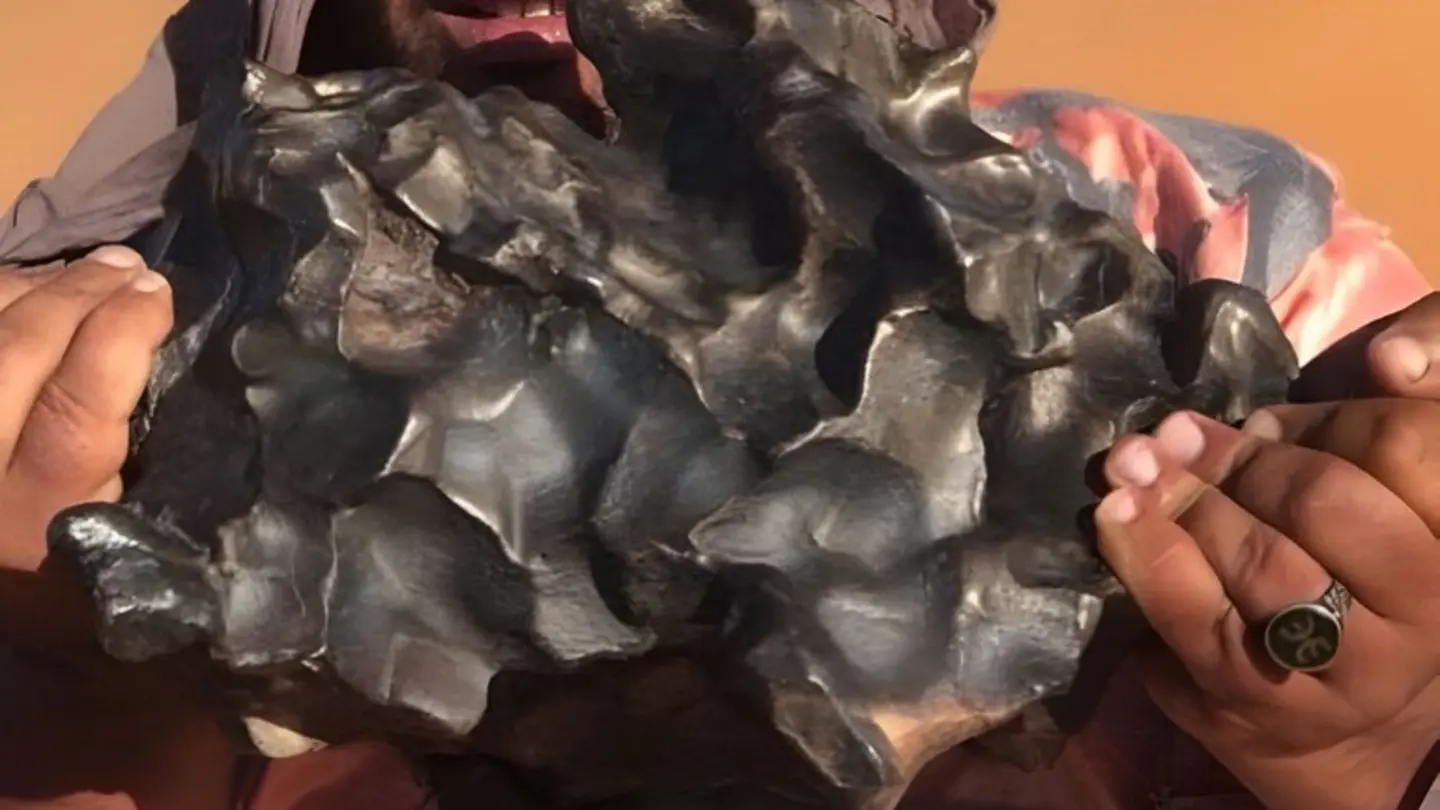
Benamar, who has dedicated years to scouring the Sahara for space rocks, identified the unusual rock based on its distinct characteristics – a heavily regmaglypted surface, indicating atmospheric entry, and a metallic sheen. Initial analysis confirms the object is an iron meteorite, though further study is needed to determine its exact classification and origin. The meteorite’s weight and composition suggest it’s a significant find, potentially containing unique metallic alloys not commonly found on Earth.
Significance of Iron Meteorites
Iron meteorites are particularly valuable to scientists because they represent the cores of ancient asteroids that were shattered by collisions. Unlike stony meteorites, which are more abundant but often altered by terrestrial weathering, iron meteorites are relatively resistant to corrosion, preserving their original composition for billions of years. This allows researchers to analyze the materials and learn about the conditions that existed during the formation of the solar system.
The Sahara Desert is an ideal hunting ground due to its dark, rocky terrain which contrasts sharply with the lighter color of most meteorites, making them easier to spot. The arid climate also minimizes weathering, preserving the meteorites in a relatively pristine state. Several significant meteorite discoveries have been made in the region, including fragments of Martian meteorites, offering tangible evidence of impacts from other planets.
Benamar’s find is currently undergoing more detailed analysis, including isotopic dating, to pinpoint its age and trace its trajectory back to its parent asteroid. Scientists are eager to examine the meteorite’s internal structure, which could reveal clues about the asteroid’s formation and evolution. The composition of the iron meteorite will also be scrutinized for rare elements and minerals.
The discovery underscores the importance of continued meteorite research. These celestial visitors provide a unique window into the past, offering invaluable data that complements other astronomical and geological investigations. Benamar plans to continue his explorations in the Sahara, hoping to uncover more of these fascinating relics from space. He believes that many more meteorites remain hidden beneath the desert sands, waiting to be discovered and studied. The find is a testament to the dedication of amateur and professional meteorite hunters alike, and the potential for groundbreaking discoveries in even the most remote corners of the world.
The meteorite will eventually be made available for study by researchers worldwide, contributing to a greater understanding of our solar system’s history and the processes that shaped the planets we know today. Further updates on the analysis and classification of the meteorite will be released as they become available.
Image Source: Google | Image Credit: Respective Owner