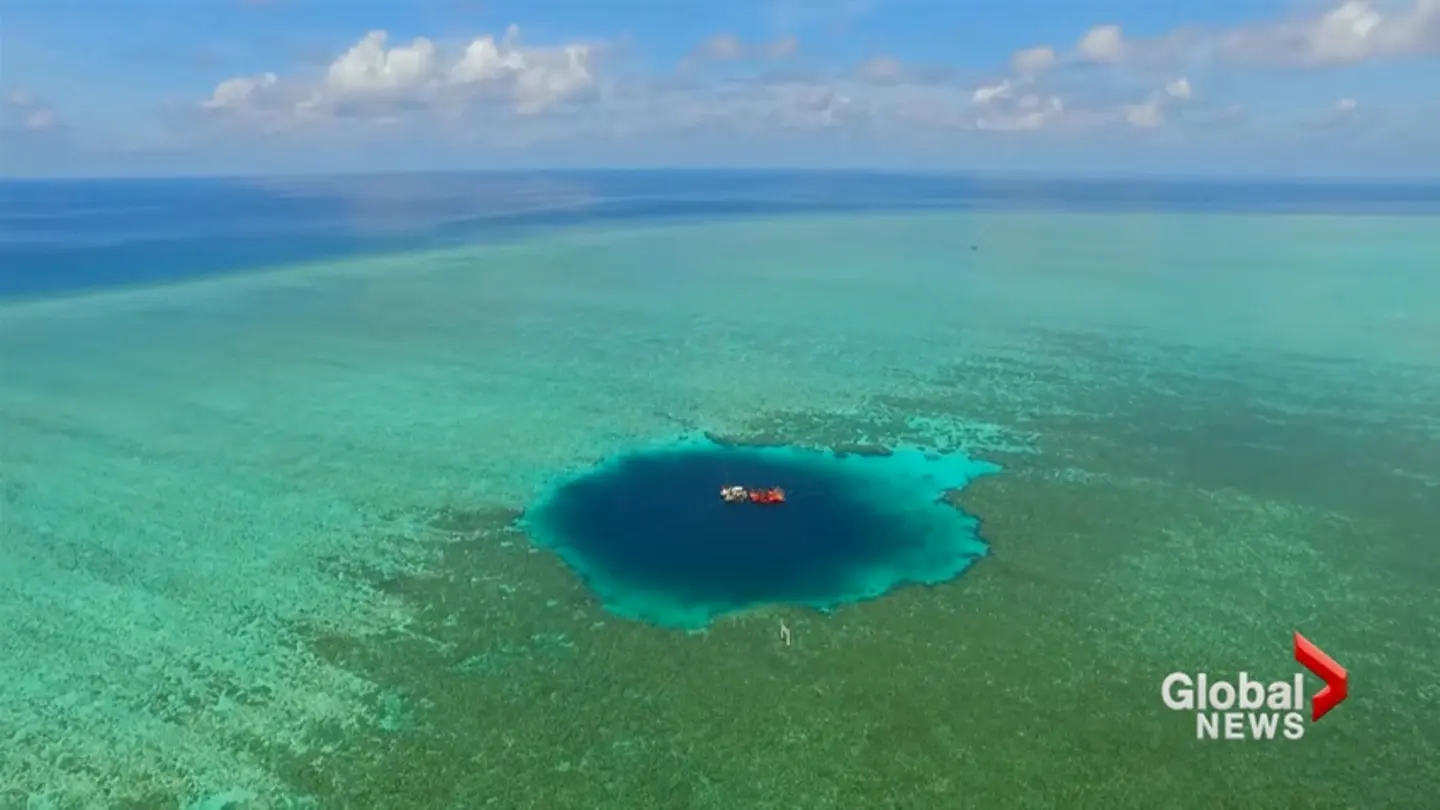
Scientists have discovered a massive sinkhole in the South China Sea, dubbed the ‘Dragon Hole,’ harboring a remarkably diverse collection of previously unknown viruses. The underwater chasm, located off the coast of Hainan Island, is approximately 30 meters wide and plunges over 100 meters deep, creating a unique ecosystem isolated from the surrounding ocean environment.
A recent study, published in the journal Microbiome, details the analysis of samples collected from the ‘Dragon Hole’ and the surrounding waters. Researchers identified over 1,700 distinct viral species within the sinkhole, many of which are unlike any viruses previously cataloged. This discovery highlights the vast, largely unexplored viral diversity hidden within the world’s oceans and the potential for these viruses to play a crucial role in marine ecosystems.
The ‘Dragon Hole’ is not a volcanic vent, but rather a karstic depression – a geological formation created by the dissolution of soluble rocks like limestone. This process results in a natural sinkhole, providing a sheltered environment where unique microbial communities can thrive. The viruses discovered within the hole are believed to infect these microbes, influencing their growth, metabolism, and even their evolution.
“This is a completely new ecosystem,” explained Dr. Junjie Ma, a lead researcher on the project from the South China Sea Institute of Oceanography. “The viruses we found are very different from those found in other marine environments. They have unique genetic signatures and likely play a different role in the ecosystem.” The team used advanced metagenomic sequencing techniques to analyze the viral DNA, revealing the extent of this previously unknown diversity.
The implications of this discovery are significant. Viruses are key drivers of evolution and play a critical role in regulating microbial populations, which form the base of the marine food web. Understanding the diversity and function of these viruses is essential for predicting how marine ecosystems will respond to environmental changes, such as climate change and pollution.
Potential Impacts and Future Research
While the vast majority of these viruses are not known to infect humans or other animals, the discovery underscores the importance of continued exploration and monitoring of deep-sea environments. The ‘Dragon Hole’ represents a natural laboratory for studying viral evolution and ecology, and could potentially yield insights into the origins of life and the development of new biotechnologies.
Researchers are particularly interested in understanding how these viruses have adapted to the unique conditions within the sinkhole. The limited water exchange and the high concentration of organic matter may have created a selective pressure that favored the evolution of novel viral strategies. Further research will focus on isolating and characterizing these viruses, and on determining their specific roles in the ‘Dragon Hole’ ecosystem. The team also plans to investigate other similar sinkholes in the South China Sea to assess whether they harbor comparable viral diversity.
The study serves as a potent reminder of how much remains unknown about the ocean depths and the complex microbial world they contain. The ‘Dragon Hole’ and its hidden viruses represent just a small glimpse into the vast biodiversity waiting to be discovered, and the potential for groundbreaking scientific advancements that lie beneath the waves.
Image Source: Google | Image Credit: Respective Owner