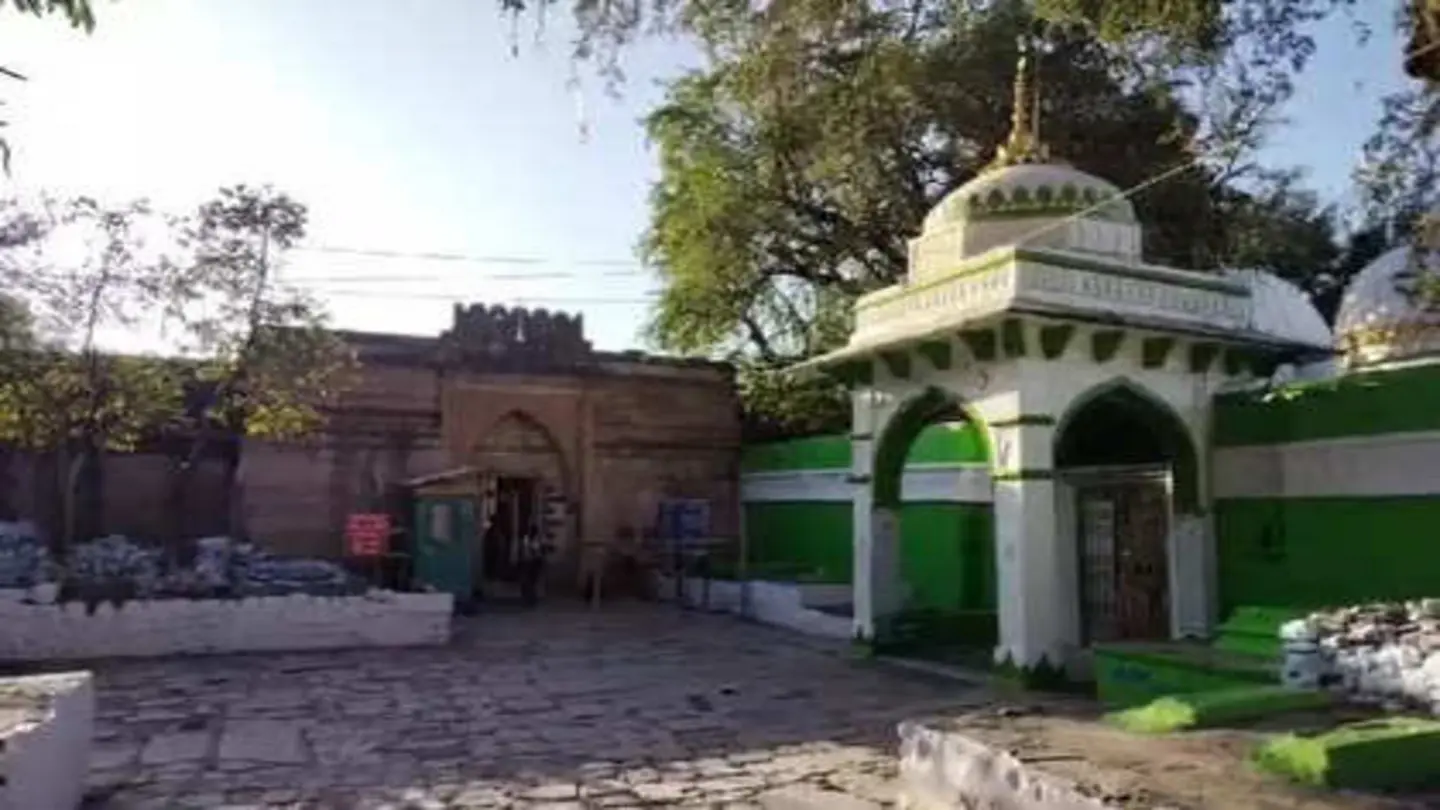
Dhar, Madhya Pradesh witnessed an unusual convergence of religious observances on Friday as Saraswati Puja and Friday Namaz were held simultaneously at the historic Bhojshala complex. The event unfolded under a significantly heightened security presence, reflecting the sensitivity surrounding the site and the ongoing dispute over its ownership and usage.
The Bhojshala, a medieval temple complex, has been a site of contention for decades. Hindus claim it as the original site of the Goddess Saraswati, while Muslims consider it the Kamal Maula Mosque. A court order currently allows Hindus to perform Saraswati Puja on the fifth day of the bright fortnight of Magh (Basant Panchami), and Muslims to offer Friday prayers.
This year, both events coincided, necessitating elaborate security arrangements. Authorities deployed a large contingent of police personnel, including the Special Armed Force (SAF), to maintain order and prevent any untoward incidents. Entry to the complex was strictly regulated, with devotees and worshippers undergoing thorough security checks. The district administration had previously held meetings with representatives of both communities to ensure peaceful conduct of the rituals.
The Saraswati Puja saw a substantial turnout of devotees, who offered prayers to the goddess of knowledge and learning. Elaborate decorations adorned the temple premises, and traditional rituals were performed by priests. Simultaneously, a large number of Muslims gathered to offer their Friday prayers within the designated area of the complex.
District Magistrate, Dhar, stated that the administration was committed to upholding the court order and ensuring the safety and security of all devotees. “Our priority is to maintain peace and harmony. We have made all necessary arrangements to facilitate both the Saraswati Puja and the Friday Namaz without any disruption,” he said.
Historical Context and Ongoing Dispute
The dispute over Bhojshala dates back to the 19th century. The Archaeological Survey of India (ASI) declared the site a protected monument in 1918. The current arrangement, established by the Madhya Pradesh High Court in 2003, allows for the shared use of the complex. However, both communities have filed petitions seeking exclusive rights to the site, and the matter remains sub judice.
Hindu organizations have been demanding the removal of the mosque structure from the temple complex, while Muslim groups have asserted their right to continue offering prayers at the site. Several rounds of negotiations between the two communities have failed to yield a resolution, and the issue continues to be a source of tension in the region.
The peaceful conduct of both the Saraswati Puja and Friday Namaz on Friday is being seen as a positive sign, demonstrating the willingness of both communities to coexist peacefully despite the ongoing dispute. However, authorities remain vigilant and are prepared to address any potential challenges that may arise in the future. The situation highlights the complex interplay of religion, history, and law in India, and the need for sensitive and nuanced approaches to resolving such disputes.
The heavy security deployment will continue for the foreseeable future, particularly during major religious festivals and events, to ensure the safety and security of all visitors and worshippers at the Bhojshala complex.
Image Source: Google | Image Credit: Respective Owner