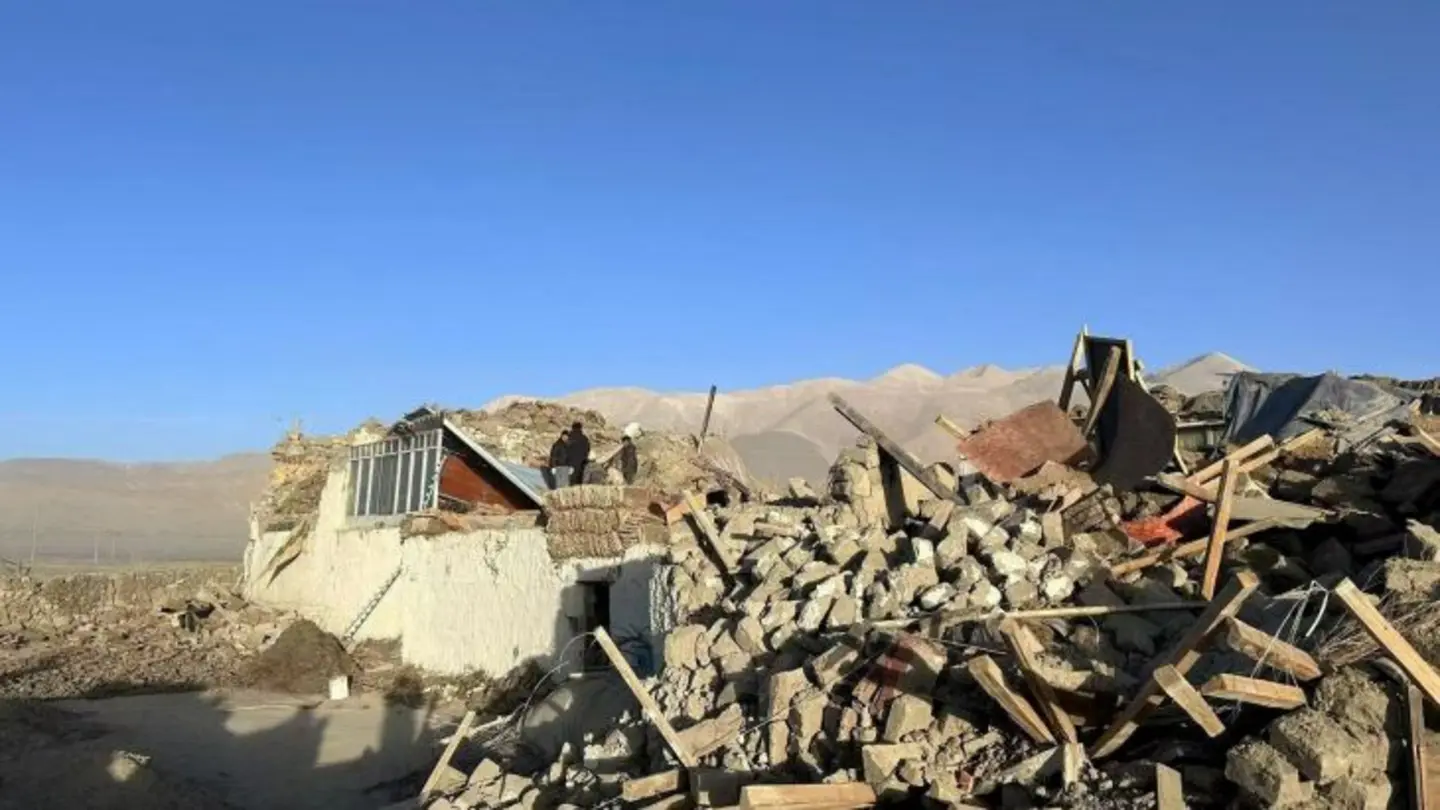
New research published in the ESS Open Archive is questioning the commonly accepted origins of deep earthquakes reported in Tibet and California. Traditionally, these events, occurring at depths of 60-100 kilometers within the Earth’s crust and upper mantle, have been attributed to tectonic stresses within subducting plates – areas where one tectonic plate slides beneath another. However, the study suggests these earthquakes may not be originating from the depths initially believed, and proposes alternative explanations related to the complexities of continental geology.
The research focuses on re-examining seismic data from both regions. Scientists have long observed earthquake activity in Tibet despite the absence of a major subducting plate. Similarly, certain deep earthquakes in California don’t neatly fit the subduction zone model. The authors argue that current methods for locating these deep events rely on velocity models of the Earth’s interior that may be insufficiently detailed, particularly in areas with complex crustal structures like those found in continental collision zones (Tibet) and regions with significant fault interactions (California).
Challenging Conventional Wisdom
The primary challenge to the traditional view stems from the possibility that seismic waves are bending and refracting in unexpected ways as they travel through the Earth. Inaccurate velocity models can lead to miscalculations of earthquake locations, effectively “shifting” the perceived origin point deeper than it actually is. The study highlights that variations in rock composition, the presence of fluids, and even small-scale geological features can significantly alter seismic wave propagation.
For Tibet, the research suggests that the deep earthquakes may be occurring within the thickened continental crust itself, resulting from the ongoing collision between the Indian and Eurasian plates. This collision creates immense stress, but the exact mechanisms triggering earthquakes at such depths within a non-subducting environment are still debated. The study proposes that dehydration reactions within the crust, where minerals release water, could be lowering the melting point of rocks and facilitating earthquake rupture.
In California, the authors point to the intricate network of faults and the potential for stress transfer between them. Earthquakes on shallower faults might be triggering deeper events indirectly, or the complex geometry of the fault system could be causing wave-path distortions. The study emphasizes the need for higher-resolution seismic imaging to accurately map the subsurface structure and improve earthquake location accuracy.
The implications of this research are significant for earthquake hazard assessment. If deep earthquakes are not originating where previously thought, current models used to estimate seismic risk may be flawed. A more accurate understanding of the earthquake generation mechanisms in these regions is crucial for developing effective mitigation strategies. Further research, including the deployment of denser seismic networks and the development of more sophisticated velocity models, is needed to confirm these findings and refine our understanding of the Earth’s deep interior and its relationship to seismic activity. The study calls for a re-evaluation of deep earthquake catalogs in other continental regions as well, suggesting the phenomenon may be more widespread than currently recognized.
Image Source: Google | Image Credit: Respective Owner