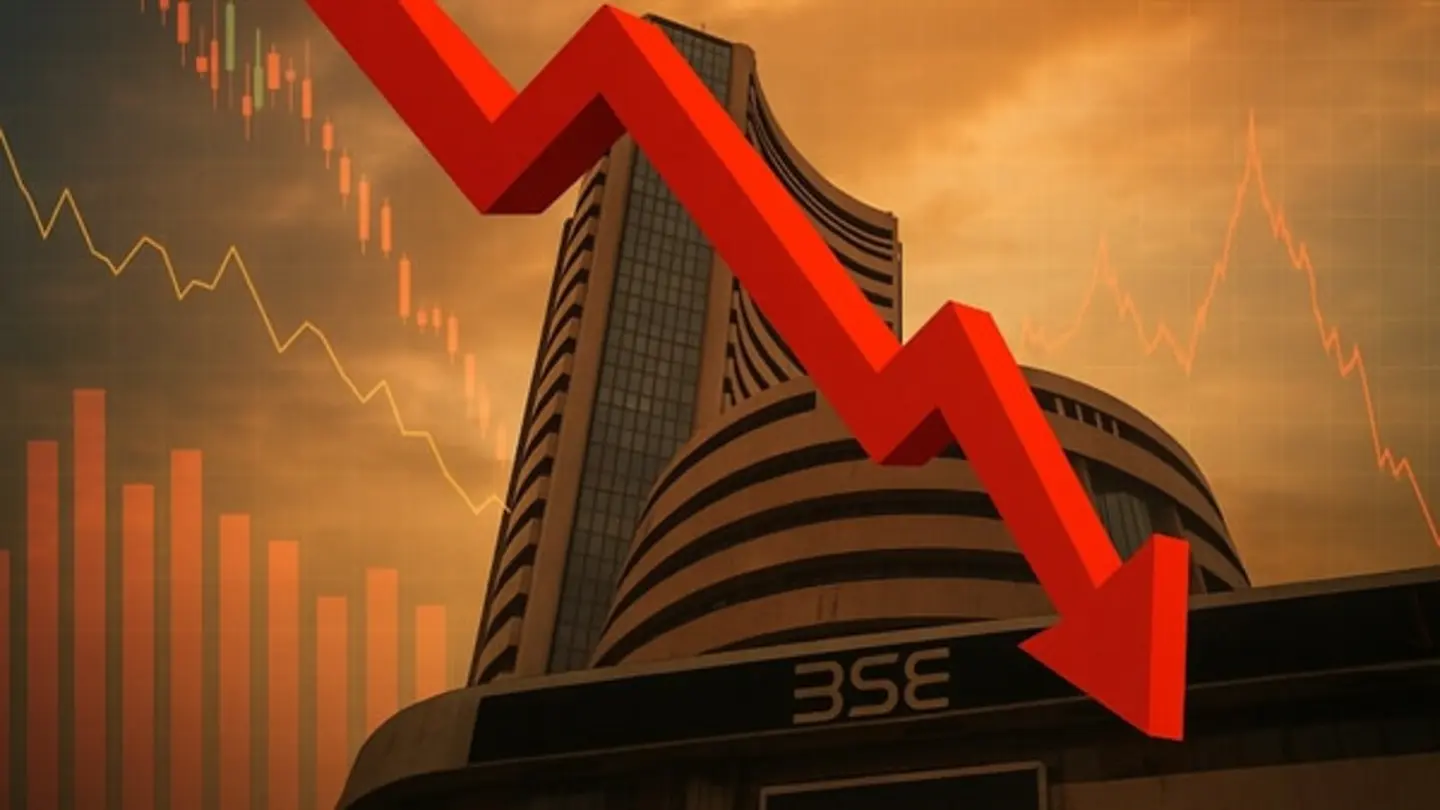
Mumbai’s benchmark Sensex experienced a significant downturn on Thursday, plummeting over 1,000 points, mirroring a broader sell-off in global markets. The decline, which erased substantial gains accumulated earlier in the week, was triggered by a confluence of factors, including rising US Treasury yields, concerns over global economic growth, and sustained foreign institutional investor (FII) selling.
The Sensex closed at 75,059.25, down 1,062.27 points, or 1.41%, while the Nifty 50 settled at 22,734.35, a decrease of 348.80 points, or 1.52%. Both indices had opened positively but quickly reversed course as the day progressed. Broader market indices also participated in the decline, with the BSE Midcap and Smallcap indices underperforming the benchmark.
Key Contributing Factors
A primary driver of the market correction was the surge in US Treasury yields to multi-month highs. This increase reflects expectations that the Federal Reserve may delay interest rate cuts, strengthening the dollar and making emerging markets like India less attractive to foreign investors. The stronger dollar also puts pressure on the rupee, potentially leading to imported inflation.
Adding to the negative sentiment were concerns about the global economic outlook. Recent data from major economies, including the US and China, have indicated slower-than-expected growth, fueling fears of a potential recession. Geopolitical tensions also continue to weigh on investor confidence.
FIIs have been net sellers in the Indian equity market for several consecutive sessions, withdrawing substantial amounts of capital. This selling pressure has exacerbated the downward trend. Data indicates that FIIs have offloaded shares worth billions of rupees in recent weeks, citing concerns about valuations and global macroeconomic conditions.
Sectoral analysis reveals that most sectors experienced losses. Financial services, IT, and consumer goods were among the worst performers. Heavyweight stocks like HDFC Bank, ICICI Bank, and Infosys contributed significantly to the Sensex’s decline. However, some defensive sectors, such as pharmaceuticals, managed to limit their losses.
Analysts suggest that the current market correction could continue in the short term, but maintain a positive long-term outlook for the Indian economy. They advise investors to remain calm and avoid panic selling. Focusing on fundamentally strong companies with good growth prospects is considered a prudent strategy during periods of market volatility. The Reserve Bank of India’s (RBI) monetary policy stance and upcoming earnings season will be crucial factors to watch in the coming weeks.
The volatility index (India VIX) also spiked, indicating increased market uncertainty. Experts believe that the market may consolidate in the near future before finding a new direction. Investors are advised to closely monitor global developments and adjust their portfolios accordingly.
Image Source: Google | Image Credit: Respective Owner