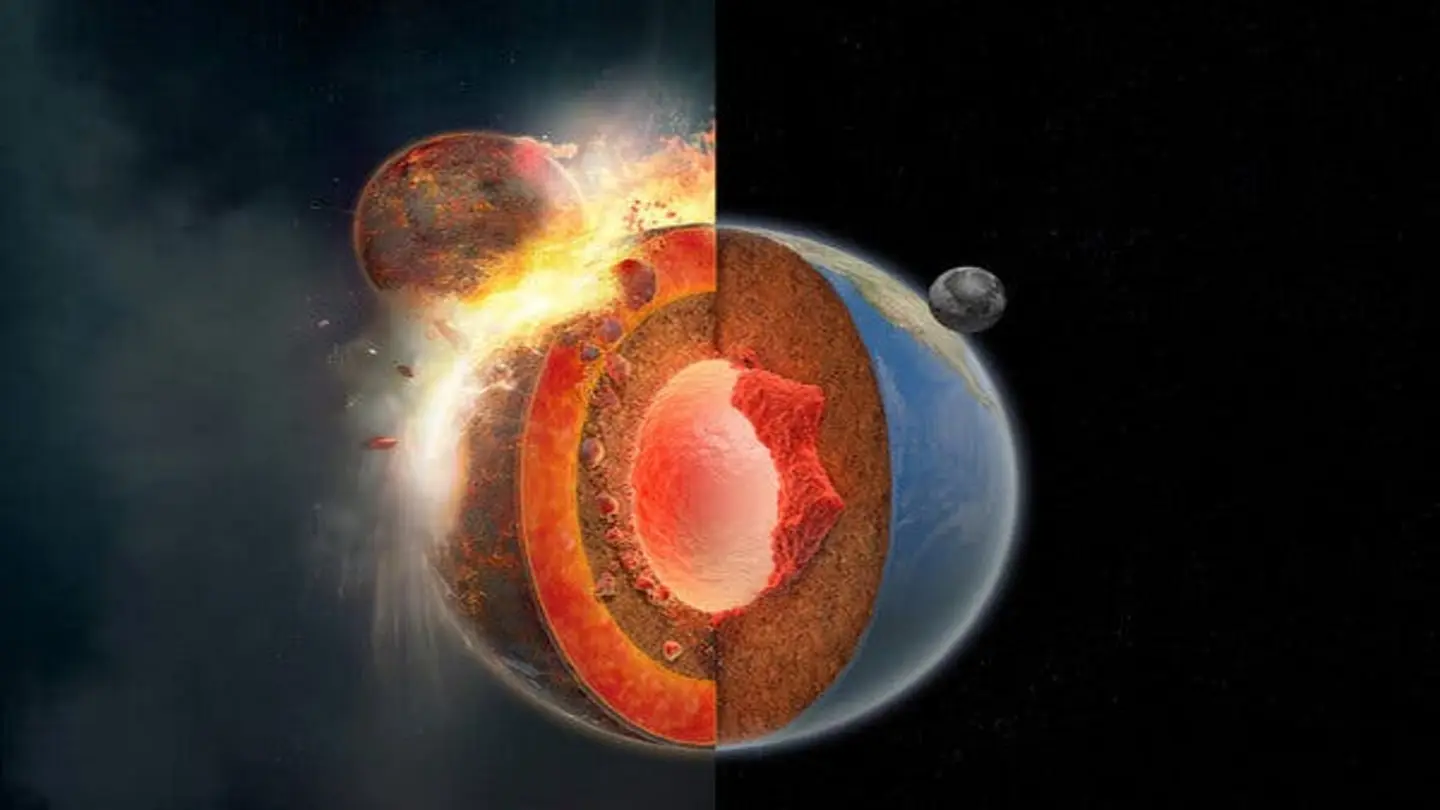
New research published in the ESS Open Archive challenges long-held assumptions about the role of large impacts in shaping the early evolution of planets. The study suggests that while massive collisions *can* temporarily heat a planet’s core, this heating is relatively short-lived and unlikely to have a lasting, significant impact on the planet’s long-term thermal evolution.
For decades, scientists have theorized that frequent, giant impacts during the early stages of planetary formation could have provided substantial energy to melt planetary cores, driving processes like the generation of magnetic fields and influencing mantle convection. These impacts, involving protoplanets or large asteroids, were thought to be a primary mechanism for establishing the internal structure and dynamics of terrestrial planets like Earth, Mars, and Venus.
However, the new modeling work, led by researchers at the Swiss Federal Institute of Technology (ETH) Zurich, indicates a different scenario. Using sophisticated numerical simulations, the team investigated the thermal consequences of impacts on planetary cores over various timescales. Their findings demonstrate that the heat generated by these impacts dissipates much more rapidly than previously believed.
Rapid Heat Dissipation
The key lies in the efficiency of heat transfer within the planet. The simulations reveal that the core quickly loses heat to the mantle through conduction and convection. While the initial temperature spike can be considerable, it’s largely buffered by the vast thermal mass of the mantle. This rapid cooling means that the core remains molten for a shorter duration than models previously predicted.
“We found that the core doesn’t stay hot for very long after a major impact,” explains Dr. Simone Marchi, a co-author of the study. “The mantle acts like a giant heat sink, drawing the energy away from the core before it can fundamentally alter the planet’s long-term thermal state.” The research specifically focused on impacts occurring during the late accretion phase, when planets are already largely formed.
This doesn’t mean impacts were unimportant. They still played a crucial role in delivering volatile elements, altering the planet’s composition, and potentially triggering periods of increased volcanic activity. However, their influence on core dynamics appears to be more nuanced and less dramatic than previously thought.
The study’s implications extend to our understanding of planetary habitability. A long-lived, internally heated core is often considered essential for maintaining a protective magnetic field, which shields the planet’s atmosphere from being stripped away by stellar winds. If impact-induced heating is transient, other mechanisms, such as radiogenic heating from the decay of radioactive elements within the mantle, must be more significant in sustaining a planet’s core convection and magnetic field over geological timescales.
Further research will focus on exploring the interplay between impact heating and radiogenic heating, as well as investigating the effects of different impactor sizes and velocities. The team also plans to refine their models to incorporate more complex planetary interiors and mantle dynamics. Ultimately, this work contributes to a more accurate and comprehensive picture of how planets form and evolve, and what factors determine their potential to host life.
Image Source: Google | Image Credit: Respective Owner