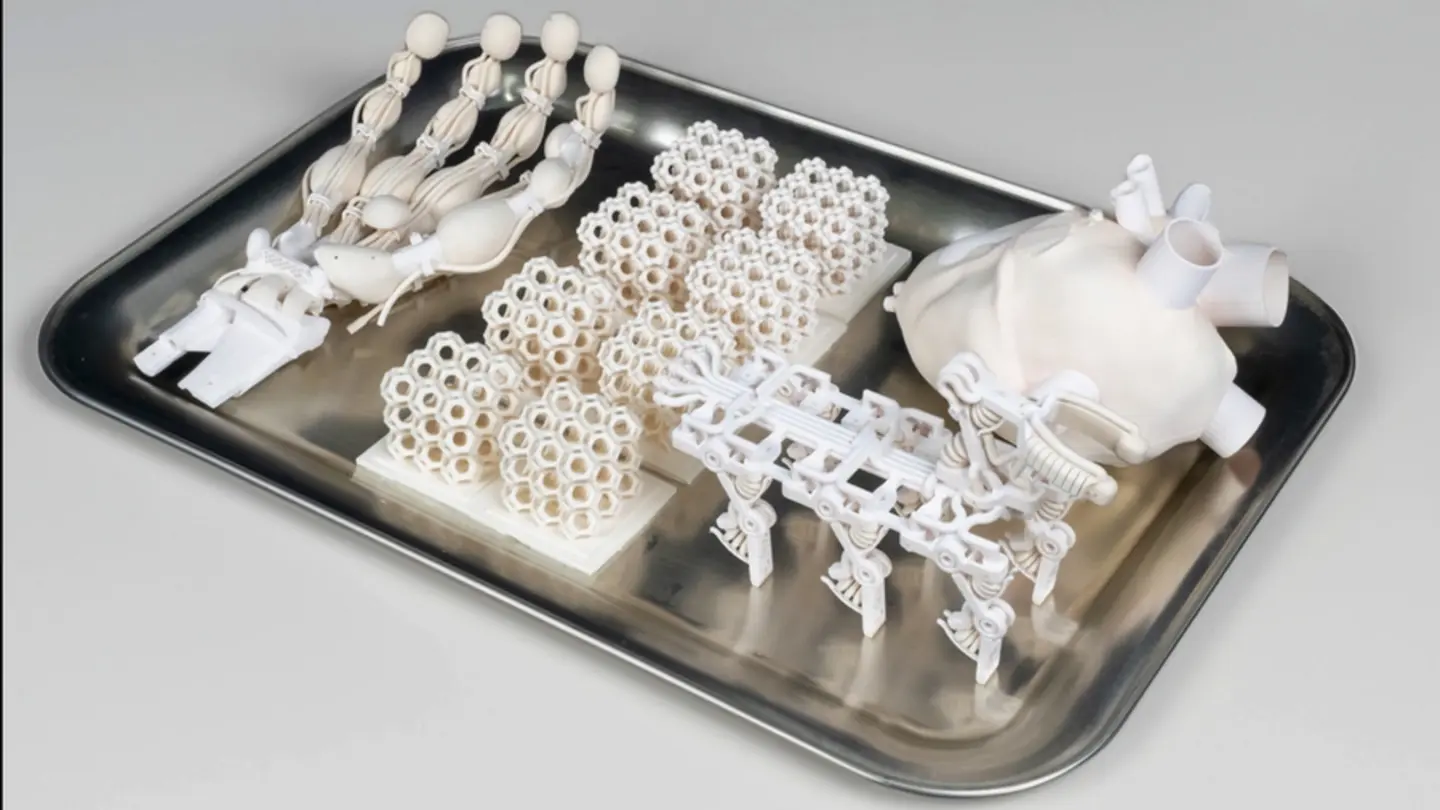
Researchers at the Massachusetts Institute of Technology (MIT) have developed a new generative artificial intelligence (AI) tool that dramatically improves the functionality and durability of 3D-printed objects, moving beyond prototyping and hobbyist creations towards items capable of withstanding daily wear and tear. The system, dubbed ‘DuraPrint,’ addresses a long-standing challenge in additive manufacturing: the inherent weakness of 3D-printed parts compared to traditionally manufactured ones.
Traditionally, 3D printing excels at creating complex geometries but often sacrifices structural integrity. The layer-by-layer construction process introduces vulnerabilities, particularly along those layers, making printed objects prone to fracture under stress. DuraPrint tackles this issue by intelligently adjusting the internal structure of a design during the printing process, reinforcing weak points without significantly increasing material usage or print time.
How DuraPrint Works
The AI operates by analyzing a 3D model and predicting areas likely to fail under stress. It then generates variations of the internal support structure – the infill – optimizing for strength and stability. Unlike existing methods that rely on uniform infill patterns, DuraPrint creates a customized, anisotropic structure, meaning its strength varies depending on the direction of the applied force. This is crucial because real-world objects experience stress in multiple directions.
The team trained DuraPrint using a combination of simulations and physical experiments. They subjected numerous 3D-printed samples to destructive testing, gathering data on how different infill patterns responded to various loads. This data was then used to refine the AI’s predictive capabilities. The result is a system that can consistently produce parts with significantly improved mechanical properties.
According to the MIT News report, DuraPrint has demonstrated the ability to increase the strength of 3D-printed objects by up to 68% in certain directions. This improvement opens up possibilities for printing functional parts for a wider range of applications, including customized tools, replacement components, and even personalized assistive devices. The researchers emphasize that the tool doesn’t require specialized hardware; it can be implemented as a software plugin for existing 3D printers.
The implications extend beyond simply making stronger parts. By optimizing infill, DuraPrint can also reduce material consumption, leading to more sustainable manufacturing practices. Furthermore, the ability to tailor the internal structure allows for the creation of objects with specific performance characteristics, such as enhanced flexibility or impact resistance. The team is currently exploring ways to integrate DuraPrint with design software, enabling users to automatically optimize their models for 3D printing.
The research highlights a growing trend in AI-assisted manufacturing, where algorithms are used to enhance and automate the production process. DuraPrint represents a significant step forward in making 3D printing a viable alternative to traditional manufacturing methods for a broader spectrum of applications. Future work will focus on expanding the AI’s capabilities to handle more complex geometries and a wider variety of materials.
The team published their findings in a recent peer-reviewed journal, detailing the methodology, experimental results, and potential impact of DuraPrint. They are also actively seeking partnerships with industry to further develop and commercialize the technology.
Image Source: Google | Image Credit: Respective Owner