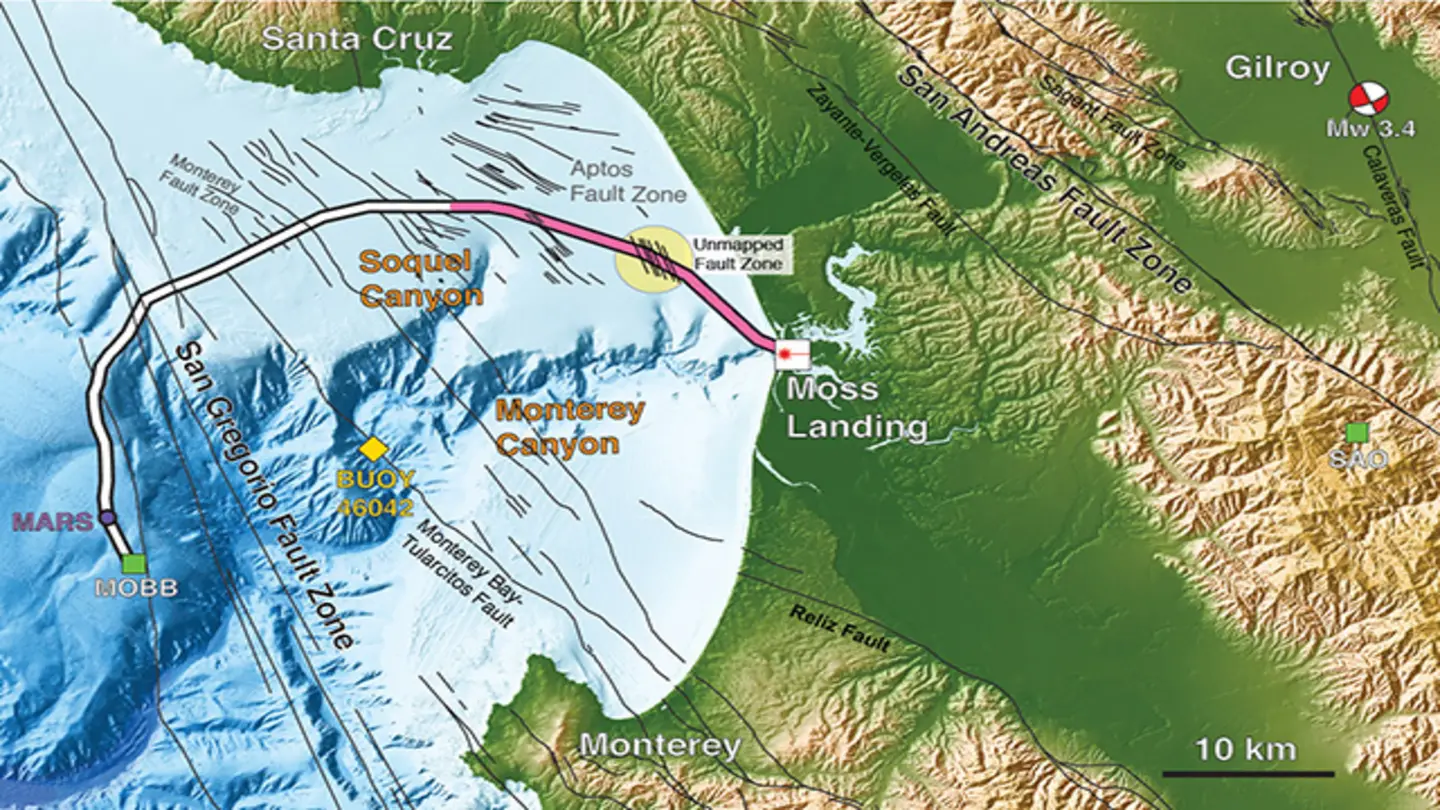
New research published on ESS Open Archive details a groundbreaking discovery regarding the control of seismic waves using sub-wavelength seabed stiffness. The study, led by researchers utilizing Distributed Acoustic Sensing (DAS) technology, demonstrates how manipulating the stiffness of the seafloor at a scale smaller than the wavelength of seismic energy can effectively modulate the amplitude of these waves.
Traditionally, understanding and mitigating seismic activity has focused on large-scale geological factors. This research, however, introduces a novel approach – focusing on minute, engineered changes to the seafloor’s physical properties. The findings have significant implications for a range of applications, from improving the resolution of seismic imaging to developing new methods for earthquake protection and resource exploration.
The core of the study revolves around the use of DAS, a fiber-optic sensing technology that transforms kilometers of standard fiber optic cable into an array of virtual seismic sensors. By analyzing the acoustic signals detected by the DAS array, researchers were able to observe how variations in seabed stiffness, created through controlled experiments, directly impacted the amplitude of passing seismic waves. This level of control was previously thought unattainable.
Implications for Seismic Imaging
One of the most immediate benefits of this discovery lies in the potential to enhance seismic imaging techniques. Currently, the resolution of these images is limited by the wavelength of the seismic energy used. By strategically altering seabed stiffness, researchers can effectively ‘focus’ the seismic waves, leading to clearer and more detailed images of subsurface structures. This is particularly valuable in the oil and gas industry, where accurate subsurface mapping is crucial for identifying and extracting resources.
Beyond resource exploration, improved seismic imaging can also aid in geological hazard assessment. More precise imaging of fault lines and subsurface layers can help scientists better understand the mechanisms driving earthquakes and landslides, ultimately leading to more effective early warning systems and mitigation strategies.
The research also opens up possibilities for novel methods of seismic wave manipulation. While still in its early stages, the ability to control wave amplitude could potentially be harnessed to dampen or redirect seismic energy, offering a new avenue for earthquake protection. Imagine a future where strategically engineered seafloor sections could reduce the impact of tsunamis or mitigate the shaking caused by nearby earthquakes.
The team emphasizes that this is a fundamental research breakthrough, and significant engineering challenges remain before these concepts can be implemented on a large scale. However, the proof-of-concept demonstrated in this study is compelling and suggests a paradigm shift in how we approach seismic monitoring and control. Further research will focus on optimizing the stiffness modulation techniques and exploring their effectiveness in different geological settings. The study’s open-access publication on ESS Open Archive ensures wider dissemination and collaboration within the scientific community, accelerating the development of this promising technology.
The findings represent a significant step forward in our understanding of wave propagation in complex media and highlight the power of innovative sensing technologies like DAS in unlocking new insights into Earth’s dynamic processes.
Image Source: Google | Image Credit: Respective Owner