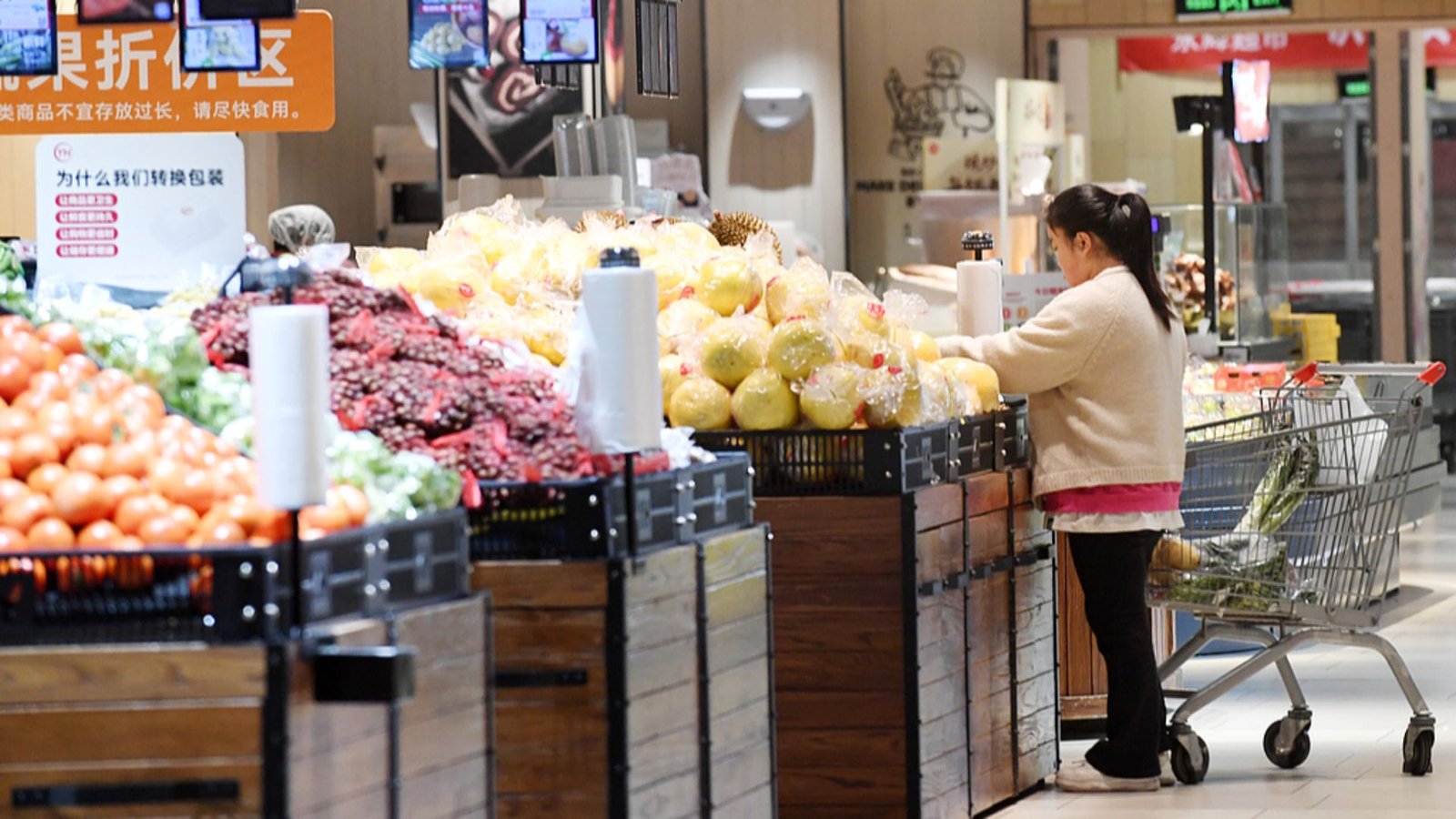
China’s consumer price index (CPI) rose by 0.8% in December, according to data released by the National Bureau of Statistics. This increase marks a slight acceleration from the 0.2% rise recorded in November. While the December figure indicates some inflationary pressure, officials suggest the overall price situation remains relatively stable, with the full year of 2025 expected to see unchanged price levels.
The primary drivers of the December CPI increase were food prices, particularly those of pork. Pork, a staple in the Chinese diet, experienced a significant price surge due to a cyclical downturn in production, impacting overall food inflation. However, prices for non-food items reportedly showed more moderate gains.
Economic Context
The Chinese economy has been navigating a complex period of recovery following the lifting of stringent COVID-19 restrictions. While output has generally increased, consumer spending has been more hesitant. The slight uptick in December’s CPI could be viewed as a sign of improving domestic demand, though the prediction of no change for 2025 suggests that policymakers do not foresee widespread inflationary pressures taking hold. This contrasts with many Western economies that have been grappling with persistently high inflation.
Analysts point to several factors contributing to the relatively subdued inflationary environment in China. These include a comparatively weaker domestic demand than anticipated, a strong base effect from the previous year’s low inflation, and government interventions aimed at stabilizing key commodity prices. The Chinese government has previously employed measures such as releasing state reserves of grains and oil to curb price increases.
The producer price index (PPI), which measures the prices that factories charge, continues to show deflationary pressures. This divergence between CPI and PPI – consumer prices rising while factory prices fall – highlights the structural challenges within the Chinese economy, including overcapacity in certain industrial sectors and sluggish global demand. The persistent decline in PPI is a concern as it can squeeze corporate profits and potentially lead to job losses.
Looking ahead, the government has signaled its commitment to maintaining price stability as a key policy objective. This will likely involve continued monitoring of food prices, especially pork, and proactive measures to address any potential supply disruptions. The relatively stable inflation outlook provides the People’s Bank of China (PBOC) with some flexibility in its monetary policy, allowing it to focus on supporting economic growth.
The prediction of no overall CPI change in 2025 is a notable signal, indicating that authorities are confident in their ability to manage price expectations and prevent inflation from becoming a major obstacle to economic recovery. However, unanticipated external shocks, such as geopolitical tensions or significant fluctuations in global commodity markets, could quickly alter this outlook. Investors will be watching closely for any shifts in official policy or economic data that might indicate a change in the inflationary trajectory.
Image Source: Google | Image Credit: Respective Owner