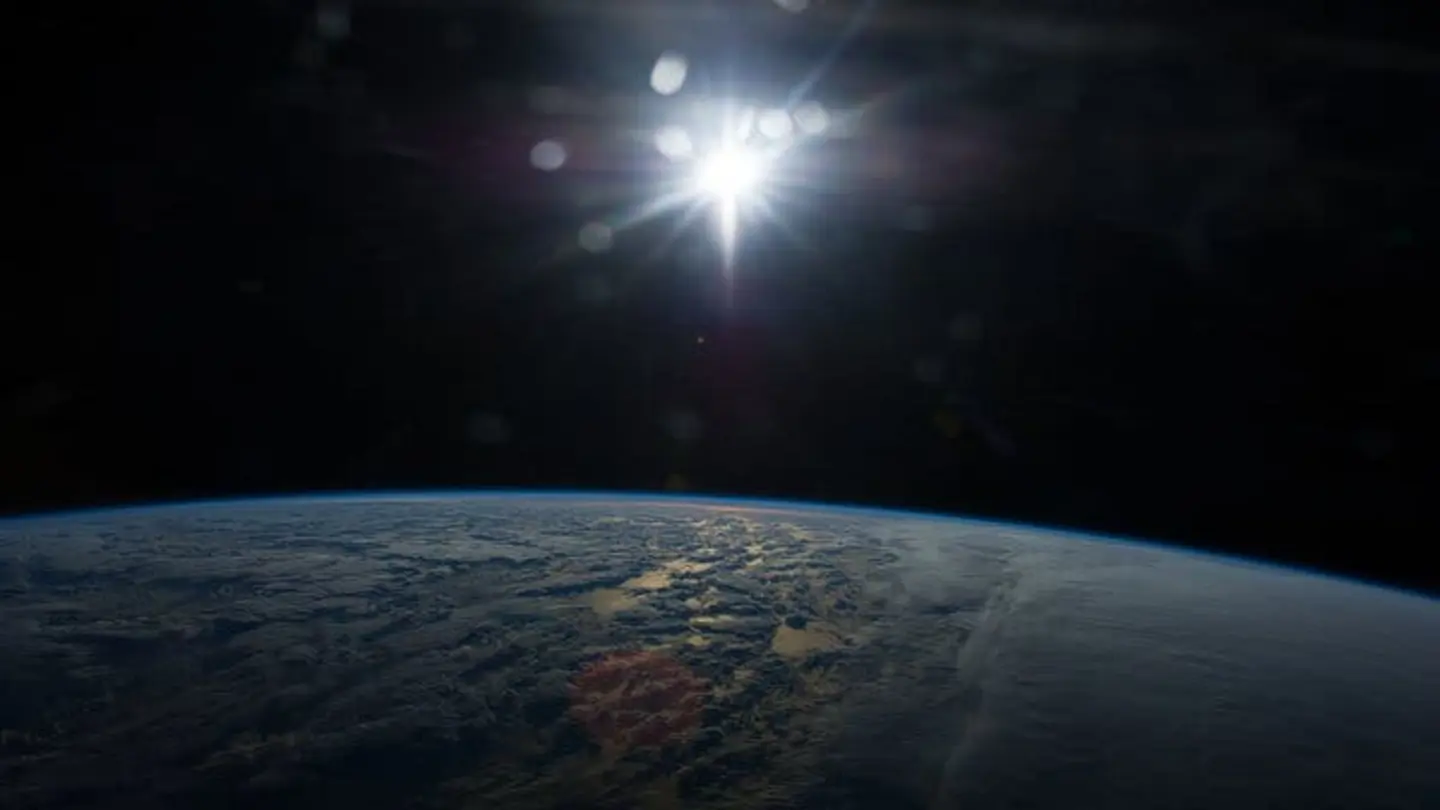
Today marks perihelion, the point in Earth’s orbit where our planet is closest to the Sun. Although the term might conjure images of scorching temperatures, the event isn’t directly responsible for seasonal changes. The Earth reached its closest point to the Sun at approximately 7:07 AM EST, residing roughly 91.4 million miles away.
Understanding Perihelion and Aphelion
Earth’s orbit isn’t a perfect circle; it’s an ellipse, meaning one side of the orbit brings Earth closer to the Sun than the other. Perihelion, as mentioned, is the closest approach. Conversely, aphelion, occurring around July 4th, is the farthest distance – about 94.5 million miles. This difference of over 3 million miles might seem significant, but its impact on Earth’s temperature is surprisingly minimal.
The primary driver of seasons is Earth’s axial tilt of 23.5 degrees. As Earth orbits the Sun, different hemispheres are angled more directly towards it, receiving more concentrated sunlight and experiencing summer. The hemisphere tilted away receives less direct sunlight, resulting in winter. Because perihelion occurs in January, during the Northern Hemisphere’s winter, the effect is somewhat muted. At perihelion, the Northern Hemisphere experiences slightly milder winters, while the Southern Hemisphere experiences slightly warmer summers.
While the difference in distance isn’t the main seasonal factor, it does subtly influence orbital speed. According to Kepler’s Laws of Planetary Motion, a planet moves faster when it’s closer to the Sun. Therefore, Earth travels slightly faster during its perihelion passage than during aphelion. This difference in speed is not noticeable in our daily lives.
This year’s perihelion is particularly noteworthy as it coincides with a period of increased solar activity. The Sun is currently approaching the peak of its 11-year solar cycle, meaning it’s experiencing more frequent and intense sunspots, solar flares, and coronal mass ejections.
These events can disrupt Earth’s magnetosphere and cause geomagnetic storms, potentially affecting satellite communications, power grids, and even visible aurora displays. Although these occurrences are unrelated to the Earth’s proximity to the sun, the timing does add an extra layer of interest to the perihelion event. Scientists continue to monitor solar activity closely to predict and mitigate any potential disruptions.
The event has captivated skywatchers and astronomers alike, offering a yearly reminder of the dynamic relationship between Earth and its star. Observing the sun, however, requires extreme caution and specialized equipment. Looking directly at the sun, even during perihelion, can cause severe and permanent eye damage. Safe viewing methods, such as using certified solar filters, are essential for anyone interested in observing this celestial phenomenon.
Looking ahead, the Earth will continue its elliptical journey around the Sun, gradually moving toward aphelion. Perihelion will return annually in early January, marking another close encounter with our solar powerhouse.
Image Source: Google | Image Credit: Respective Owner