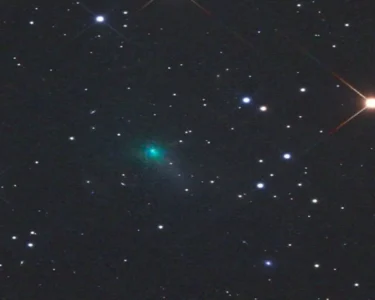
A potentially hazardous asteroid, 99942 Apophis, is set to make an exceptionally close approach to Earth in 2029, passing within just 32,000 kilometers (19,800 miles) of our planet. This rare flyby, closer than many geostationary satellites, presents a unique opportunity for scientists to study a near-Earth asteroid in unprecedented detail, potentially unlocking secrets about the formation of our solar system and the origins of life.
Initially identified as a significant impact risk, subsequent observations refined Apophis’s orbit, ruling out any collision with Earth for at least the next century. However, the 2029 approach remains a focal point for astronomical research. The asteroid, estimated to be around 370 meters (1,214 feet) in diameter, will become visible to the naked eye as it streaks across the sky, appearing as a moving star.
The close proximity will allow for detailed radar imaging, providing insights into Apophis’s shape, size, composition, and internal structure. Scientists plan to utilize this data to better understand the asteroid’s “Yarkovsky effect” – a subtle force caused by the uneven emission of thermal radiation, which can alter an asteroid’s trajectory over time. Accurately modeling this effect is crucial for predicting the long-term orbits of near-Earth objects.
“This is a really exciting event,” says Dr. Marina Popović, a planetary scientist involved in tracking Apophis. “It’s a chance to observe an asteroid of this size at a distance we’ve never been able to achieve before. The data we collect will be invaluable for improving our understanding of these celestial bodies and refining our planetary defense strategies.”
Scientific Significance
Apophis is classified as an S-type asteroid, meaning it’s composed primarily of silicate rocks, similar to those found on Earth. Studying its composition can provide clues about the materials that were present in the early solar system. Furthermore, the asteroid may harbor organic molecules, the building blocks of life. While a direct sample return mission isn’t planned for the 2029 flyby, the detailed observations could help identify potential targets for future missions.
The event will also serve as a valuable test for planetary defense systems. Although Apophis is not currently a threat, the flyby will allow scientists to practice tracking and characterizing a potentially hazardous object, refining techniques that could be used to deflect an asteroid on a collision course with Earth in the future. This includes validating models used to predict asteroid behavior and improving the accuracy of impact predictions.
The 2029 flyby is a collaborative effort involving space agencies and research institutions worldwide. Observations will be conducted using a network of ground-based telescopes and radar facilities, as well as space-based observatories. The data will be publicly available, fostering further research and analysis by the global scientific community. The event is anticipated to generate significant public interest, inspiring a new generation of space explorers and scientists.
Beyond the scientific benefits, the Apophis flyby is a reminder of the dynamic nature of our solar system and the constant potential for interactions with near-Earth objects. Continued monitoring and research are essential for mitigating any future risks and ensuring the long-term safety of our planet.
Image Source: Google | Image Credit: Respective Owner