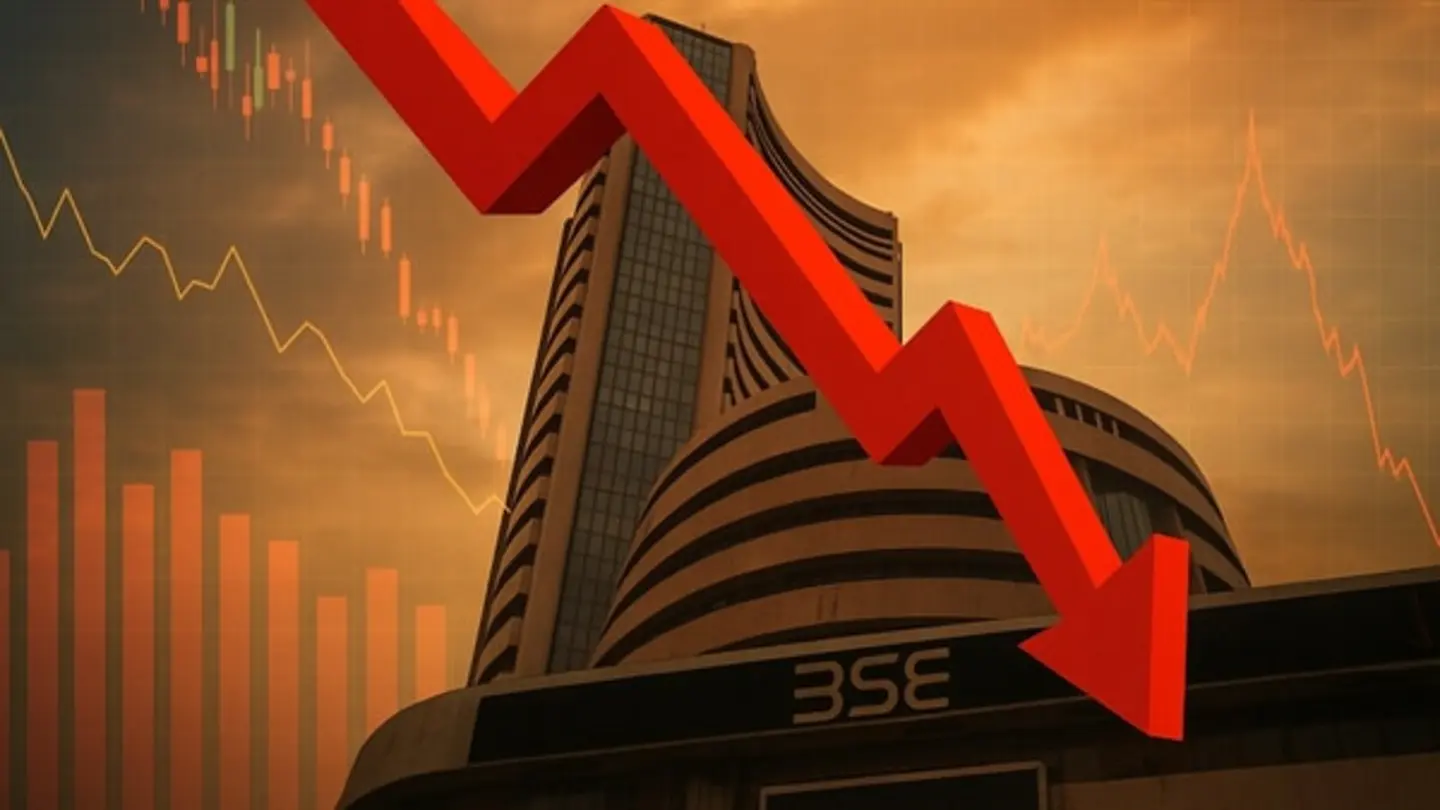
Indian stock markets experienced a downturn on Thursday, with both the Sensex and Nifty indices retreating from their intraday highs. The Sensex closed 300 points lower, while the Nifty ended the day below the 26,150 mark. Several factors contributed to this negative market sentiment, including profit booking, rising global bond yields, and a cautious approach adopted by investors ahead of upcoming economic data releases.
Profit booking emerged as a significant driver of the decline. After a recent rally, investors opted to secure gains, leading to selling pressure across various sectors. The initial optimism fueled by positive earnings reports and global market trends gradually waned as traders chose to cash in on the upward movement. This is a common phenomenon in mature bull runs, where corrections are often seen as healthy adjustments.
Adding to the downward pressure, global bond yields continued their ascent. Rising yields in the US and other major economies make fixed-income investments more attractive, diverting funds away from equities. This shift in investor preference particularly impacts emerging markets like India, which are more sensitive to global interest rate fluctuations. The expectation of further rate hikes by central banks globally also contributed to the risk-off sentiment.
Furthermore, investors adopted a cautious stance as they awaited the release of key economic indicators. Upcoming data on inflation, industrial production, and GDP growth are expected to provide further clarity on the health of the Indian economy. Uncertainty surrounding these releases prompted some investors to remain on the sidelines, contributing to the subdued trading activity. Market participants are keen to assess whether the current economic trajectory supports the recent market gains.
Sectoral Performance
Among the sectoral indices, the financial services and auto sectors experienced the most significant losses. Banking stocks, in particular, came under selling pressure due to concerns about asset quality and rising interest rates. The auto sector faced headwinds from weak demand and supply chain disruptions. However, the IT sector managed to hold its ground, supported by positive global cues and strong earnings forecasts.
Despite the day’s decline, analysts remain optimistic about the long-term prospects of the Indian stock market. They believe that the underlying fundamentals of the Indian economy remain strong, and the recent correction presents a buying opportunity for long-term investors. However, they also caution that the market is likely to remain volatile in the near term, influenced by global macroeconomic factors and domestic economic data releases. Investors are advised to maintain a balanced portfolio and adopt a cautious approach to risk management.
The volatility index (India VIX) also saw an uptick, indicating increased uncertainty in the market. This suggests that investors are bracing for further fluctuations in the short term. The overall market breadth was negative, with more stocks declining than advancing. Foreign institutional investors (FIIs) were net sellers, further exacerbating the downward trend. Domestic institutional investors (DIIs), however, provided some support by being net buyers.
Image Source: Google | Image Credit: Respective Owner