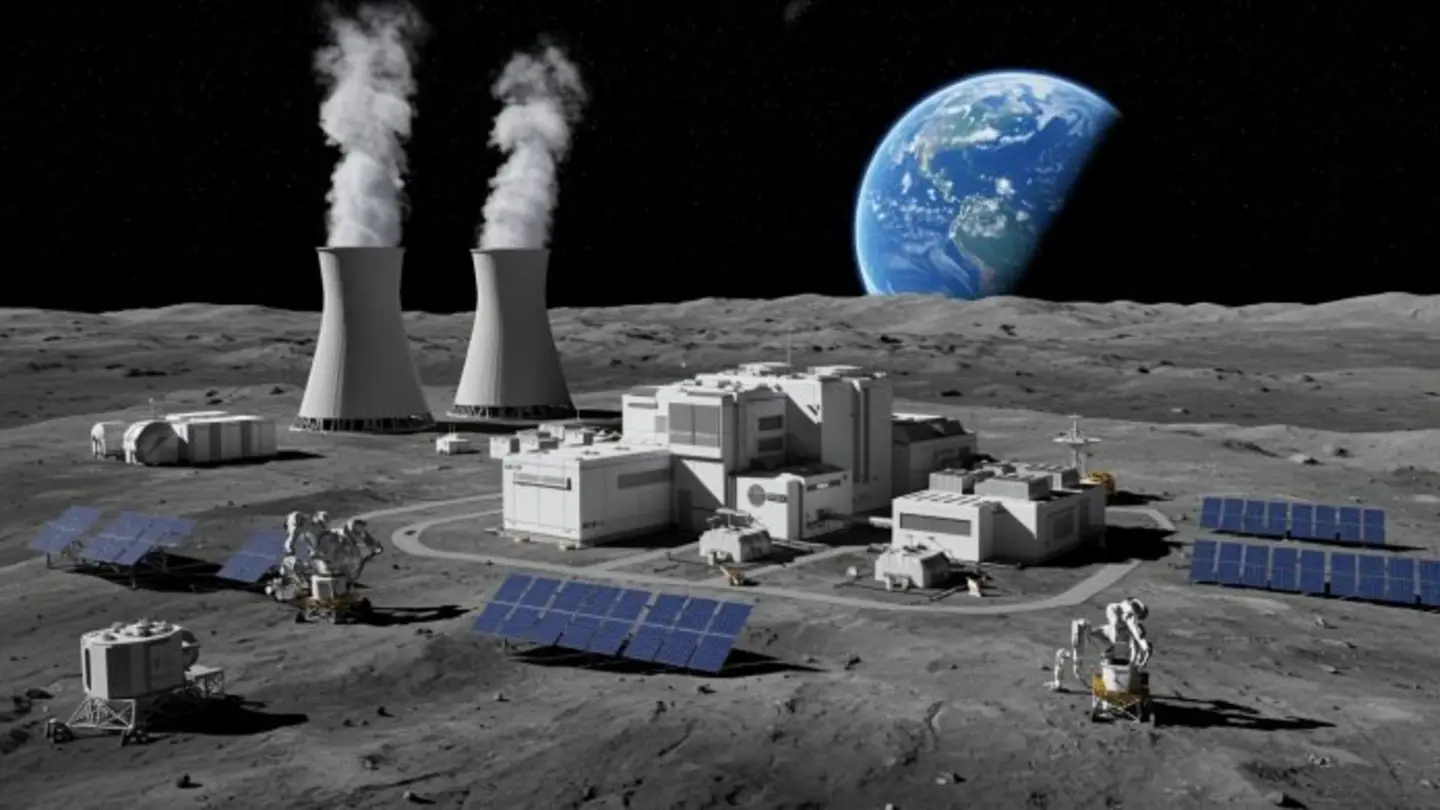
Russia is aiming to construct a nuclear power plant on the Moon by 2036, initiating a potential space race with the United States, according to reports from The Times of India. The ambitious project, announced by Roscosmos chief Yuri Borisov, intends to provide a sustainable and powerful energy source for lunar operations, potentially facilitating resource extraction and long-term habitation.
The proposed plant would utilize a compact nuclear reactor, a technology Russia has been developing for several years. Borisov stated that the project is feasible and crucial for enabling more complex lunar missions beyond simple sample returns. He emphasized the need for a robust power supply to support activities like lunar mining, particularly the extraction of helium-3, a potential fuel source for future fusion reactors on Earth.
US Response and Competition
The United States is reportedly accelerating its own plans for lunar power generation, viewing Russia’s initiative as a challenge. NASA administrator Bill Nelson acknowledged the Russian proposal and indicated that the US is working to achieve a similar capability sooner. While NASA currently relies on solar power for its lunar missions, the agency recognizes the limitations of solar energy, particularly during the long lunar nights which last approximately 14 Earth days.
The US approach is currently focused on developing fission surface power systems, which are smaller and more adaptable than traditional large-scale nuclear reactors. NASA has awarded contracts to several companies to design and build prototype lunar nuclear power systems, with a target deployment date potentially before 2036. The competition between the two space powers is expected to drive innovation and accelerate the development of lunar infrastructure.
Experts suggest that a nuclear power plant on the Moon would be a game-changer for lunar exploration and development. It would provide a reliable and continuous power source, independent of sunlight, enabling a wider range of scientific experiments, resource utilization, and potentially even the establishment of a permanent lunar base. The logistical challenges of transporting a nuclear reactor to the Moon are significant, but Russia and the US appear determined to overcome them.
The safety aspects of deploying a nuclear reactor on the Moon are also under scrutiny. Both countries are expected to adhere to strict international guidelines and implement robust safety measures to prevent any potential environmental contamination. The success of these projects will depend not only on technological advancements but also on international cooperation and responsible space exploration practices. The race to power the Moon is on, and the implications for the future of space exploration are profound.
Further details regarding the specific design and deployment strategy for the Russian lunar power plant remain limited, but Roscosmos has indicated that it will leverage its experience in developing nuclear reactors for remote locations on Earth. The US, meanwhile, is prioritizing a modular and scalable approach, allowing for incremental deployment and adaptation to evolving lunar mission requirements.
Image Source: Google | Image Credit: Respective Owner