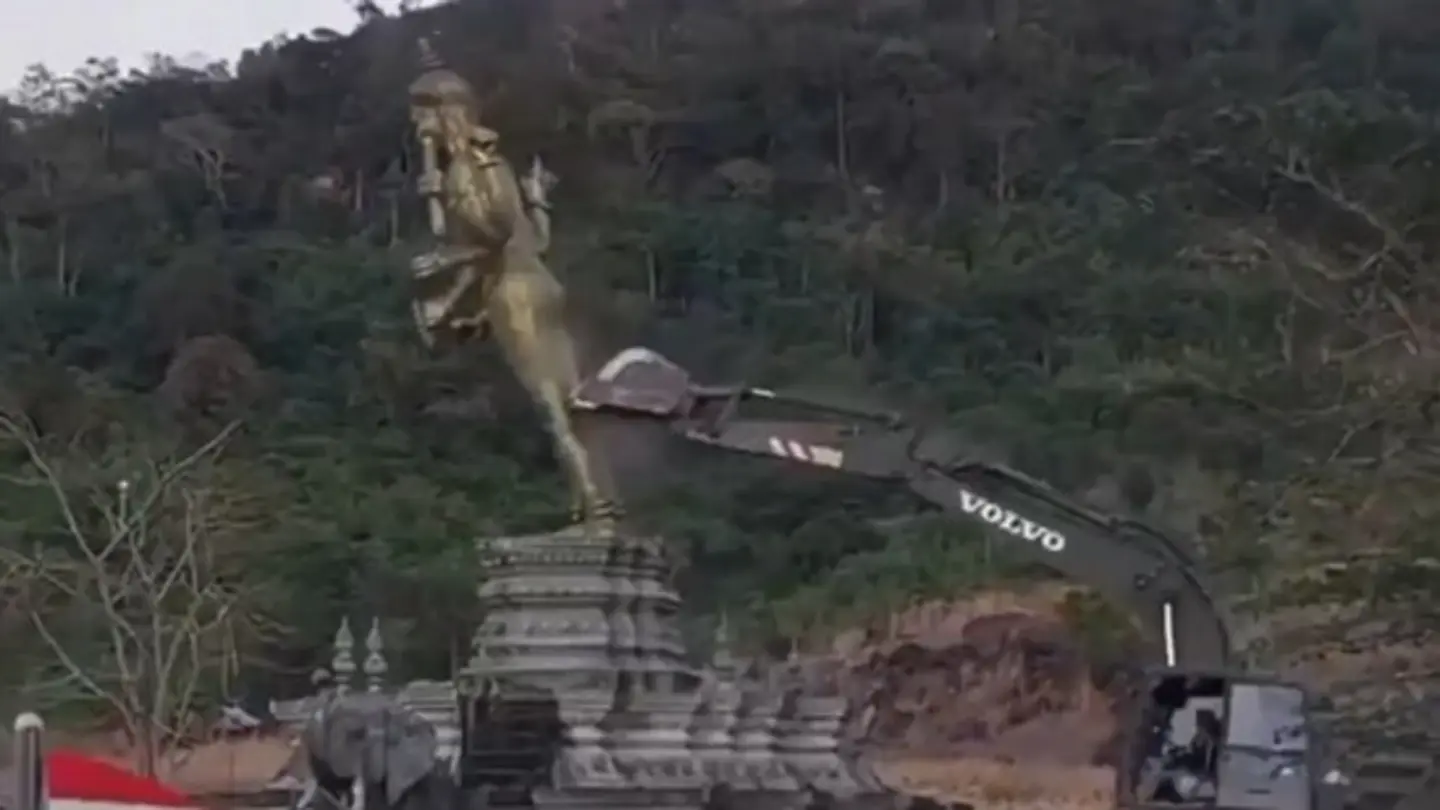
New Delhi has reacted strongly to the recent demolition of a Vishnu statue at the Thailand-Cambodia border, with officials and Hindu organizations expressing concerns over the incident and its potential to “hurt sentiments globally.” The statue, located in a temple complex in the Si Sa Ket province of Thailand, was reportedly destroyed by Cambodian authorities, sparking outrage and diplomatic ripples.
The incident occurred amidst a long-standing dispute over the Preah Vihear temple complex, a UNESCO World Heritage site claimed by both Thailand and Cambodia. While the exact circumstances surrounding the demolition remain contested, reports suggest the statue was removed as part of a construction project. However, the manner in which it was carried out, and the lack of prior consultation with Thai authorities or Hindu representatives, has fueled the controversy.
India’s Ministry of External Affairs has taken note of the situation and is reportedly in touch with both the Thai and Cambodian governments to seek clarification and ensure the preservation of religious and cultural heritage in the region. Sources indicate that New Delhi has conveyed its concerns through diplomatic channels, emphasizing the importance of respecting religious sentiments and avoiding actions that could escalate tensions.
Historical and Religious Significance
The temple complex where the Vishnu statue was housed holds significant historical and religious importance for Hindus, particularly those who revere Vishnu as a principal deity. The presence of the statue symbolized the historical and cultural connections between India and Southeast Asia, a region heavily influenced by Indian civilization for centuries. Many believe the statue represented a crucial link to the region’s Hindu past.
Hindu organizations in India have condemned the demolition as an act of religious intolerance and disrespect. They have urged the international community to intervene and ensure the protection of Hindu religious sites in Cambodia and other countries. Several groups have also announced plans to stage protests and raise awareness about the issue.
The Cambodian government, while acknowledging the demolition, has maintained that it was a necessary step to facilitate infrastructure development and that the statue was not of significant religious value. They have also accused Thai nationalists of exploiting the incident to stir up anti-Cambodian sentiment. However, this explanation has failed to quell the outrage, with critics arguing that the demolition could have been avoided with more sensitivity and dialogue.
The incident highlights the delicate balance between national sovereignty, religious freedom, and the preservation of cultural heritage. It also underscores the importance of bilateral cooperation and mutual respect in resolving disputes over historical sites. The situation remains fluid, and further developments are expected as India continues to engage with both Thailand and Cambodia to address the concerns raised by the demolition of the Vishnu statue. The long-term impact on India-Cambodia and India-Thailand relations remains to be seen, but the incident has undoubtedly cast a shadow over regional diplomacy.
Experts suggest that a thorough investigation into the incident is needed to determine the facts and assign responsibility. They also emphasize the need for a comprehensive framework for the protection of religious and cultural sites in border areas, involving all stakeholders and ensuring transparency and accountability.
Image Source: Google | Image Credit: Respective Owner