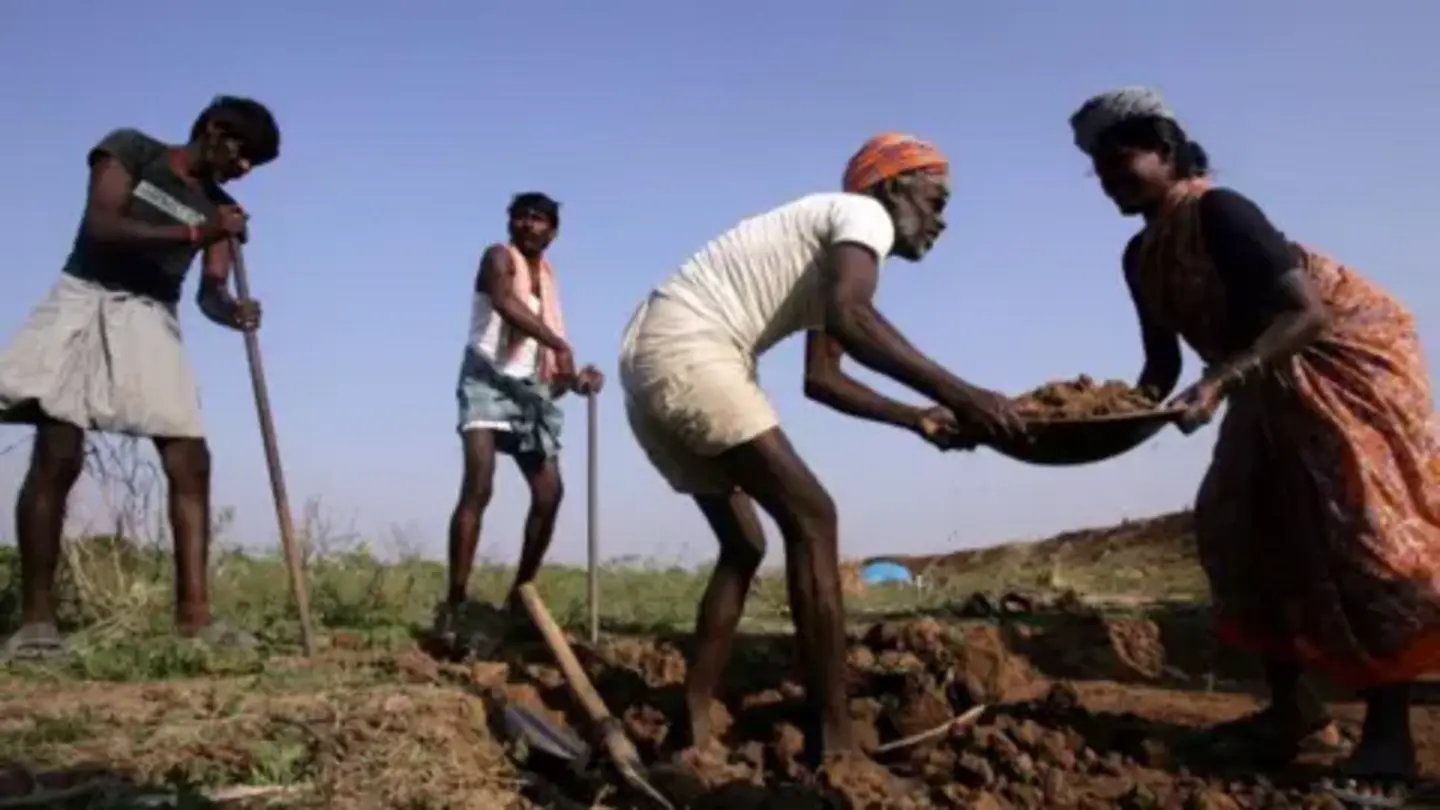
India’s Mahatma Gandhi National Rural Employment Guarantee Act (MGNREGA), a flagship scheme providing guaranteed wage employment to rural households, is facing increasing concerns regarding its functionality due to a new digital payment system. The system, known as G-RAMS (Governance, Registration, and Management System), implemented by the Ministry of Rural Development, is reportedly causing significant delays in wage payments and creating hurdles for vulnerable workers.
The BBC reports that numerous workers across several states, including Uttar Pradesh, Bihar, and Jharkhand, have experienced difficulties accessing their wages since the rollout of G-RAMS in January. Previously, wages were directly transferred to workers’ post office accounts or bank accounts. Now, the new system requires workers to authenticate themselves through Aadhaar-based biometric authentication or, if that fails, to visit a designated bank branch – a significant challenge for many in remote rural areas.
Payment Delays and Technical Glitches
Complaints abound regarding technical glitches within the G-RAMS platform. Workers report failed authentication attempts, incorrect account details, and a lack of clarity regarding the status of their payments. These issues are exacerbated by limited digital literacy among rural populations and inadequate infrastructure in many areas. The delays in receiving wages have a direct impact on the livelihoods of these families, many of whom rely on MGNREGA income for their basic needs.
Critics argue that the shift to G-RAMS, while intended to improve transparency and efficiency, has instead created a new layer of complexity and exclusion. Activists and economists point out that the system disproportionately affects marginalized communities, including women, Dalits, and Adivasis, who may lack the necessary documentation or access to technology to navigate the new process. Concerns have also been raised about the potential for data privacy breaches and the security of Aadhaar-linked information.
The Ministry of Rural Development maintains that G-RAMS is a necessary step towards streamlining the MGNREGA system and reducing corruption. Officials claim that the system will eventually lead to faster and more reliable wage payments. However, the ongoing issues and widespread complaints suggest that significant improvements are needed to address the challenges faced by workers on the ground.
The future of MGNREGA, a scheme lauded for its role in poverty reduction and rural development, hangs in the balance. The effectiveness of G-RAMS will be crucial in determining whether the scheme can continue to fulfill its promise of providing a safety net for millions of rural Indians. Further investigation and immediate corrective measures are needed to ensure that the digital transition does not undermine the fundamental principles of the MGNREGA act.
The BBC’s investigation highlights the importance of considering the practical realities of implementation when introducing large-scale digital reforms, particularly in a country with significant digital divides and socio-economic disparities. The government faces a critical test in ensuring that the benefits of technology are accessible to all, and that vulnerable populations are not left behind.
Image Source: Google | Image Credit: Respective Owner