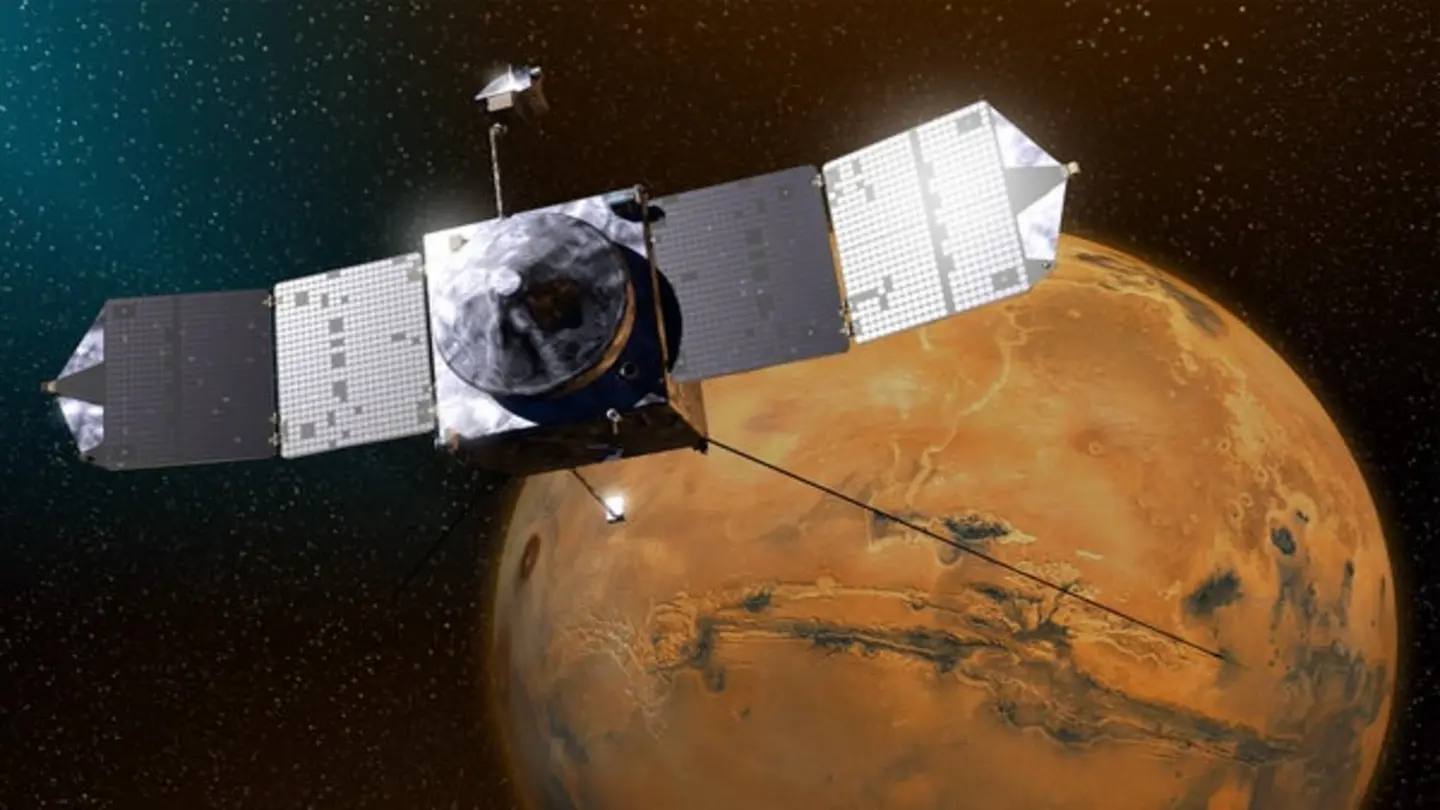
NASA has confirmed the temporary loss of communication with its MAVEN (Mars Atmosphere and Volatile Evolution) orbiter, a critical spacecraft studying the Red Planet’s upper atmosphere. The agency reported that contact was lost on February 20, 2025, when the spacecraft entered a safe mode following an unexpected anomaly. Mission controllers at NASA’s Jet Propulsion Laboratory immediately began diagnostic procedures to re-establish communication.
The MAVEN spacecraft, launched in November 2013, has been orbiting Mars since September 2014, providing invaluable data about the Martian atmosphere’s composition and behavior. The mission has significantly advanced our understanding of how Mars lost its atmosphere over time, offering crucial insights into the planet’s climate history and potential for past habitability.
Technical Challenges and Recovery Efforts
According to mission officials, MAVEN entered safe mode after detecting irregularities in its navigation systems. Safe mode is a protective state where non-essential systems are shut down to prevent damage while engineers assess the situation. The spacecraft has experienced similar incidents in the past but has always maintained basic communication capabilities until now.
The current communications blackout has presented unique challenges. NASA’s Deep Space Network, which normally tracks all Mars missions, has been working around the clock to regain contact. Engineers are investigating possible causes, including software glitches, hardware malfunctions, or radiation-induced memory errors.
MAVEN carries sophisticated instruments that measure solar wind interactions with Mars’ upper atmosphere. These measurements are essential for understanding atmospheric escape processes that may have transformed Mars from a planet with liquid water into today’s cold, dry world. Losing this capability would represent a significant setback for planetary science.
International Mars Mission Context
The timing of this incident is particularly noteworthy as it coincides with the recent arrival of multiple international missions at Mars. This creates additional complexity for ground controllers who must coordinate communication schedules among various spacecraft.
NASA remains optimistic about recovering the mission, citing MAVEN’s robust design and redundant systems. Past Mars missions, including the Spirit and Opportunity rovers, have overcome similar challenges through persistent engineering efforts. The agency plans to continue recovery attempts while preparing backup data collection strategies.
Success in restoring MAVEN operations would not only preserve valuable scientific data but also demonstrate important lessons for future deep space missions about designing resilient spacecraft systems and comprehensive recovery protocols.
Image Source: Google | Image Credit: Respective Owner