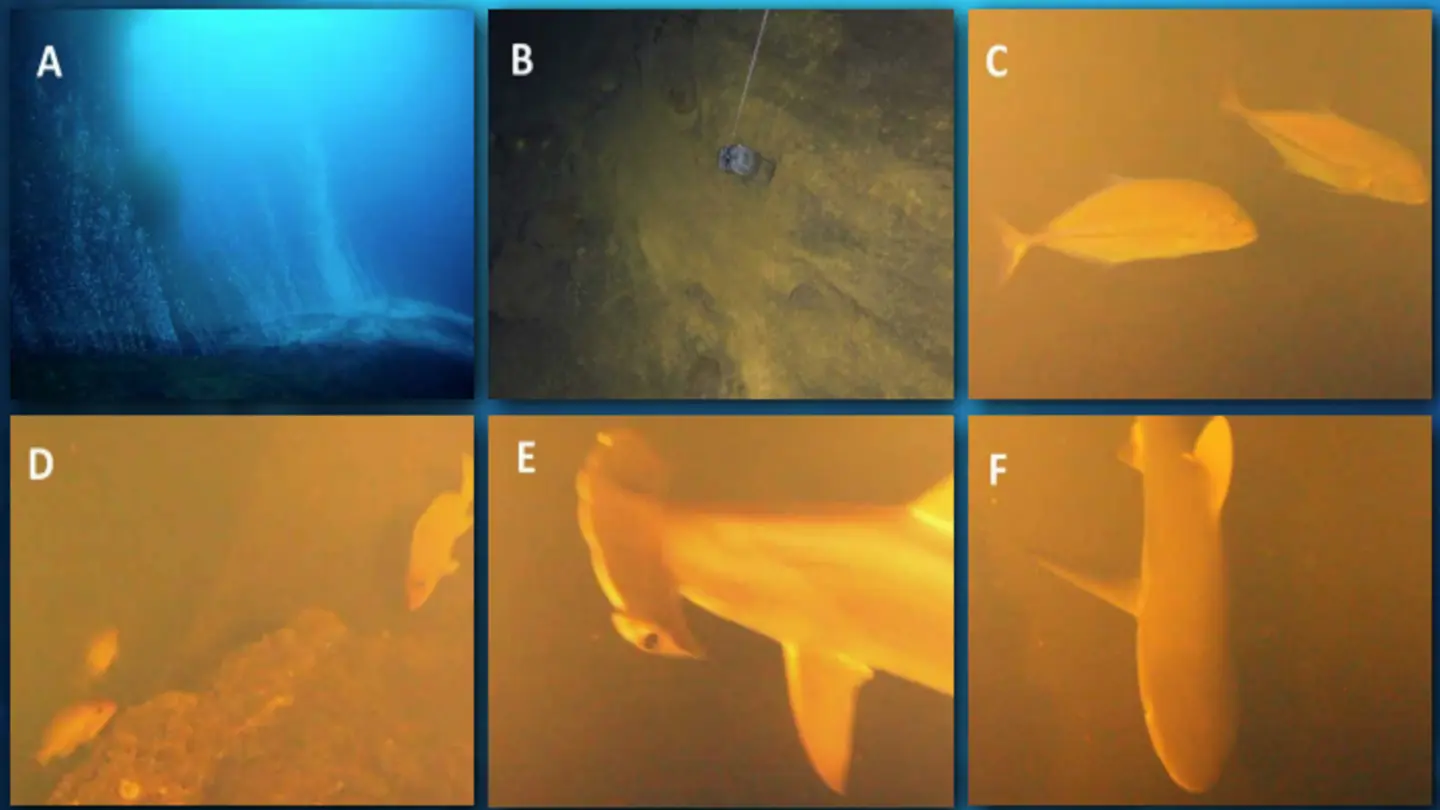
Scientists exploring Kavachi, one of the world’s most active underwater volcanoes in the Solomon Islands, have made a startling discovery: sharks and other marine animals thriving inside the submerged crater. Using baited drop cameras, researchers spotted scalloped hammerhead sharks, silky sharks, and sixgill stingrays gliding through the acidic, superheated waters of an active volcano—an environment previously considered incompatible with complex marine life.
Kavachi, located in the southwest Pacific, rises 1.2 kilometres from the seafloor and breaches the surface during major eruptions, only to be eroded back below the waves. An expedition launched by National Geographic witnessed eruptions that threw molten lava and volcanic bombs into the air, yet the volcano’s submerged crater harboured an unexpected ecosystem. This challenges long-held assumptions about the harshness of hydrothermal and volcanic habitats.
The observations have profound implications for marine biology and extremophile research. Scientists found the sharks did not display obvious stress responses despite the extreme conditions. The team even documented two distinct populations of hammerhead sharks possibly using the crater as a refuge or a feeding ground. How these animals endure low oxygen, high acidity, and temperatures reaching hundreds of degrees near vents remains largely unexplained.
Genetic and physiological sampling could help uncover whether these sharks possess unique biochemical adaptations—such as heat-shock proteins, specialised enzymes, or acid-resistant epithelia—that allow them to exploit this hostile niche. Understanding these mechanisms holds promise for biotechnology and medicine, including insights into cellular stress tolerance and novel proteins.
Kavachi’s activity complicates research efforts. Strong eruptions disperse populations, so repeated visits are essential to map residency patterns and demographic stability. Dr Brennan Phillips, an oceanographer on the expedition, plans to deploy longer-term monitoring tools to track individual sharks, correlate presence with eruption cycles, and measure fine-scale temperature and pH gradients in the crater.
Beyond biology, the findings carry lessons for planetary science. Hydrothermal systems like those on Saturn’s moon Enceladus or Jupiter’s Europa are candidate environments for extraterrestrial life. If complex organisms can thrive inside an erupting submarine volcano on Earth, similar resilience might be possible on icy moons with subsurface oceans.
The unexpected presence of large predators inside Kavachi serves as a powerful reminder that life can flourish in environments once deemed lethal, reshaping our view of habitability on Earth and beyond. Continued research in these extreme habitats may reveal unprecedented evolutionary innovations and expand our search for life elsewhere in the Solar System.