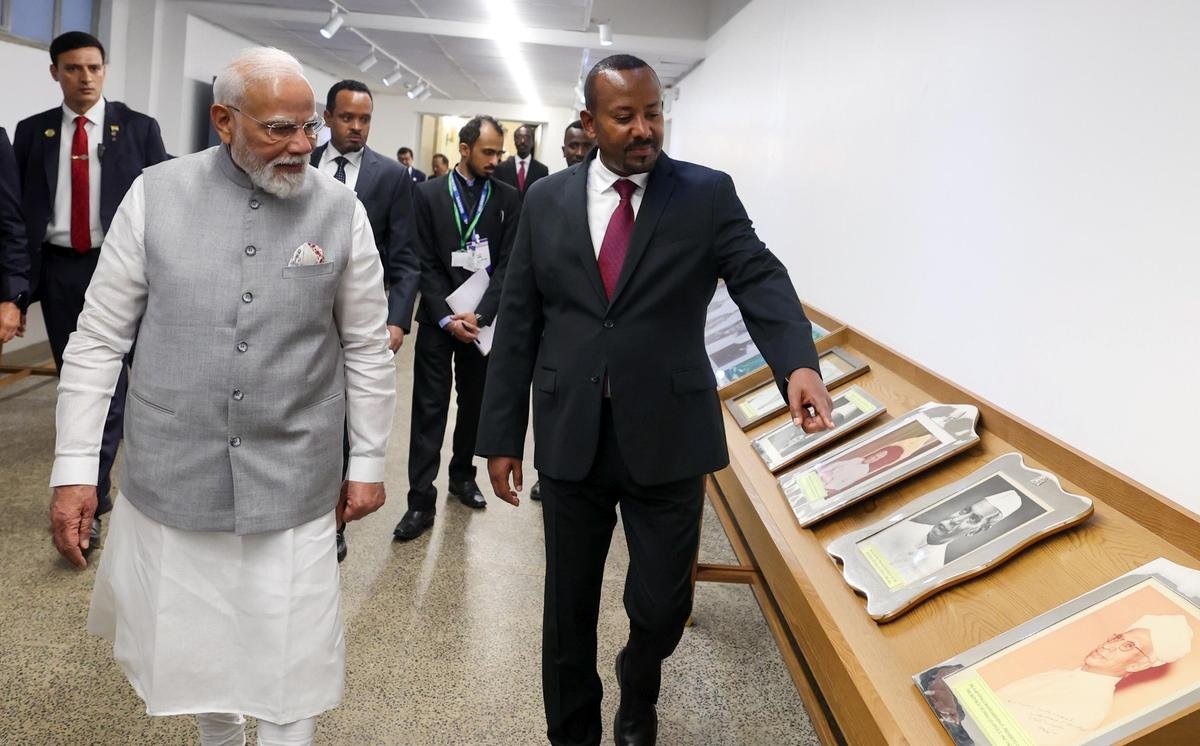
India and Ethiopia have agreed to elevate their bilateral relationship to a Strategic Partnership, marking a significant step in strengthening political, economic, and diplomatic cooperation between the two countries. The announcement was made during Prime Minister Narendra Modi’s official visit to Ethiopia on December 16, his first trip to the country since taking office.
During delegation-level talks in Addis Ababa, Prime Minister Modi described the move as a way to add “new energy, momentum and depth” to India-Ethiopia relations. He underlined the long-standing historical and cultural connections between the two nations and said both countries, as democratic voices of the Global South, share common values and aspirations.
Ethiopian Prime Minister Abiy Ahmed personally received Modi at the airport, a rare gesture reflecting the warmth of the relationship. The two leaders also held informal interactions during unscheduled visits to local landmarks, including discussions around Ethiopia’s coffee culture. During the visit, Modi was conferred ‘The Great Honour Nishan of Ethiopia’, the country’s highest civilian award.
Speaking at the talks, Modi said his visit carried a “deep sense of belonging,” noting that India and Ethiopia have maintained contact and exchanges for thousands of years. He pointed out that both nations reflect “unity in diversity” through their languages, cultures, and traditions.
The Indian prime minister also highlighted Ethiopia’s strategic importance in Africa, calling it the hub of African diplomacy as it hosts the headquarters of the African Union. He recalled India’s role in supporting the African Union’s inclusion as a permanent member of the G20 in 2023.
Modi thanked the Ethiopian leadership for expressing solidarity with India following the recent Pahalgam terror attack and for supporting India’s stance against terrorism, stressing the importance of international cooperation in such matters.
Following the talks, both sides exchanged three Memorandums of Understanding (MoUs) covering cooperation in UN peacekeeping training, mutual administrative assistance in customs, and the establishment of a data centre at Ethiopia’s Ministry of Foreign Affairs.
Economic cooperation was also a key focus of the discussions. The two leaders explored opportunities in digital public infrastructure, mining, critical minerals, and clean energy.
India remains one of Ethiopia’s largest foreign investors, with over 675 Indian companies registered in the country and investments exceeding $6.5 billion. India is also Ethiopia’s second-largest trading partner, accounting for nearly 24% of its global trade. Bilateral trade between the two nations stood at $550.19 million in 2024–25, with India enjoying a trade surplus.
The new Strategic Partnership is expected to further strengthen cooperation across diplomacy, trade, technology, and development, reinforcing India’s growing engagement with Africa.
Image Source: Google | Image Credit: Respective Owner