Political Turmoil in Kerala
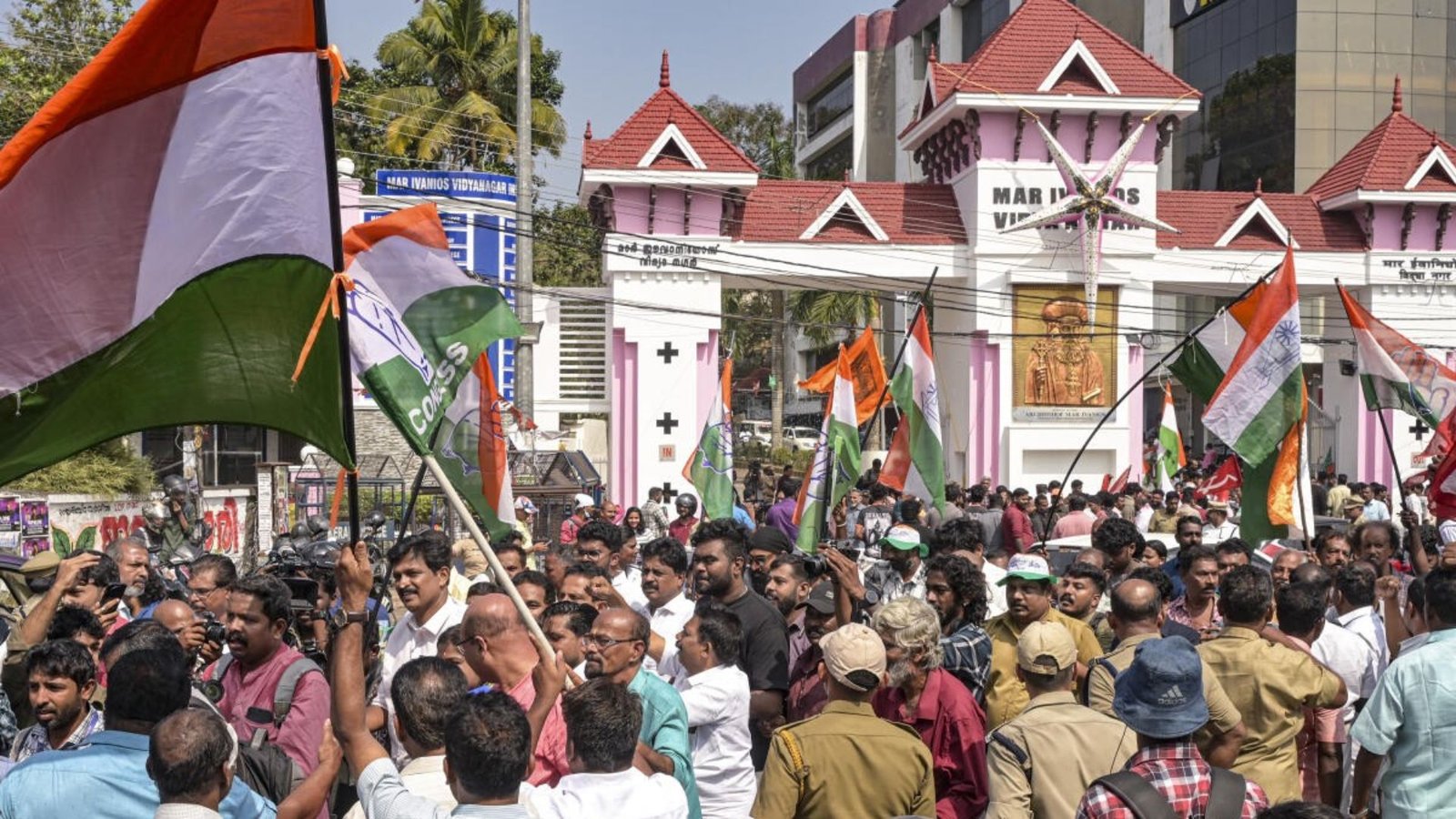
Following the announcement of civic poll results in Kerala, violent clashes have erupted across multiple cities and towns in the southern Indian state. The unrest, which began shortly after the election commission declared the outcomes, has seen opposition supporters and ruling party cadres engage in heated confrontations, leading to widespread destruction of public and private property.
The most affected regions include Thiruvananthapuram, Kochi, and Kozhikode, where heavy police deployments have been struggled to control riotous mobs. Security forces have reportedly used tear gas canisters and water cannons to disperse agitated crowds that set fire to vehicles, vandalized government buildings, and blocked major highways. Local authorities have imposed Section 144 restrictions in several districts, prohibiting gatherings of more than four people as a preventive measure against further escalation.
Opposition leaders have vehemently accused the ruling coalition of manipulating vote counts to secure favorable outcomes in key municipal constituencies. They claim that irregularities were observed during the counting process and have demanded independent audits by the Election Commission of India (ECI). Meanwhile, chief ministers and senior officials from the governing party dismiss these allegations as politically motivated attempts to discredit their electoral victory. Senior officials stated that the elections were conducted free and fair, with adequate monitoring measures in place.
The Election Commission has issued a strongly worded statement urging all political entities to maintain peace and refrain from actions that threaten public order. A special ECI delegation is scheduled to visit Kerala to assess the law-and-order situation and evaluate potential electoral fraud claims. Civil society groups and human rights organizations have expressed concern about the rising political violence, warning that such incidents undermine democracy and civic trust.
Injuries have been reported on both sides, with at least 27 people sustained non-life-threatening injuries according to preliminary hospital records. Emergency medical teams remain on high alert across affected zones. Local businesses have suffered significant losses due to lootings and arson attacks, with several shop owners reporting inventory damages running into lakhs of rupees. Educational institutions and public transportation services remain shut as a safety precaution.
Security agencies have reinforced patrolling units and established checkpoints to intercept armed miscreants. Central paramilitary forces have been placed on standby for possible joint operations if state resources prove insufficient. Political analysts suggest that the current unrest reflects deeper systemic issues within Kerala’s political framework, where competition between major parties often transcends democratic norms. Observers warn that unless dialogue mechanisms are re-established, the cycle of post-election violence could recur in future contests.
National leaders have called for immediate de-escalation through constructive negotiations. The central government offered assistance to state authorities for restoration of normalcy, emphasizing that maintaining law and order is a constitutional responsibility of provincial administrations. International observers and foreign diplomatic missions have issued advisories cautioning travelers about potential civil disturbances in Kerala.
As nighttime curfews continue in violence-hit zones, residents express apprehension about prolonged instability. Community leaders are organizing peace marches and interfaith gatherings to promote harmony. The Kerala High Court has scheduled an emergency hearing to review petitions challenging the election results’ validity. Until clarity emerges from these judicial proceedings, Kerala remains on edge, with many citizens hoping that democratic institutions will ultimately prevail over partisan aggression.
Image Source: Google | Image Credit: Respective Owner