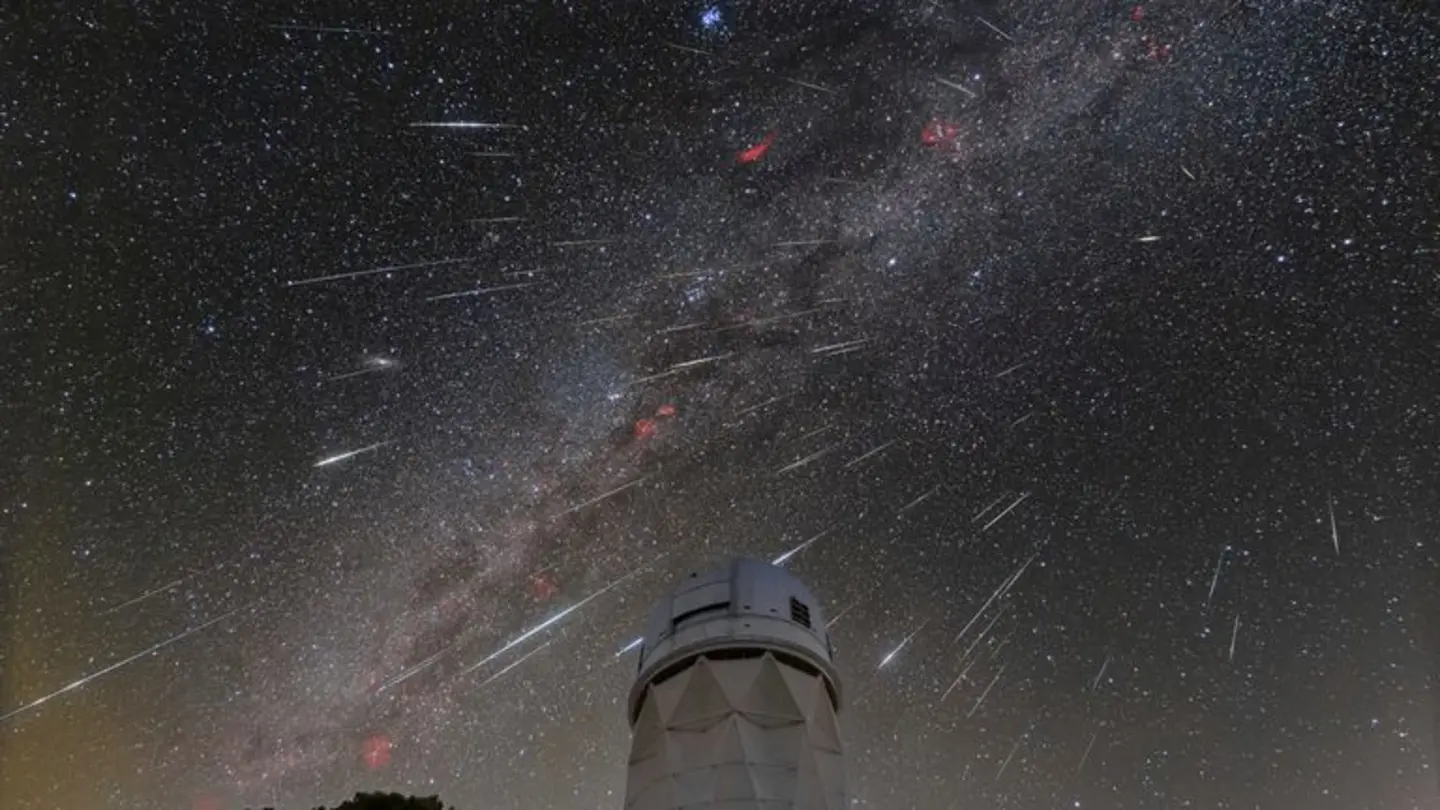
The Geminid meteor shower, one of the most spectacular celestial events of the year, reaches its peak overnight as Earth passes through the debris trail of asteroid 3200 Phaethon.
Observers worldwide are encouraged to seek dark skies to witness the peak activity, expected between December 13 and 14, with the highest rates occurring after midnight.
The Geminids, known for producing bright, multistream meteors with minimal fragmentation, often create vivid fireballs that streak across the night sky.
Unlike many meteor showers that originate from comets, the Geminids derive from rocky debris left by Phaethon, an asteroid-like object first observed in 1971.
This unique origin contributes to the shower’s dense, fast-moving particles, which enter Earth’s atmosphere at approximately 22 kilometers per second.
Astronomy enthusiasts are advised to find locations away from city lights, allow their eyes to adjust to darkness for about 30 minutes, and lie flat on their backs to view as much of the sky as possible.
The new moon phase during the peak will provide optimal viewing conditions, minimizing light pollution.
Scientists from institutions such as NASA and the European Space Agency continue to study the Geminids to better understand asteroid-meteoroid relationships and improve predictive models for future meteor events.
The Geminid shower, visible from both hemispheres, remains a highlight of the winter astronomy calendar, drawing stargazers and researchers alike to observe its fleeting beauty.
Weather permitting, the display promises to be a dazzling conclusion to 2023’s astronomical offerings, offering anyone with clear skies a front-row seat to nature’s most mesmerizing fireworks.
Image Source: Google | Image Credit: Respective Owner