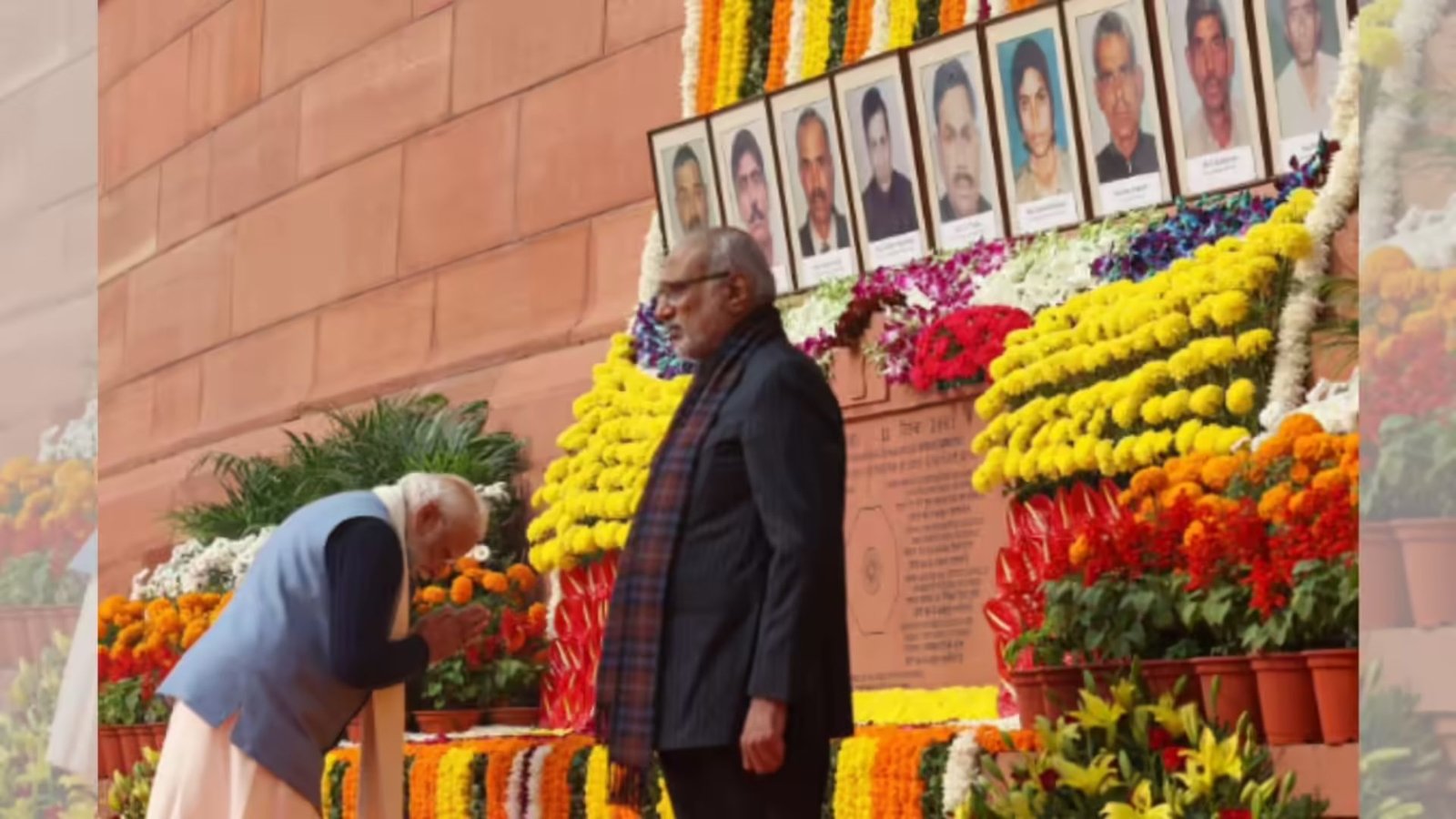
Commemoration of Bravery
On the anniversary of the 2001 Indian Parliament attack, Prime Minister Narendra Modi and Congress leader Rahul Gandhi paid solemn tribute to the fallen heroes who lost their lives defending the nation’s legislative heart. The tragic event, which occurred on December 13, 2001, remains a stark reminder of terrorism’s threat to democratic institutions. Twelve security personnel and five terrorists were killed during the coordinated assault by Jaish-e-Mohammed militants, who breached tight security to storm Parliament.
Both leaders emphasized the sacrifices made to protect India’s democratic framework. Modi, through a social media post, recalled the “unsung bravery” of those who fought back, stating, “Their legacy reminds us that freedom comes at a terrible cost.” Gandhi, visiting the Parliament complex, laid a wreath and met with surviving officers, praising their “courage in the face of unspeakable danger.”
The attack triggered nationwide shockwaves and reshaped India’s security protocols. Parliament sessions were suspended for weeks, and investigations uncovered connections to cross-border terrorism. Memorial services were held across the country, with families of victims sharing stories of loss and resilience. Senior officials reiterated commitments to foiling future threats through intelligence collaboration and advanced surveillance.
Survivors and historians reflect on the day’s broader implications. “It exposed vulnerabilities we thought didn’t exist,” said a former Parliament Security chief. “But it also showed how united we can be in crisis.” The incident catalyzed policy reforms, including stricter anti-terrorism laws and joint operations centers with neighboring nations.
International observers marked the occasion by highlighting India’s endurance. The United Nations Security Council president called the attackers “enemies of peace,” while diplomatic missions observed moments of silence. Educational institutions incorporated the event into curricula to underscore civic duty and national unity.
As India commemorates two decades since the assault, debates persist about balancing security with openness. Experts caution that evolving threats require adaptive strategies. “Technology alone cannot stop determined attackers,” noted a security analyst. “It demands vigilance from every citizen.” The anniversary thus serves not just as mourning but as a call to reinforce collective defense mechanisms.
The government announced plans for a permanent memorial near Parliament, featuring names of all victims and an eternal flame. Cultural events, including plays and documentaries, aim to keep their sacrifice alive in public memory. Analysts suggest such measures help heal national trauma while reinforcing resolve against future attacks.
Image Source: Google | Image Credit: Respective Owner