Breakthrough in Lightning Research
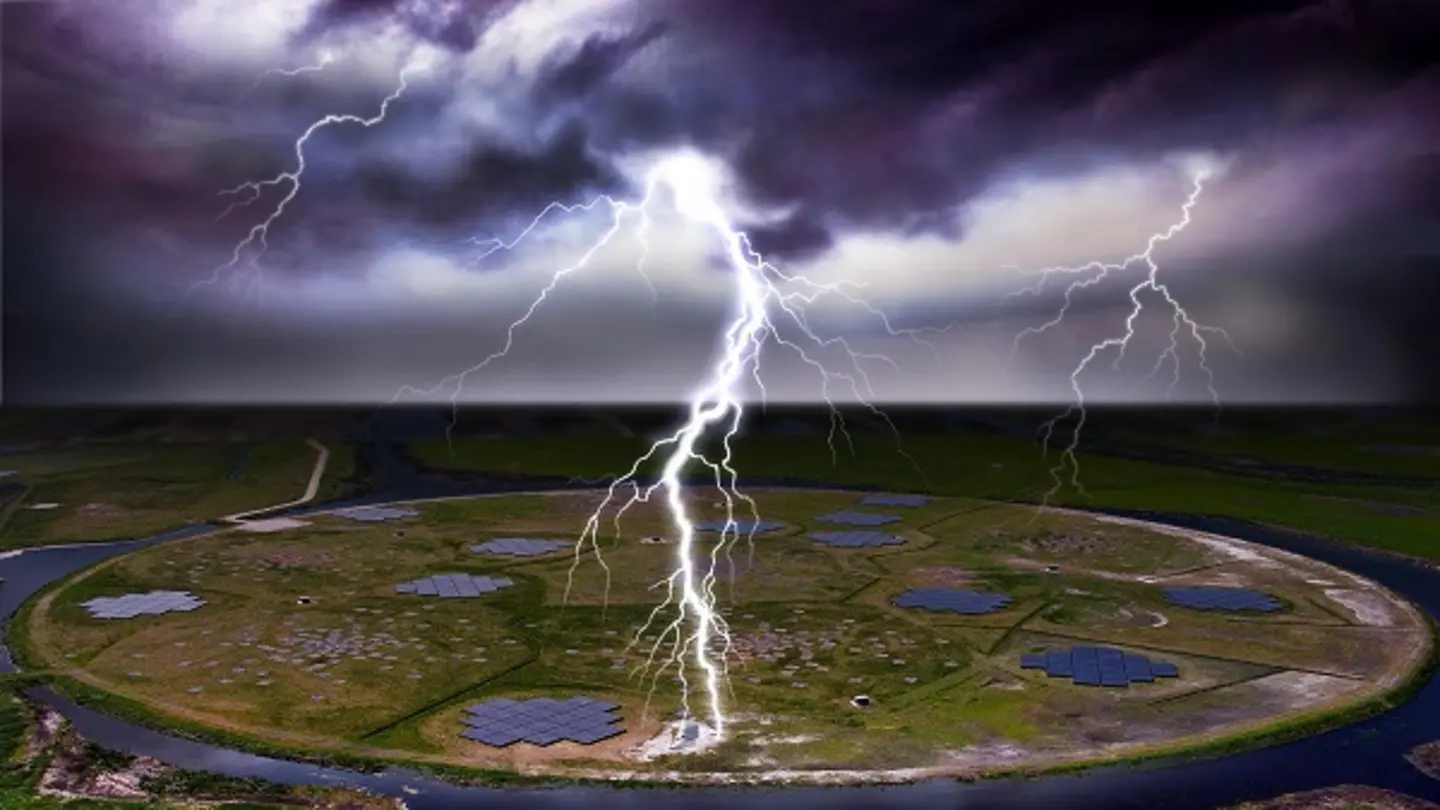
A recent study published in the ESS Open Archive has provided unprecedented insights into the initiation mechanisms of lightning flashes using high-resolution Very High Frequency (VHF) observations from the Low Frequency Array (LOFAR) telescope. Researchers have long struggled to fully understand the earliest stages of lightning formation, but this analysis marks a significant leap forward in atmospheric electricity research.
The study focused on the positive initiating events of several lightning flashes, capturing minute-by-minute developments in storm atmospheres. By analyzing LOFAR’s VHF data, scientists observed the formation of upward-propagating leaders – the first electrical channels that develop before a full lightning strike occurs. These leaders were found to originate from positively charged regions within thunderclouds, challenging some previous assumptions about lightning initiation.
LOFAR, normally used for astronomical observations, proved to be an exceptional tool for atmospheric studies due to its ability to detect faint, high-frequency signals associated with lightning development. The telescope’s unique capabilities allowed researchers to track the three-dimensional evolution of these initiating events with unprecedented spatial and temporal resolution.
Discoveries from this research could have profound implications for weather prediction and safety protocols. Understanding the precise moment when lightning begins could improve early warning systems for severe weather. The study also suggests that positive lightning flashes, which often originate from the top of thunderclouds, may be more complex than previously modeled.
Dr. Anna Mertens, lead author of the study, emphasized the importance of these findings: “Our observations reveal that the initiation of lightning is a much more dynamic process than we previously thought. The ability to observe these events in such detail opens new avenues for improving lightning detection technologies and reducing related hazards.”
The research team collaborated with institutions across Europe, combining data from multiple LOFAR stations to create comprehensive models of lightning development. Future studies may incorporate satellite data and additional ground-based observations to further validate these findings.
While the study provides critical insights into lightning physics, researchers acknowledge challenges in applying these observations to all weather conditions. Different storm environments may produce variations in initiation mechanisms, requiring continued study across diverse atmospheric scenarios.
This work represents a major step forward in atmospheric science, demonstrating how astronomical instruments can be repurposed for Earth observation. As technology advances, scientists hope to develop real-time monitoring systems capable of predicting lightning strikes with greater accuracy, potentially saving lives and protecting infrastructure worldwide.
Image Source: Google | Image Credit: Respective Owner