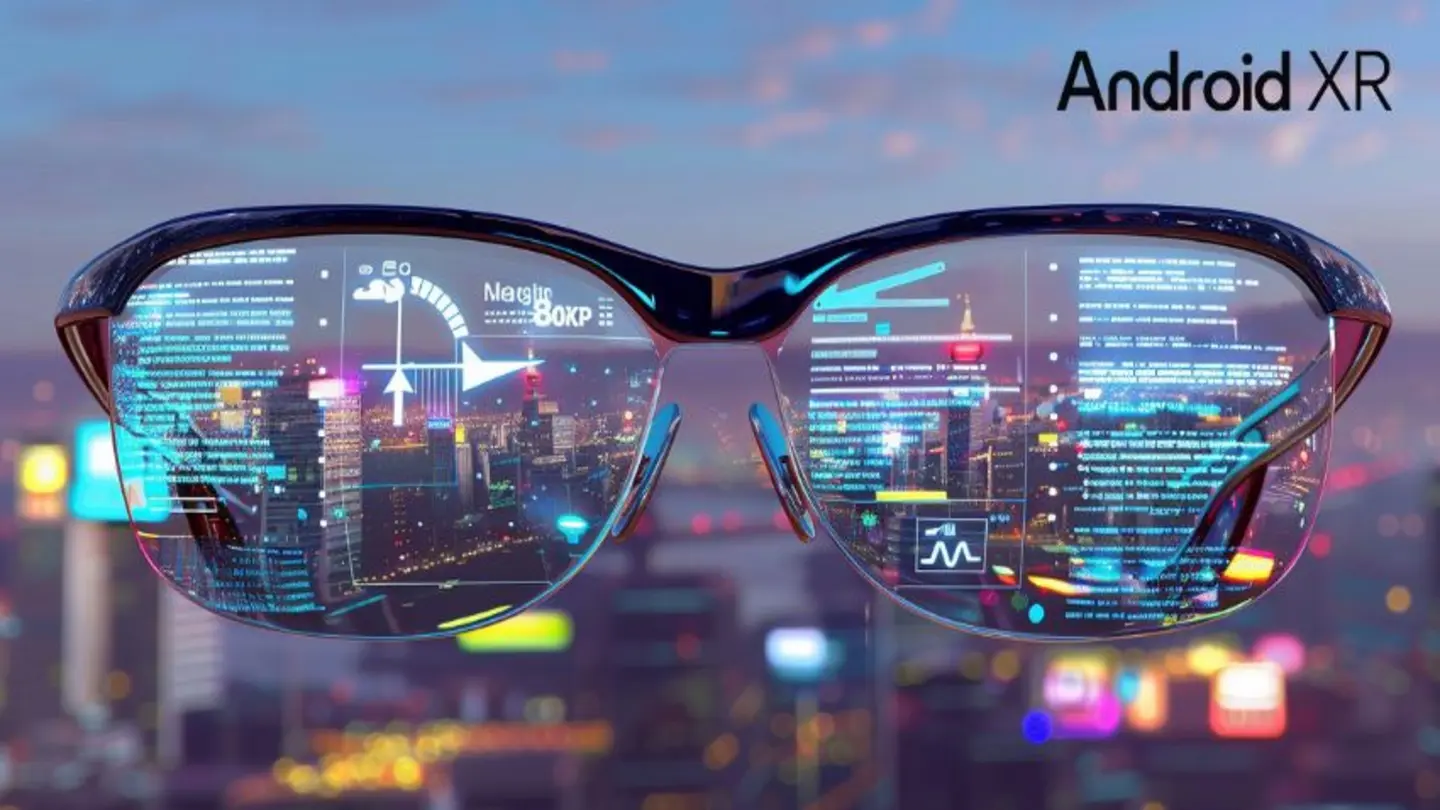
Google has provided an exclusive preview of its highly anticipated Android XR smart glasses, integrating its powerful Gemini AI system. The device promises to redefine the augmented reality (AR) wearable landscape with seamless connectivity and advanced computational capabilities.
The new XR glasses feature a sleek, lightweight design crafted from aerospace-grade materials, ensuring both durability and comfort for extended wear. Equipped with high-resolution micro-OLED displays, users will experience crisp, edge-to-edge visuals that overlay neatly onto the physical world. Advanced sensors including LiDAR, depth cameras, and motion tracking enable precise spatial awareness and interaction with both digital and physical environments.
Gemini integration represents the centerpiece of this innovation. The AI assistant provides context-aware responses, real-time translation across multiple languages, and predictive suggestions based on user behavior patterns. Unique to this implementation, Gemini can enhance media consumption by identifying objects in real-time, offering instant access to related content, and even editing photos on-the-fly through gesture controls.
Battery technology has been significantly improved, offering up to 12 hours of continuous use with fast-charging capabilities. The glasses support wireless charging through a magnetic docking station and maintain connectivity via Wi-Fi 6E and Bluetooth 5.3. Storage options include 128GB and 256GB variants, with expandable memory through cloud integration.
Google engineers emphasized the device’s enterprise potential, showcasing applications in healthcare diagnostics, industrial maintenance, and architectural visualization. Developers will gain access to an expanded SDK with enhanced ARCore capabilities, enabling creation of sophisticated AR applications ranging from virtual try-ons to complex data visualizations.
Pricing details remain under wraps, but industry analysts suggest a competitive stance against Apple’s Vision Pro, potentially positioning the device at $400 USD. Launch specifications indicate compatibility with both Android and select Windows devices, with iOS support promised through upcoming software updates.
The AR market continues its exponential growth, with recent projections suggesting a $70 billion industry by 2027. Google’s entry is timed to capitalize on increasing consumer demand for practical AR solutions beyond gaming applications. Early reviews from tech reviewers highlight the device’s intuitive interface and meaningful improvements over previous AR attempts.
While some concerns remain about eye strain during prolonged use and privacy considerations with always-on cameras, Google assurance strict data encryption protocols and user-controlled permissions. The company plans a phased rollout beginning with select markets in late 2024, with wider global availability scheduled for early 2025.
Image Source: Google | Image Credit: Respective Owner