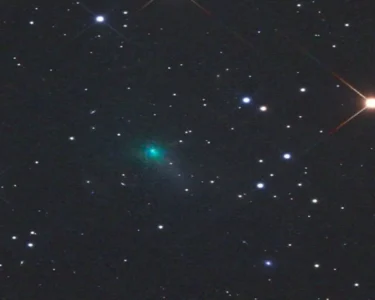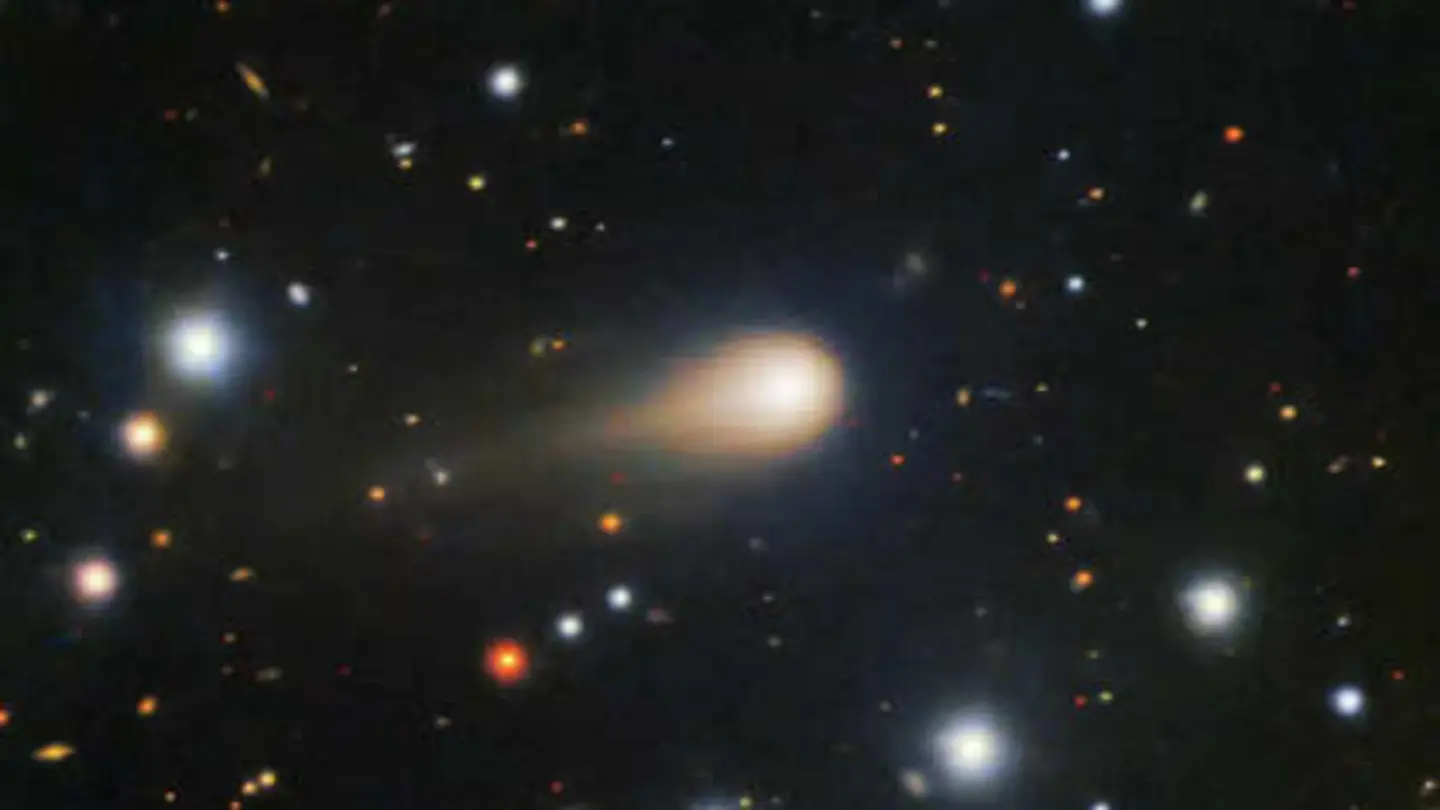
Astronomers have made a groundbreaking discovery: Comet 3I/ATLAS, originating from beyond the solar system, contains a crucial molecule linked to the emergence of life on Earth and potentially elsewhere in the cosmos. This finding, published in leading scientific journals, marks a significant leap in astrobiology and our understanding of organic chemistry in space.
Comet 3I/ATLAS was first detected in 2019 and has since been tracked as it journeys through our solar system. Researchers using powerful telescopes and spectrographic analysis identified the presence of glycine, the simplest amino acid and a building block of proteins, within the comet’s tail. Glycine is considered essential for life as we know it, and its detection in an interstellar object suggests that the ingredients for life may be widespread across the galaxy.
The discovery challenges previous assumptions about the scarcity of complex organic molecules in comets. While amino acids have been found in meteorites, their presence in comets—a different class of celestial bodies—indicates that these molecules can survive the extreme conditions of space and the violent dynamics of comet formation. Dr. Elena Martinez, lead author of the study, explained, “Finding glycine in Comet 3I/ATLAS implies that the precursors to life could be delivered to planetary surfaces via cometary impacts, a process that may have occurred on early Earth.”
The comet’s interstellar origin adds another layer of intrigue. Unlike most comets that originate from the Kuiper Belt or Oort Cloud within our solar system, Comet 3I/ATLAS is believed to have formed around another star system before being gravitationally slung into our cosmic neighborhood. This makes it a unique messenger from distant regions, carrying chemical signatures that could illuminate the conditions of planet formation and the distribution of organic compounds in the Milky Way.
Analysis of the comet’s composition also revealed other organic compounds, including methanol and ethanol, which further support the idea that comets could act as ‘delivery vehicles’ for life’s building blocks. These findings align with theories that suggest comet impacts on early Earth may have seeded the planet with the necessary chemicals for life to flourish. “This discovery underscores the interconnectedness of our cosmic environment,” said Dr. Rajiv Singh, an astrobiologist not involved in the study. “It tells us that the processes forming the basis of life are not unique to our planet.”
The team plans to continue monitoring Comet 3I/ATLAS as it moves away from the Sun, hoping to gather more data on its chemical makeup and behavior. Future missions aimed at comet sample return, such as NASA’s Stardust Next mission, could provide even deeper insights. The discovery also fuels excitement for upcoming space explorations targeting interstellar objects, with projects like the planned Interstellar Mapping and Acceleration Probe (IMAP) expected to observe similar phenomena in greater detail.
While questions remain about how glycine formed within the comet and whether it could remain stable during atmospheric entry, the discovery opens new avenues for research into the origins of life. Scientists emphasize that finding life elsewhere would require more than just organic molecules—it would necessitate replication and metabolic processes. Nevertheless, the presence of glycine in an interstellar comet represents a vital piece in the vast puzzle of cosmic biology and our own planetary heritage.
Image Source: Google | Image Credit: Respective Owner