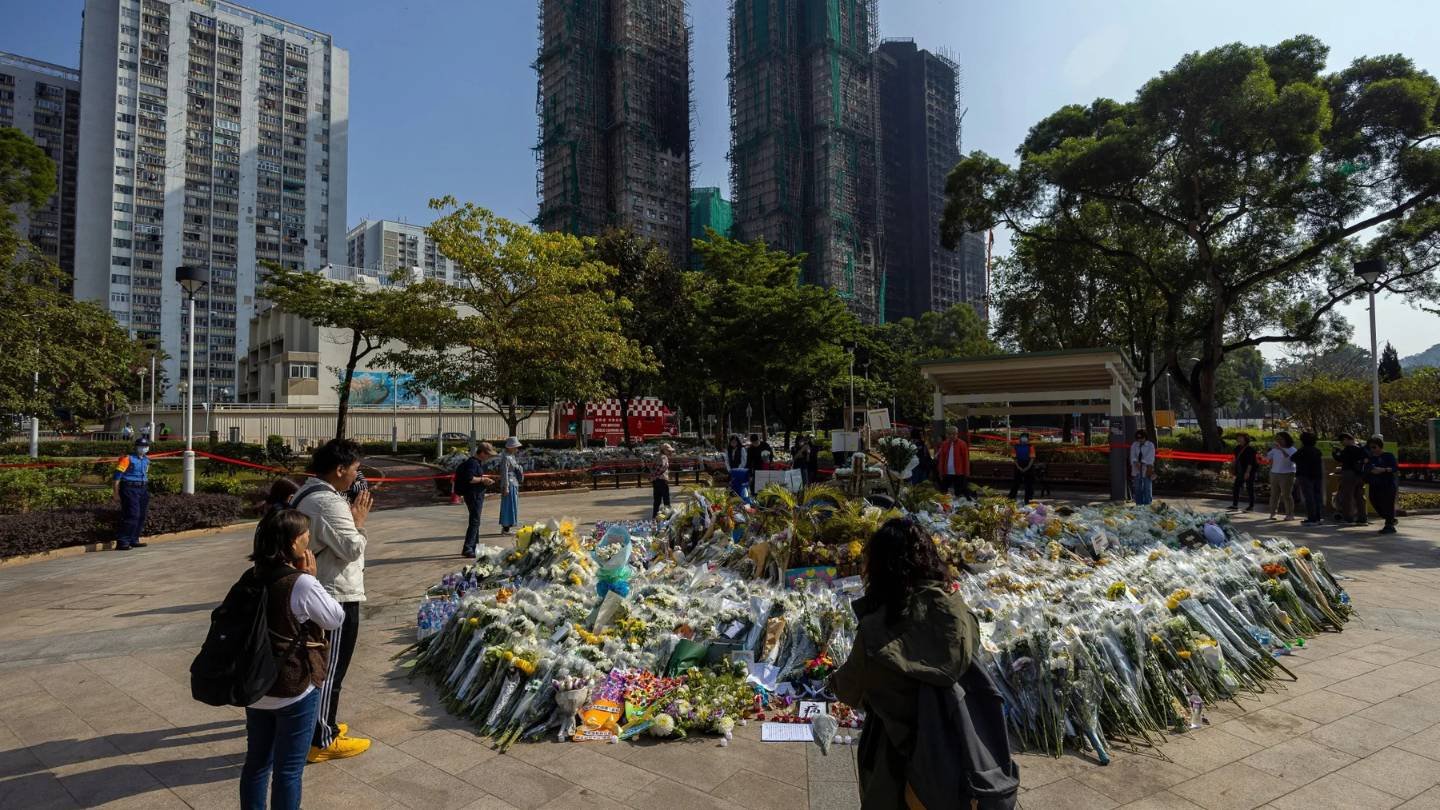
Hong Kong residents are heading to the polls in a Legislative Council (LegCo) election that many view as a barometer of public sentiment—coming just days after a devastating fire in Tai Po left nearly 160 people dead, the city’s worst blaze in more than seven decades.
The election follows an intensive government campaign urging citizens to vote, with authorities promoting the poll through citywide posters, giveaways, public events and entertainment programmes. All 161 candidates running for the 90 LegCo seats have been vetted under Beijing’s “patriots-only” framework introduced in 2021.
Election Takes Place Amid Mourning and Anger
The vote is being held under the shadow of the 26 November inferno at Wang Fuk Court, a cluster of residential towers in northern Hong Kong. The fire, which spread rapidly through scaffolding mesh and external renovation materials that failed to meet safety standards, has so far claimed 159 lives, with the toll expected to rise.
The disaster has prompted widespread grief as well as criticism over building safety regulations and oversight in a city filled with ageing high-rise structures.
Authorities have moved quickly in response—ordering an independent inquiry, arresting 13 people on suspicion of manslaughter, and mandating the removal of non-compliant scaffolding mesh across Hong Kong. But the tragedy has also sparked tension: police detained several individuals pushing for an independent investigation, and an online petition calling for one was taken down.
Government Pushes Voter Turnout Despite Tragedy
The election is the second under the revamped electoral system that significantly reduced the scope for opposition candidates. The last LegCo election recorded a historic low turnout of 30%, reflecting widespread apathy after political reforms that critics say weakened democratic participation.
This year, authorities are offering a variety of incentives to encourage voting, including free museum and swimming pool entry, neighbourhood carnivals, and discount vouchers redeemable after casting a ballot. A themed song and cartoon mascots have also been rolled out to create what officials describe as a “festive atmosphere.”
Chief Secretary Eric Chan said the push aims to highlight the “importance of the election,” even as campaign events were paused following the Tai Po fire.
Public Response Remains Uncertain
Chief Executive John Lee has insisted the election proceed as planned, arguing that new lawmakers will be crucial in supporting reconstruction efforts and reforms after the fire.
However, analysts expect voter turnout to remain low.
John P. Burns, emeritus professor at the University of Hong Kong, noted that many traditional pan-democratic supporters—now largely excluded from the political process—are unlikely to participate. He added that even some pro-establishment voters may stay home due to anger or disappointment over governance issues exposed by the blaze.
Still, the government appears to be banking on a display of public support. Hong Kong’s national security office recently amplified a pro-Beijing commentary urging residents to vote, declaring:
“If you truly love Hong Kong, you should sincerely vote.”
Election Features New Faces in LegCo
About a quarter of current LegCo members are stepping down this year, with some reportedly retiring at Beijing’s urging amid an informal age limit. Among them is veteran politician Regina Ip, the former security chief long known as Hong Kong’s “Iron Lady.”
As Hong Kong simultaneously mourns a national tragedy and holds one of its most tightly managed elections in recent history, the final turnout may offer clues to how much trust and engagement remain within its reshaped political landscape.
Image Source: Google | Image Credit: Respective Owner