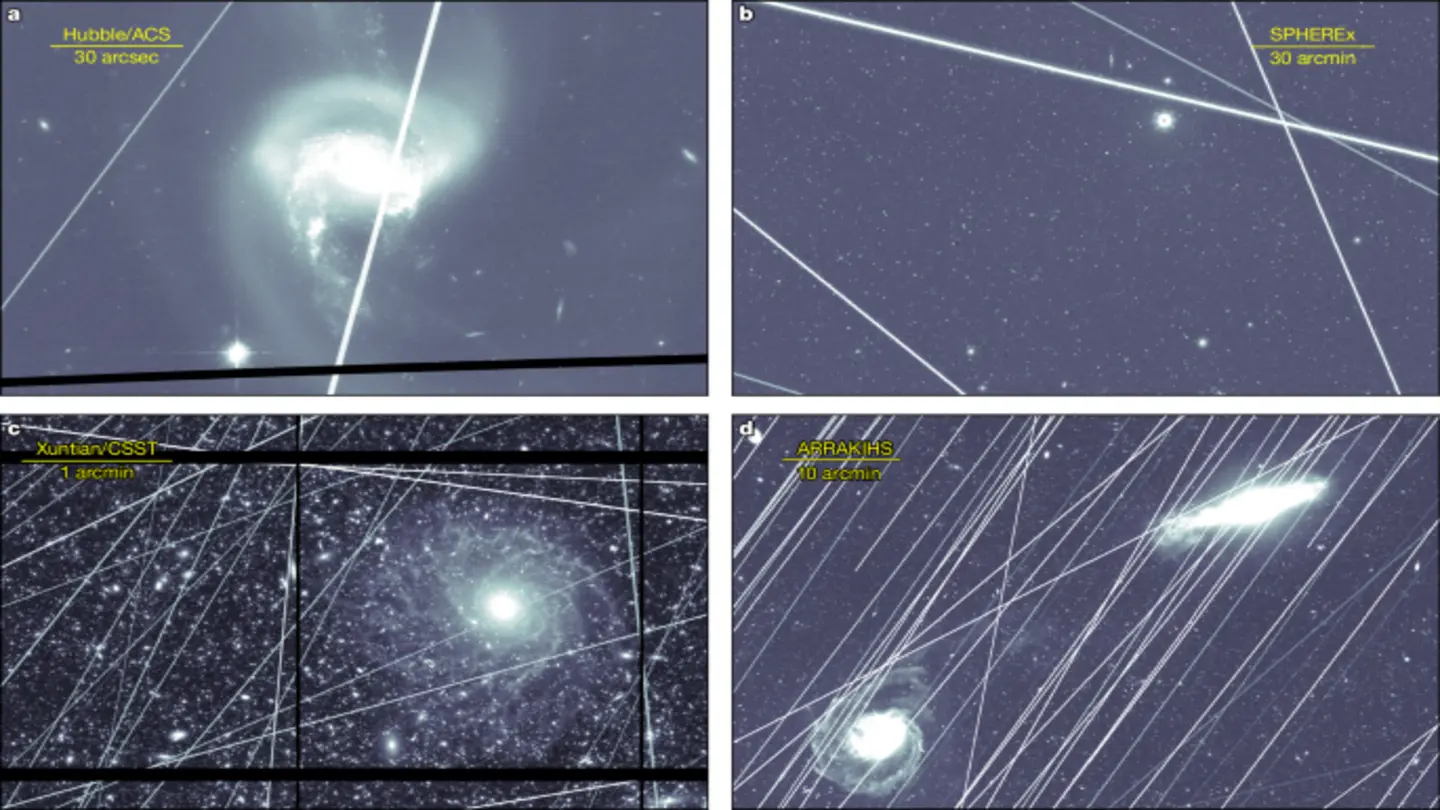
A new study published in The Astrophysical Journal Letters reveals that the increasing number of satellites orbiting Earth poses a significant threat to astronomical observations, particularly those conducted by the Hubble Space Telescope. Researchers found that nearly 40% of Hubble’s images could be affected by satellite trails in the coming years, potentially disrupting scientific research and discoveries.
The Impact on Hubble’s Observations
The study, led by scientists at the European Southern Observatory (ESO), analyzed the potential impact of satellite constellations on Hubble’s observations. They focused on low Earth orbit (LEO) satellites, which are increasingly deployed by companies like SpaceX (Starlink) and Amazon (Kuiper) to provide global internet access. These satellites reflect sunlight, creating streaks of light that can interfere with astronomical images.
Researchers simulated the visibility of these satellite trails across Hubble’s field of view, considering factors such as satellite altitude, orbital inclination, and the telescope’s pointing direction. The results indicated that the risk of satellite interference is substantial, especially for long-exposure observations that are crucial for studying faint and distant objects in the universe. Specifically, the trails can obscure details, introduce artifacts, and complicate data processing, potentially compromising the accuracy and reliability of scientific findings.
Mitigation Strategies
While the study highlights the severity of the problem, it also suggests potential mitigation strategies. One approach involves coordinating satellite deployments to minimize their visibility during astronomical observations. This could involve adjusting satellite orbits or reducing their reflectivity. Another strategy is to develop advanced image processing techniques that can remove satellite trails from astronomical data. These techniques could involve algorithms that identify and subtract the trails, or use multiple images to reconstruct the underlying astronomical scene.
Furthermore, researchers emphasize the importance of international collaboration and regulation to address the growing issue of space debris and light pollution. Establishing guidelines for satellite operators and promoting responsible space practices are crucial to preserving the integrity of astronomical observations. This collaboration could involve sharing data on satellite positions, coordinating observation schedules, and developing shared tools for mitigating the impact of satellite trails.
Broader Implications
The findings of this study have broader implications for the future of astronomy. As satellite constellations continue to expand, ground-based telescopes will also face increasing challenges from light pollution. This could affect a wide range of astronomical research, including studies of exoplanets, galaxies, and the early universe. Therefore, addressing the impact of satellites on astronomical observations is essential for safeguarding humanity’s ability to explore and understand the cosmos. The study serves as a reminder of the need for careful planning and responsible innovation in the space sector to minimize potential conflicts between technological advancements and scientific endeavors. The need for clear regulations and international standards becomes vital for continued discoveries.
Image Source: Google | Image Credit: Respective Owner