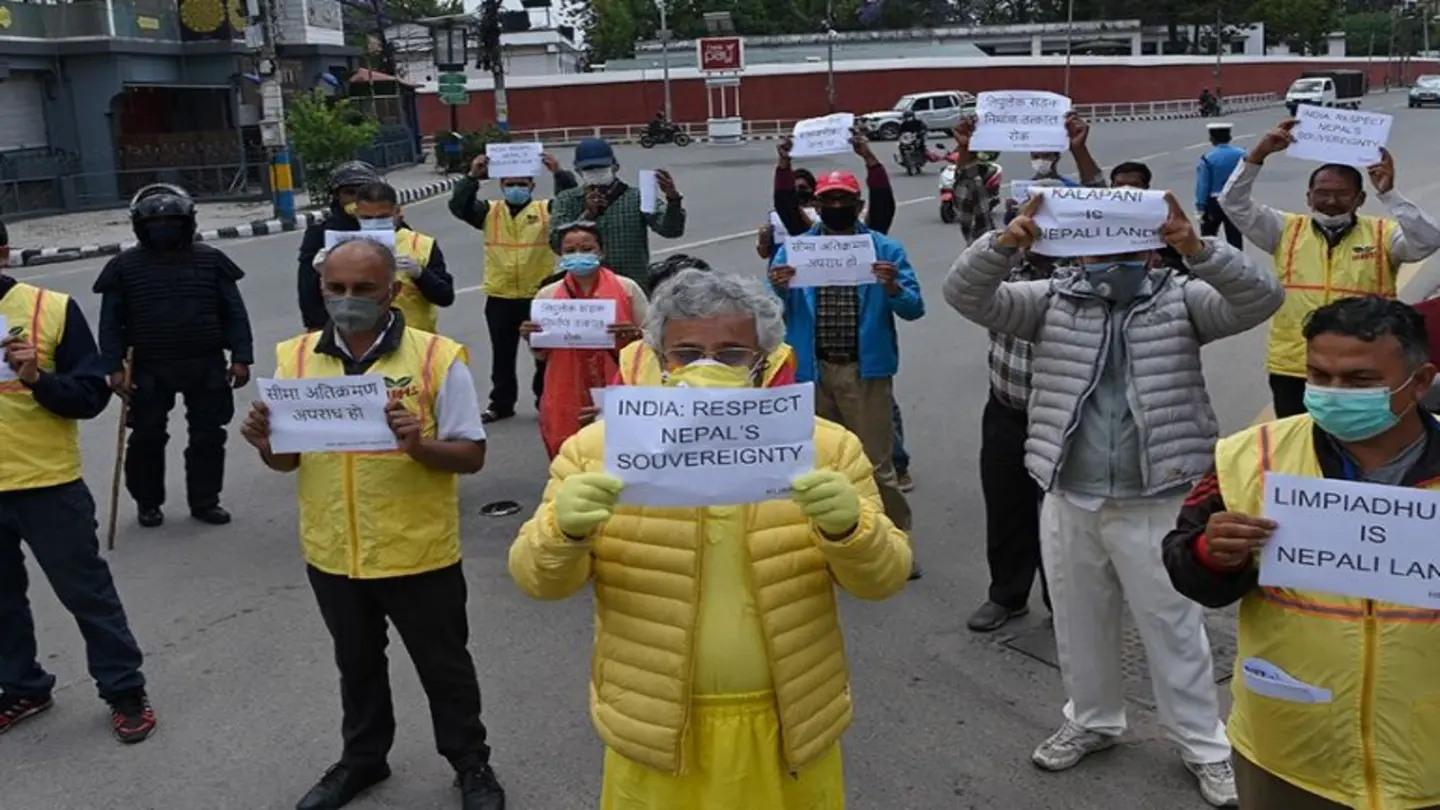
India has firmly rejected Nepal’s claims of territorial expansion as “untenable,” amidst an ongoing disagreement over the use of Indian currency in certain Nepali regions. The statement comes in response to recent maps and official pronouncements from Nepal that have depicted areas claimed by India as part of Nepali territory.
The Ministry of External Affairs spokesperson addressed the issue during a press briefing, emphasizing that India’s position on the matter is clear and consistent. “Such artificial enlargement of territorial claims will not be tenable,” the spokesperson stated, reiterating India’s commitment to resolving the matter through diplomatic dialogue and established mechanisms.
Historical Context of the Dispute
The territorial dispute primarily centers around the Kalapani region, a strategically important area near the India-Nepal-China tri-junction. Nepal claims that the region, including Limpiyadhura and Lipulekh, belongs to them based on historical maps and treaties. India, however, maintains that these areas are within its sovereign territory, citing different interpretations of the same historical documents.
The controversy reignited after India inaugurated a road through Lipulekh pass, which Nepal protested, claiming it violated their sovereignty. The Nepali government subsequently released a revised political map that included the disputed territories, further straining relations between the two countries.
Currency Restrictions and Economic Implications
Adding complexity to the situation is the recent decision by the Nepal Rastra Bank (NRB), Nepal’s central bank, to restrict the use of Indian currency notes of denominations higher than INR 100. This move, ostensibly aimed at regulating the flow of Indian currency within Nepal, has raised concerns about potential disruptions to cross-border trade and tourism, which are vital components of the economic relationship between the two nations.
Analysts suggest that the currency restrictions could be linked to the broader political tensions, with some viewing it as a retaliatory measure against India. However, Nepali authorities maintain that the decision is purely economic and intended to promote financial stability within the country.
Diplomatic Efforts and Future Prospects
Despite the ongoing disagreements, both India and Nepal have expressed a desire to resolve the issues through peaceful negotiations. Diplomatic channels remain open, and discussions are expected to continue at various levels to find mutually acceptable solutions. The strong cultural and historical ties between the two countries underscore the importance of maintaining a stable and cooperative relationship, despite the current challenges. The emphasis remains on engaging in constructive dialogue to address concerns and build a foundation for future collaboration and mutual respect.
Image Source: Google | Image Credit: Respective Owner