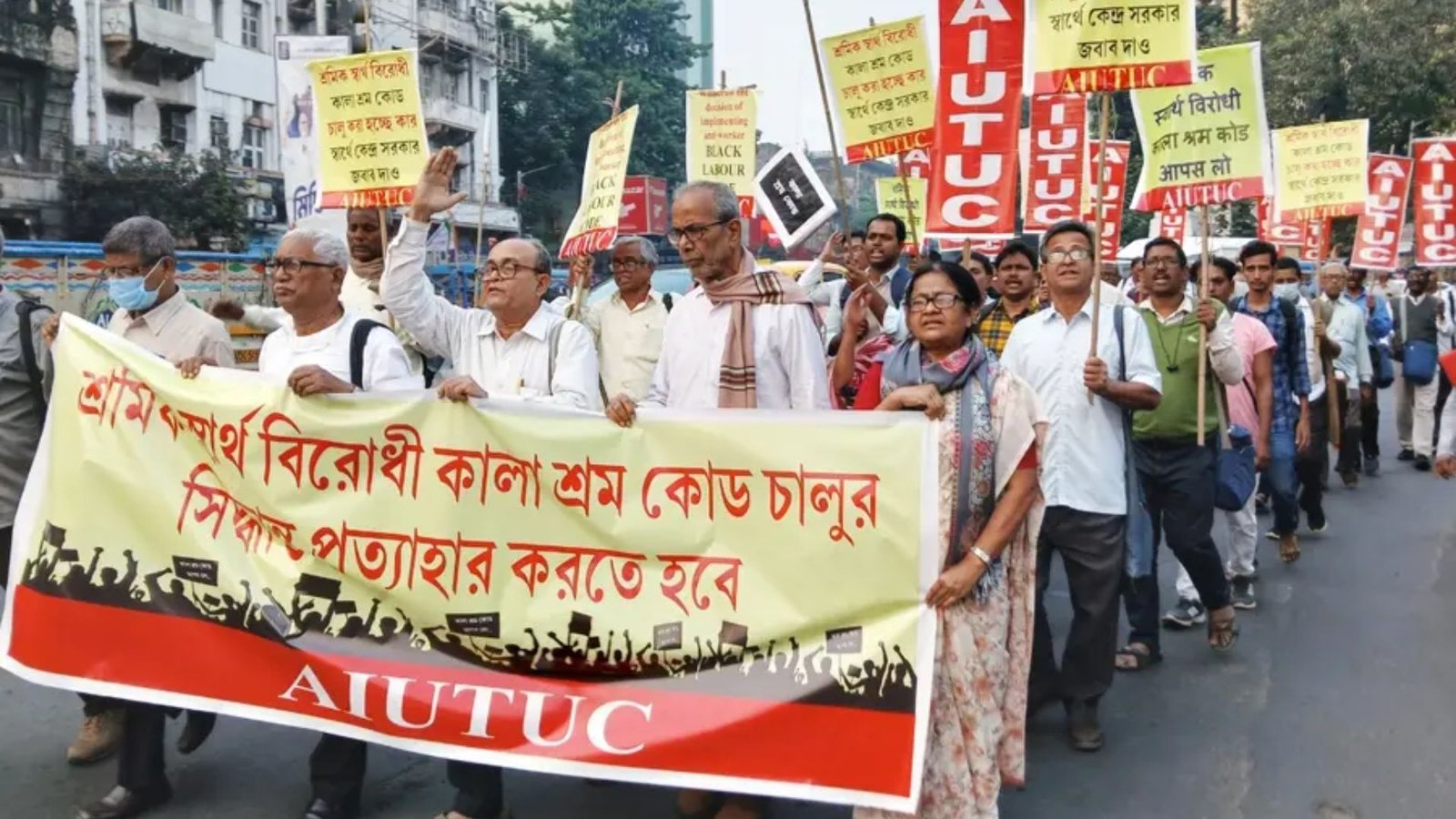
Major trade unions in India are mobilizing for nationwide protests against the recently implemented labor codes, raising concerns over worker rights and social security provisions. The unions contend that the new codes, consolidated from numerous existing labor laws, erode hard-won protections for workers and favor employers. The planned demonstrations aim to pressure the government to reconsider the legislation and address the unions’ grievances. The coordinated action highlights the growing discontent among organized labor groups regarding the direction of labor reforms in the country.
Key Concerns of the Unions
The primary concerns revolve around the perceived dilution of worker protections related to job security, wages, social security, and collective bargaining rights. Unions argue that the new codes make it easier for companies to hire and fire workers, potentially leading to increased job insecurity and exploitation. They also fear that the codes could weaken the power of trade unions and make it more difficult for workers to negotiate for better wages and working conditions. The unions are particularly critical of provisions that they believe undermine the existing social security net for workers, leaving them vulnerable in times of economic hardship or unemployment.
Impact on the Indian Economy
The labor codes are intended to streamline labor regulations, promote ease of doing business, and attract investment. The government argues that the reforms will create more jobs and boost economic growth. However, trade unions claim that the codes will lead to a decline in worker welfare and could exacerbate social inequality. The protests could potentially disrupt industrial activity and impact production in key sectors of the economy. The outcome of the protests and the government’s response will be crucial in determining the future of labor relations in India.
Government’s Stance
The government maintains that the labor codes are designed to modernize labor laws, enhance transparency, and promote flexibility in the labor market. It asserts that the codes will benefit both employers and employees by creating a more conducive environment for economic growth and job creation. The government has also emphasized that the codes include provisions for social security and worker welfare, and that it is committed to protecting the rights of workers. However, the trade unions remain unconvinced and are demanding significant revisions to the codes to address their concerns.
Future Outlook
The planned nationwide protests represent a significant challenge for the government. The success of the protests will depend on the level of participation and the ability of the unions to mobilize widespread support. The government’s response to the protests will be crucial in shaping the future of labor relations in India. A failure to address the concerns of the trade unions could lead to further unrest and could undermine the government’s efforts to promote economic growth and development. The situation remains fluid, and the outcome will have significant implications for workers, employers, and the Indian economy as a whole.
Image Source: Google | Image Credit: Respective Owner