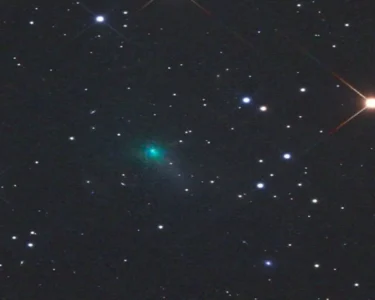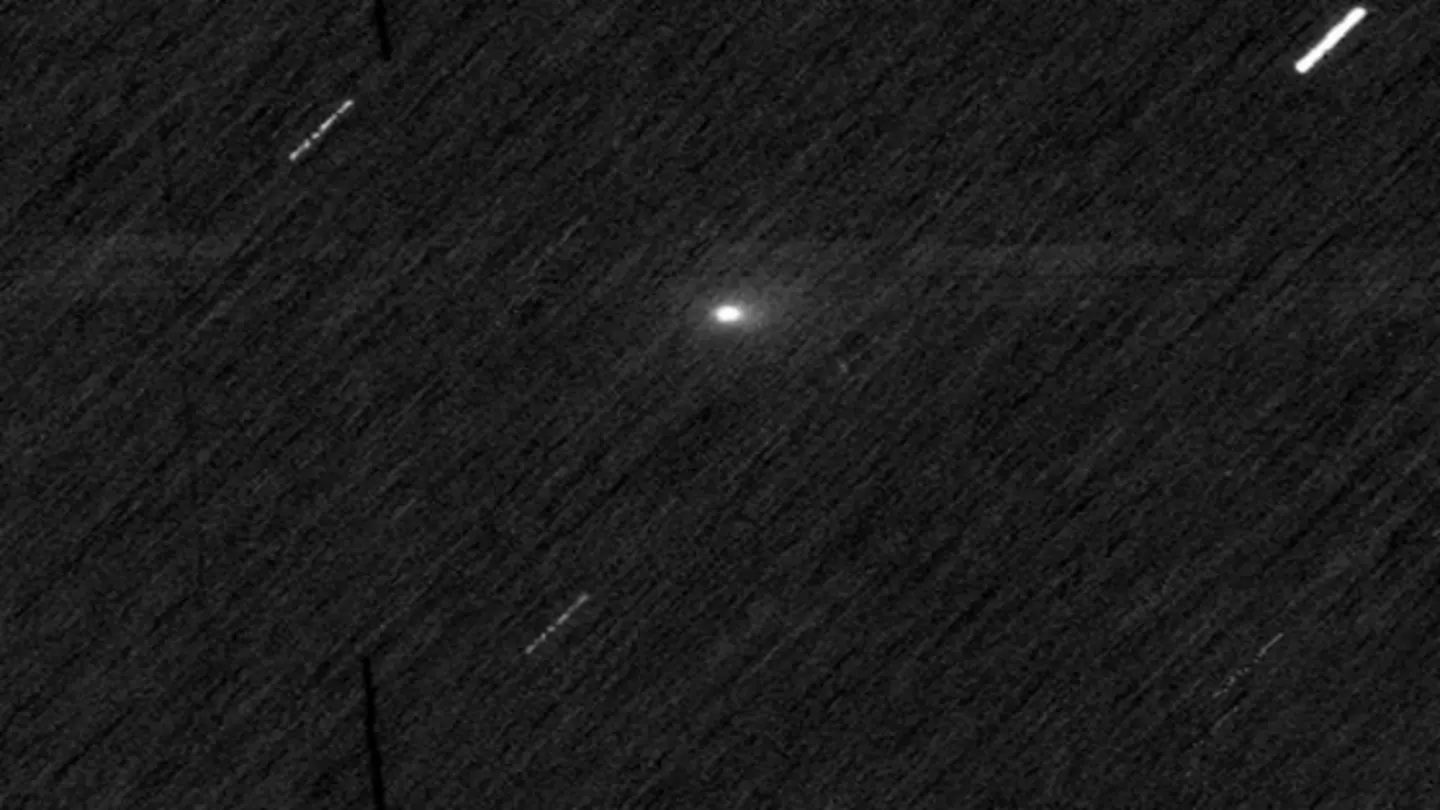
NASA and the Indian Space Research Organisation (ISRO) are closely monitoring the interstellar comet 3I/Atlas as it races past Mars at a staggering speed of 130,000 miles per hour. This celestial visitor, originating from outside our solar system, offers a rare opportunity for scientists to study the composition and behavior of objects from distant star systems. The comet’s trajectory and speed make this flyby a unique event, providing valuable data that could unlock secrets about the formation of planetary systems beyond our own.
The combined efforts of NASA and ISRO highlight the global collaboration in space exploration and research. By utilizing their respective resources and expertise, the two agencies are maximizing the scientific return from this fleeting encounter. Data collected during the observation period will be analyzed by researchers worldwide, contributing to a broader understanding of interstellar objects and their interaction with our solar system.
Significance of Interstellar Comets
Interstellar comets like 3I/Atlas are incredibly rare. They provide a sample of the materials and conditions present in other star systems. Studying their composition can reveal the building blocks of planets and the chemical processes that occur in different regions of the galaxy. The extreme speeds at which these comets travel also present unique challenges and opportunities for observation. Tracking their paths and predicting their behavior requires advanced modeling and observational techniques.
The current flyby of 3I/Atlas past Mars is particularly interesting because it allows scientists to observe the comet’s interaction with the Martian atmosphere. The comet’s passage may cause temporary changes in the atmosphere, providing insights into the planet’s atmospheric composition and dynamics. Furthermore, the proximity to Mars allows for high-resolution imaging and spectral analysis, revealing details about the comet’s nucleus and coma.
NASA’s advanced telescopes and ISRO’s space-based observatories are playing a crucial role in gathering data on 3I/Atlas. The agencies are coordinating their observations to obtain a comprehensive dataset, covering various wavelengths and angles. This coordinated approach ensures that no valuable information is missed during the comet’s brief visit. The data collected will be used to refine models of comet behavior and to improve our understanding of the interstellar environment.
This collaboration showcases the power of international cooperation in advancing scientific knowledge. By pooling resources and expertise, NASA and ISRO are pushing the boundaries of our understanding of the universe and inspiring future generations of scientists and engineers. The study of interstellar comets like 3I/Atlas is a testament to the human curiosity and the relentless pursuit of knowledge about our place in the cosmos. As 3I/Atlas continues its journey through our solar system, the data gathered by NASA and ISRO will undoubtedly provide new insights and fuel future research in the field of astrophysics.
Image Source: Google | Image Credit: Respective Owner