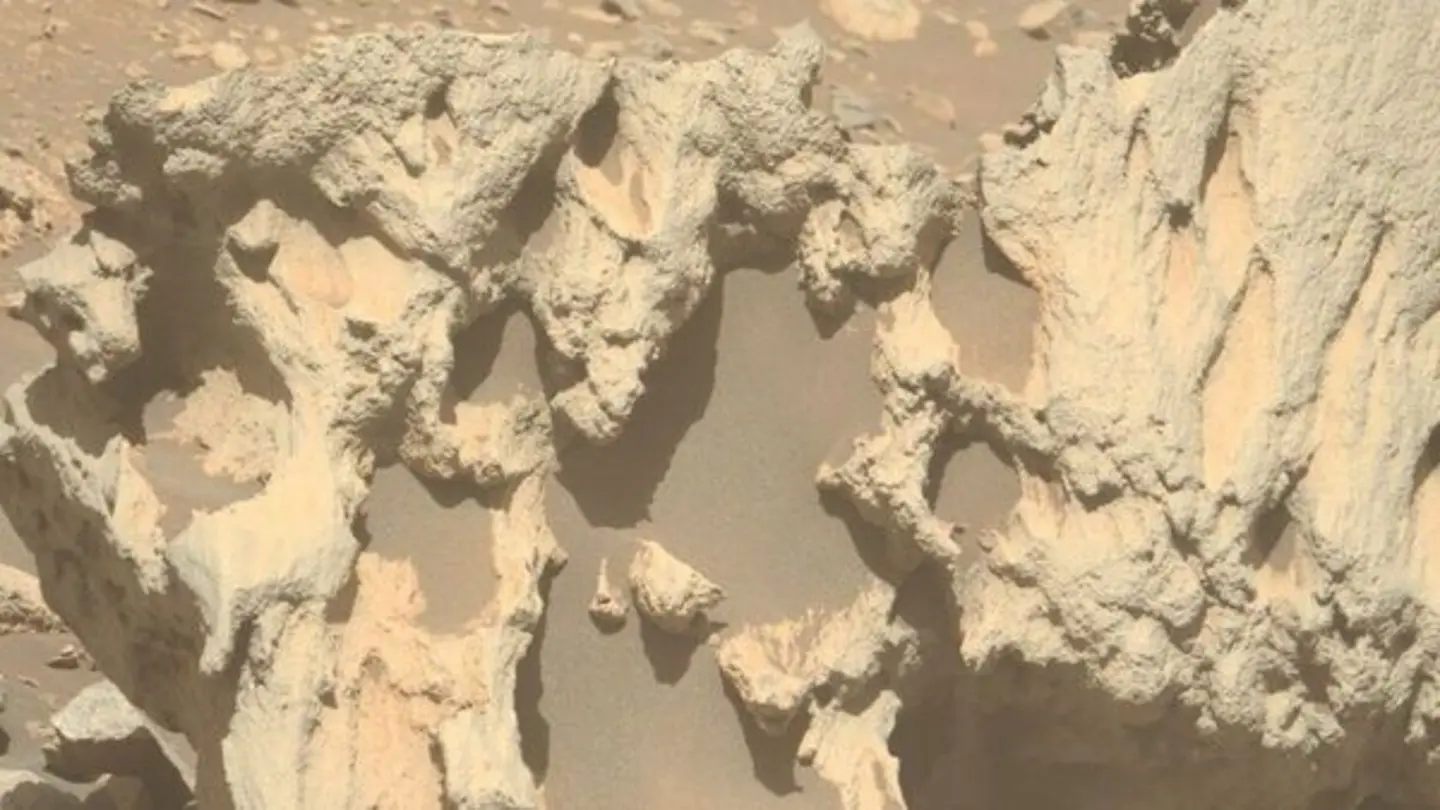
NASA’s Perseverance rover has made a fascinating discovery on Mars: an unusual iron-nickel rock, sparking intrigue among scientists about its origin. The rover, exploring the Jezero Crater, a region believed to have once been a lake, spotted the metallic rock, which stands out from the surrounding Martian landscape. Its composition and appearance suggest that it may be a meteorite, a visitor from beyond the Red Planet.
The Perseverance team is analyzing data gathered by the rover’s instruments to determine the rock’s exact composition and origin. Iron-nickel meteorites are relatively common in our solar system, originating from the cores of asteroids or shattered planets. If confirmed as a meteorite, this discovery would provide valuable insights into the early solar system and the types of materials that bombarded Mars billions of years ago.
A Martian Mystery
The unique appearance of the rock, with its smooth, metallic surface, contrasts sharply with the typically reddish, dusty Martian rocks. This contrast is what initially caught the attention of the rover’s cameras. Scientists believe the rock’s metallic composition is responsible for its resistance to the weathering processes that have shaped the Martian surface over eons.
The Jezero Crater, Perseverance’s primary exploration target, is a prime location for such discoveries. As an ancient lakebed, it may have accumulated materials from various sources, including meteorites. The rover is equipped with advanced tools to analyze the chemical composition and structure of rocks, providing critical information about their history and origin.
Perseverance’s mission is not solely focused on finding past life on Mars; it also includes studying the planet’s geology and climate history. Discoveries like this iron-nickel rock contribute significantly to our understanding of Mars’ evolution and its relationship with the broader solar system. By studying meteorites, scientists can also learn about the conditions in the early solar system, the formation of planets, and the potential for delivering organic molecules to early Earth and other planets.
The rover is currently collecting samples of Martian rocks and soil, which will eventually be returned to Earth for more detailed analysis. These samples, including potentially fragments of meteorites, will provide unprecedented insights into the composition and history of Mars. The Perseverance mission marks a significant step in our quest to understand our place in the universe and the potential for life beyond Earth. Continued analysis and further discoveries are eagerly awaited as Perseverance continues its journey across the Martian landscape.
Image Source: Google | Image Credit: Respective Owner