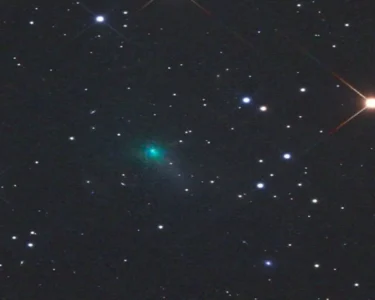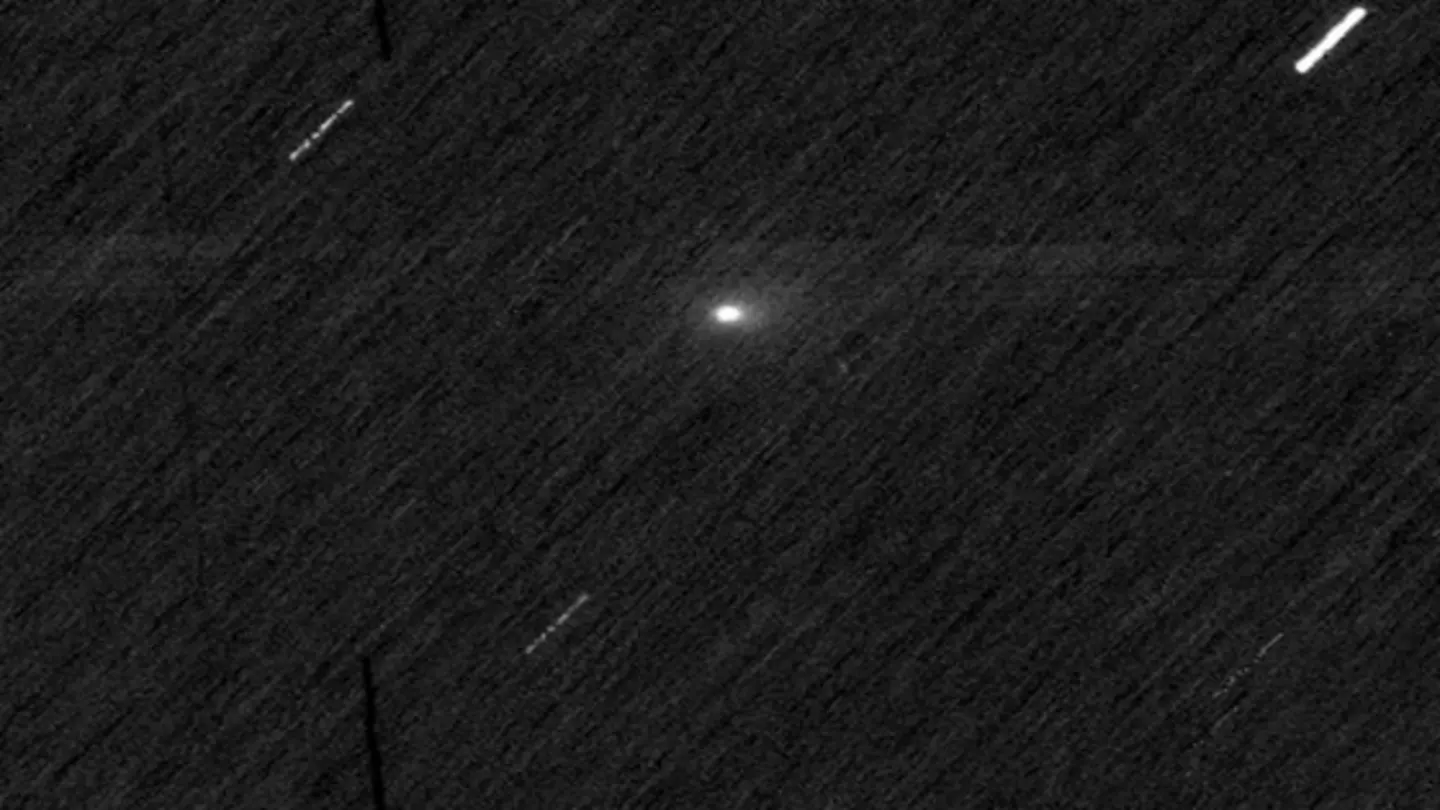
NASA has released captivating images of interstellar comet 3I/ATLAS, offering a rare glimpse into a celestial wanderer from beyond our solar system. The comet, officially designated C/2019 Q4 (Borisov), has fascinated astronomers since its discovery in 2019, providing valuable insights into the composition and origins of objects formed around other stars.
Comet’s Journey and Composition
Comet 3I/ATLAS embarked on its journey from another star system, eventually crossing into our solar neighborhood. As it approached the sun, solar radiation caused its icy nucleus to sublimate, creating a glowing coma and a trailing tail of dust and gas. These features, beautifully captured in NASA’s images, offer clues about the comet’s chemical makeup and the conditions in its birth environment.
The images, obtained using advanced telescopes and instruments, reveal intricate details of the comet’s structure and activity. Scientists analyze the color and intensity of light emitted by the coma and tail to determine the presence of various molecules, such as water, carbon monoxide, and organic compounds. This information helps them understand the building blocks of planetary systems and the potential for life beyond Earth.
Significance of Interstellar Comets
Interstellar comets like 3I/ATLAS are rare and valuable objects of study. They provide a unique opportunity to sample material from other star systems without having to travel vast interstellar distances. By analyzing these comets, scientists can gain insights into the diversity of planetary environments and the processes that shape them.
The discovery of interstellar objects also raises questions about the exchange of material between star systems. It is possible that comets and asteroids can be ejected from their home systems and eventually captured by other stars, potentially seeding new planetary systems with water and organic molecules. This process, known as panspermia, could have implications for the origin and distribution of life in the universe.
NASA’s ongoing observations of comet 3I/ATLAS and other interstellar objects are crucial for advancing our understanding of the cosmos. These studies help us to unravel the mysteries of planetary formation, the chemical evolution of interstellar space, and the potential for life beyond our solar system. The images released by NASA serve as a reminder of the vastness and complexity of the universe and the importance of continued exploration and discovery.
The data collected from 3I/ATLAS has allowed scientists to compare its composition to comets formed within our own solar system. These comparisons have revealed both similarities and differences, suggesting that the building blocks of comets may vary depending on their origin. Further research is needed to fully understand the implications of these findings.
The study of interstellar comets is a relatively new field, but it holds immense potential for expanding our knowledge of the universe. As more of these objects are discovered and analyzed, we can expect to gain even deeper insights into the formation and evolution of planetary systems and the potential for life beyond Earth.
Image Source: Google | Image Credit: Respective Owner