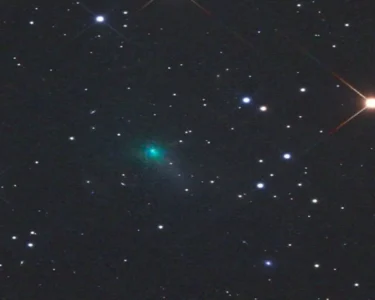
NASA’s spacecraft have captured remarkable images of an interstellar comet, potentially older than our Solar System, offering scientists unprecedented insights into the early universe. The comet, designated 2I/Borisov, was discovered in 2019 and is only the second interstellar object ever observed passing through our solar system. Its unique composition and trajectory have made it a subject of intense study by astronomers worldwide.
Observational Highlights
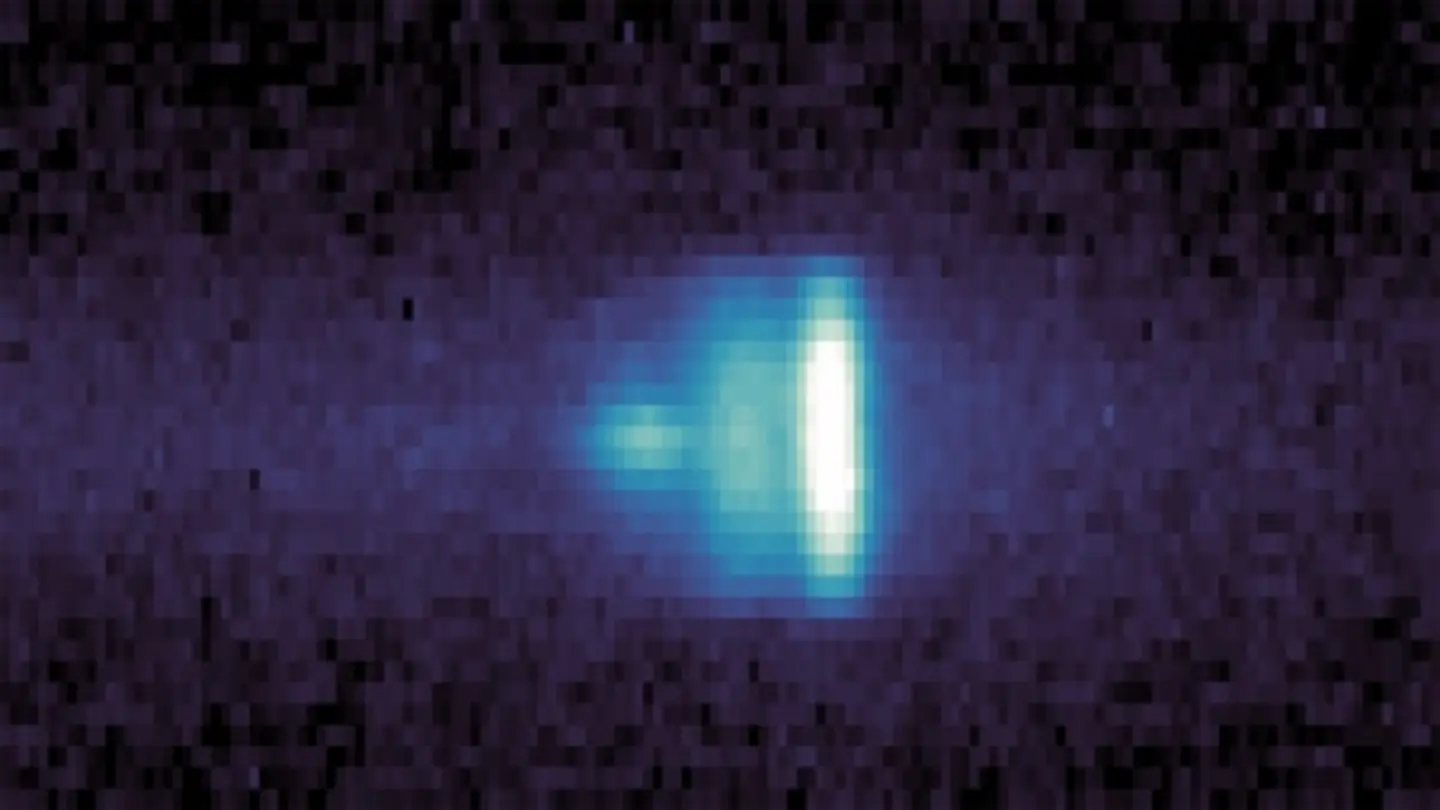
The Hubble Space Telescope and other NASA observatories have provided detailed views of Comet 2I/Borisov, revealing its structure and behavior as it interacts with the Sun’s radiation and solar wind. These images show the comet’s nucleus, coma (the cloud of gas and dust surrounding the nucleus), and tail, which stretches millions of kilometers into space. The observations have allowed scientists to determine the comet’s size, shape, and chemical composition.
One of the most significant findings is that 2I/Borisov has a high concentration of carbon monoxide, a molecule rarely found in comets within our Solar System. This suggests that the comet formed in a region of space with a different chemical environment than our own, possibly around a distant star or in a molecular cloud far from any star.
Implications for Understanding the Early Universe
The discovery and study of 2I/Borisov offer a unique opportunity to learn about the conditions that existed in the early universe. Comets are considered to be remnants of the formation of planetary systems, and their composition reflects the environment in which they formed. By studying interstellar comets like 2I/Borisov, scientists can gain insights into the diversity of planetary systems and the processes that govern their formation.
“This is a groundbreaking discovery that allows us to study a piece of another star system up close,” said Dr. Amy Mainzer, a planetary scientist at the University of Arizona. “The data we are collecting on 2I/Borisov will help us better understand the chemical building blocks of planetary systems and the conditions that lead to the formation of habitable worlds.”
The images captured by NASA’s spacecraft are not only scientifically valuable but also visually stunning, showcasing the beauty and complexity of the universe. The study of 2I/Borisov is ongoing, and scientists hope to continue to learn more about this fascinating object as it continues its journey through our solar system and eventually heads back into interstellar space. This research provides invaluable clues to understanding the origins of our solar system and potentially life itself. The analysis of its unique composition could revolutionize our understanding of planet formation and the distribution of elements across the galaxy. Its fleeting visit serves as a celestial messenger, bringing insights from the depths of space and time.
Future missions may even be designed to intercept interstellar objects like 2I/Borisov, allowing for even more detailed studies. For now, astronomers will continue to observe and analyze the data collected from this unique visitor, piecing together the story of its origin and journey through the cosmos.
Image Source: Google | Image Credit: Respective Owner