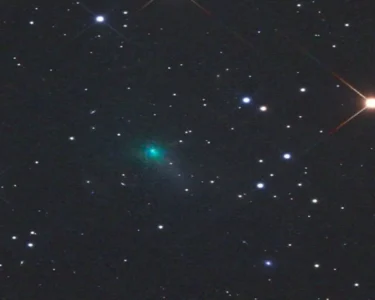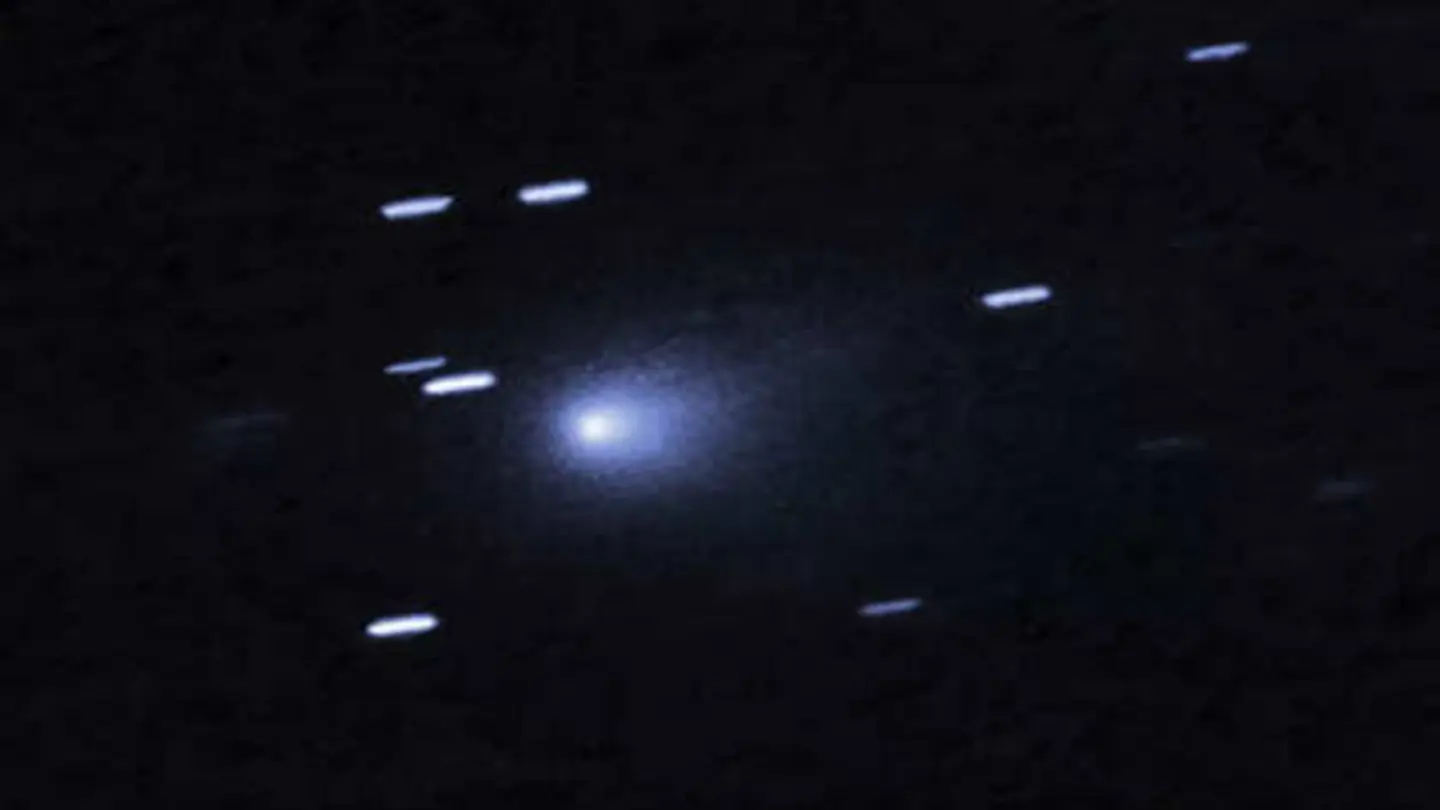
Scientists are once again intrigued by the interstellar comet 3I/ATLAS, a cosmic visitor whose recent survival after passing behind the Sun has challenged existing models of cometary behavior. The comet’s unexpected resilience is prompting a re-evaluation of the composition and structure of these icy wanderers from beyond our solar system.
3I/ATLAS was first discovered in 2017 and quickly gained attention due to its hyperbolic orbit, indicating its origin outside our solar system. Initial observations suggested a relatively fragile object, leading astronomers to predict its disintegration during its close approach to the Sun. However, the comet not only survived but also exhibited unusual activity, further deepening the mystery.
Unexpected Survival
The survival of 3I/ATLAS raises questions about the physical properties of interstellar comets. Unlike comets originating within our solar system, interstellar comets have experienced different environmental conditions and may possess distinct compositions. The ability of 3I/ATLAS to withstand the intense heat and solar radiation suggests a more robust structure, possibly due to a higher concentration of refractory materials or a unique ice composition. Studying such comets provides valuable insights into the building blocks of planetary systems beyond our own.
Researchers are now analyzing data collected during the comet’s perihelion passage, the point of closest approach to the Sun, to better understand the mechanisms behind its survival. Spectroscopic observations are being used to determine the comet’s chemical composition, while advanced imaging techniques are revealing details about its nucleus and coma, the cloud of gas and dust surrounding the nucleus. These investigations aim to identify the factors that contributed to the comet’s unexpected resilience.
Implications for Cometary Science
The case of 3I/ATLAS highlights the limitations of current cometary models and underscores the need for further research into the diversity of cometary objects. Interstellar comets, like 3I/ATLAS, offer a unique opportunity to study the materials and processes that shaped planetary systems throughout the galaxy. By comparing these objects with comets from our own solar system, scientists can gain a broader perspective on the formation and evolution of planetary systems.
The ongoing study of 3I/ATLAS is expected to yield new insights into the nature of interstellar objects and their role in the cosmic ecosystem. The comet’s survival is not just a scientific curiosity but also a reminder of the vast unknown and the potential for groundbreaking discoveries in the field of cometary science. Future missions and observations are planned to further investigate interstellar comets and unlock the secrets they hold about the origins of planetary systems and the building blocks of life.
Image Source: Google | Image Credit: Respective Owner