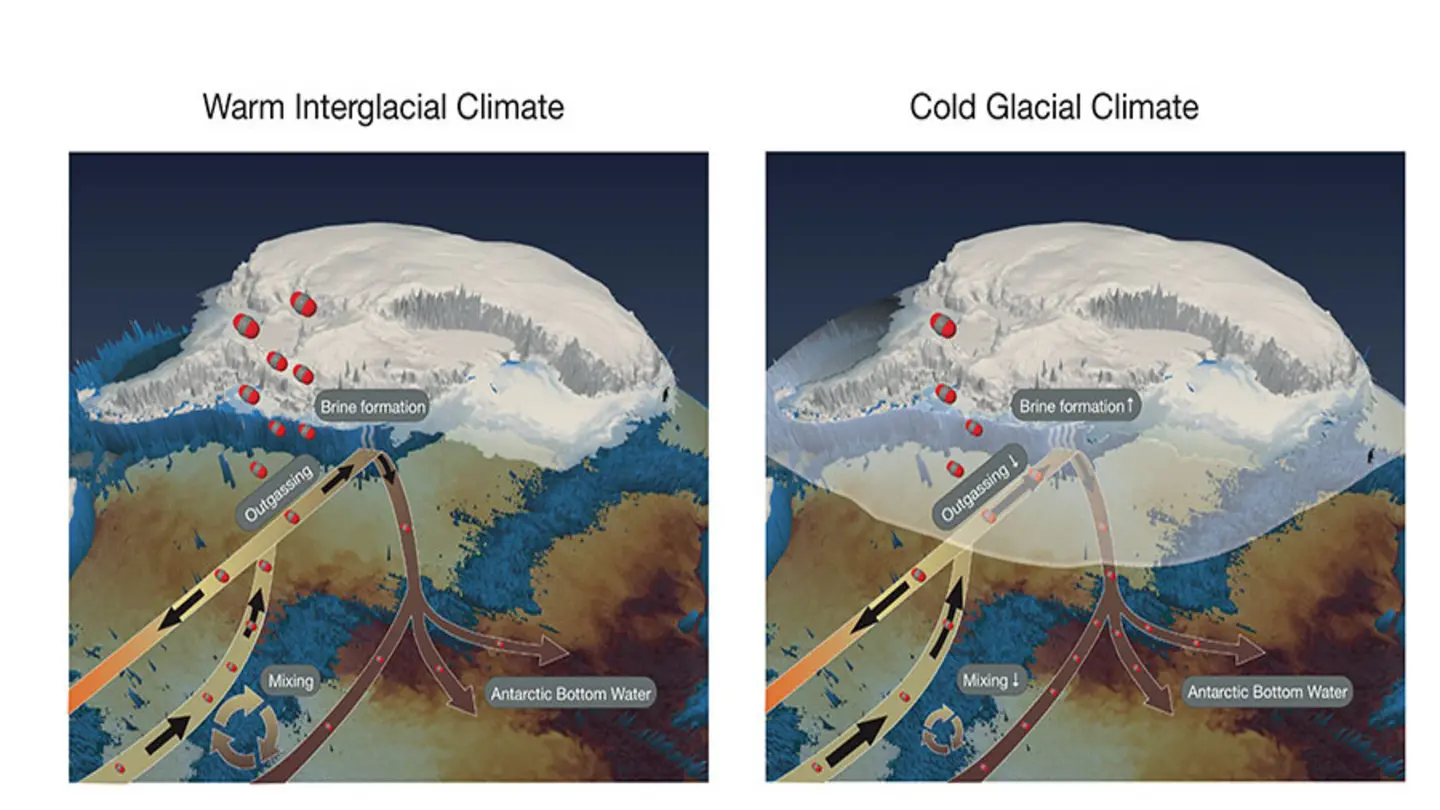
A new study published in the ESS Open Archive investigates the contribution of young ice formation processes to the accurate simulation of Antarctic sea ice mass budget. Sea ice plays a crucial role in the Earth’s climate system, influencing ocean circulation, albedo, and gas exchange. The Antarctic sea ice cover, in particular, exhibits unique characteristics and dynamics, making its accurate representation in climate models essential for reliable climate projections.
The research focuses on the processes involved in the formation of young sea ice, which differs significantly from older, thicker ice in terms of its physical properties and behavior. Young ice is more saline, has a lower albedo, and is more susceptible to melting. Consequently, accurately simulating its formation, evolution, and interaction with the surrounding environment is critical for capturing the overall mass balance of Antarctic sea ice.
The study employs a sophisticated sea ice model that incorporates detailed parameterizations of young ice formation processes. These parameterizations account for factors such as frazil ice formation, snow ice formation, and the evolution of ice salinity and density. By comparing model simulations with and without these detailed parameterizations, the researchers quantify the contribution of young ice formation to the overall sea ice mass budget.
Model Enhancements and Data Analysis
The research underscores the importance of improving the representation of these processes in climate models to reduce uncertainties in projections of future sea ice changes. The model enhancements specifically target the complex interactions between atmosphere, ocean and ice, which are key to the accurate formation and evolution of young ice. Data from field observations in the Antarctic region are used to validate and refine the model, providing a more reliable estimate of the impact of young ice.
The findings reveal that young ice formation processes significantly influence the seasonal cycle and spatial distribution of Antarctic sea ice mass. Specifically, the inclusion of detailed young ice parameterizations leads to a more realistic simulation of sea ice thickness, concentration, and extent. The study also highlights the importance of accurately representing the feedback mechanisms between young ice formation and the ocean and atmosphere.
Furthermore, the research explores the sensitivity of the simulated sea ice mass budget to different parameter settings and assumptions related to young ice formation. This sensitivity analysis provides valuable insights into the key uncertainties and knowledge gaps that need to be addressed in future research. The results emphasize the need for continued efforts to improve our understanding of young ice processes and their role in the Antarctic sea ice system. The study’s data provides a framework for improving predictive models and offers a comprehensive analysis of the complex dynamics that dictate sea ice formation. This contribution is pivotal for both climate scientists and policymakers alike.
In conclusion, this study provides compelling evidence for the importance of young ice formation processes in the simulation of Antarctic sea ice mass budget. The findings have significant implications for improving the accuracy of climate models and reducing uncertainties in projections of future sea ice changes. The research emphasizes the need for continued efforts to enhance our understanding of young ice processes and their role in the Earth’s climate system.
Image Source: Google | Image Credit: Respective Owner