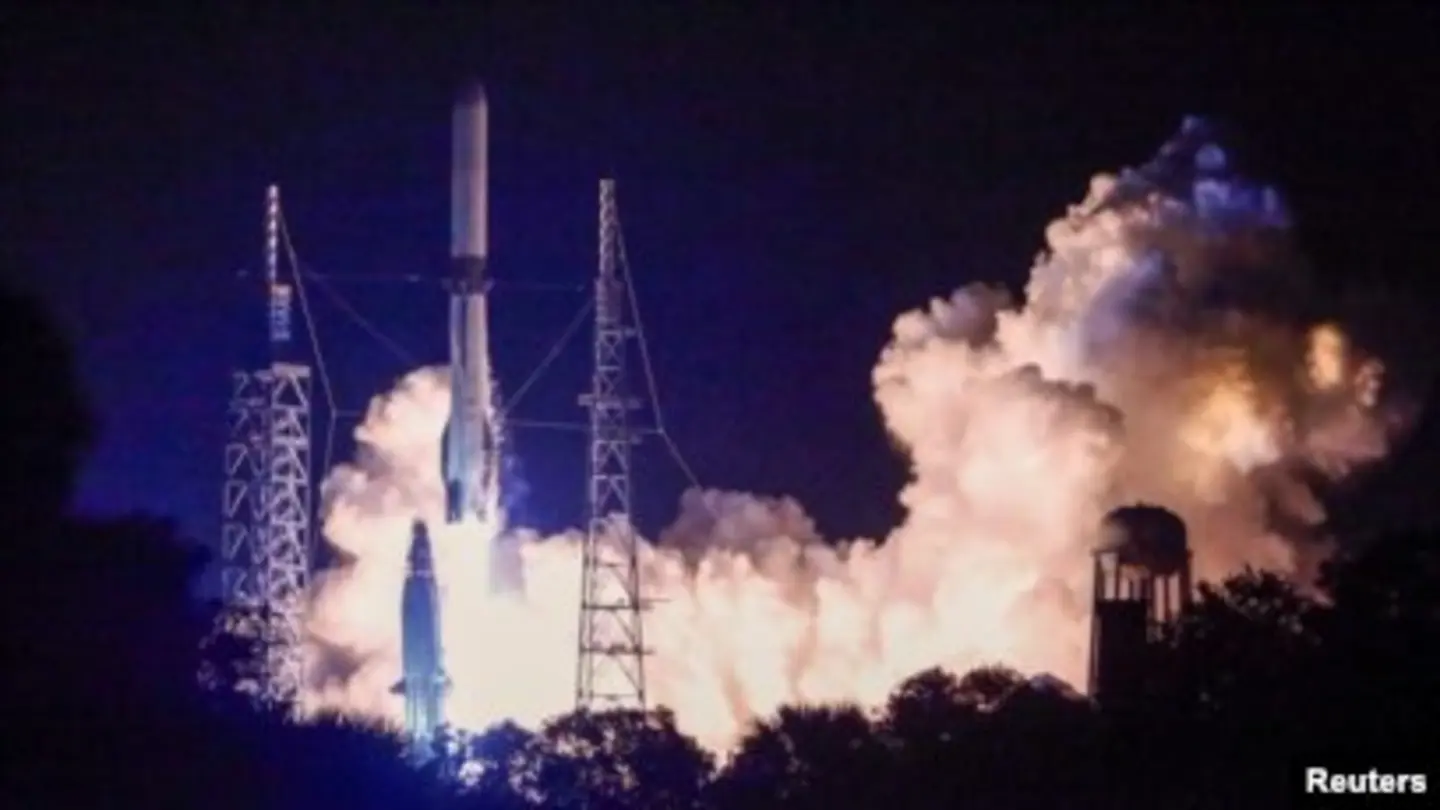
Blue Origin, the space company founded by Jeff Bezos, has successfully achieved a significant milestone with its New Glenn rocket. The rocket not only completed its mission of launching a NASA spacecraft but also accomplished a successful landing of its first-stage booster. This marks a pivotal moment for the company and the broader space industry, demonstrating the viability of reusable rocket technology for more affordable and frequent space access.
The New Glenn rocket’s primary mission was to deploy a spacecraft for NASA, contributing to the agency’s scientific endeavors. The successful launch and deployment underscore Blue Origin’s capabilities in delivering payloads to specific orbits, a critical aspect for both governmental and commercial space activities. The specifics of the NASA spacecraft and its mission objectives have not been fully detailed in initial reports, but the successful deployment is undoubtedly a key achievement.
Landing Milestone
What sets this launch apart is the successful landing of the New Glenn’s first-stage booster. Reusability is a cornerstone of modern spaceflight, pioneered by companies like SpaceX. By recovering and reusing rocket stages, the cost per launch can be significantly reduced, making space missions more economically feasible. Blue Origin’s accomplishment puts them in a stronger competitive position within the launch services market.
The landing process involves a complex series of maneuvers to guide the booster back to a designated landing site. This requires precise control of the rocket’s engines and aerodynamic surfaces, as well as sophisticated navigation systems. The successful execution of this landing proves Blue Origin’s mastery of these technologies. The landing site details have not been publicly shared, but the fact that the landing was completed is a testament to Blue Origin’s engineering prowess.
The New Glenn rocket is designed to be a heavy-lift launch vehicle, capable of carrying substantial payloads to various orbits, including geostationary orbit, which is crucial for satellite deployment. This capability opens up opportunities for Blue Origin to compete for contracts with satellite operators and other entities requiring heavy payloads in space.
This dual achievement – successful launch and booster landing – validates Blue Origin’s long-term vision and its commitment to advancing space technology. It signifies the company’s transition from development to operational capabilities, setting the stage for future missions and further advancements in space exploration and utilization. Further details regarding future planned missions are anticipated in the coming weeks. This launch should solidify trust with NASA and other partners who may be hesitant to work with unproven launch providers.
Image Source: Google | Image Credit: Respective Owner