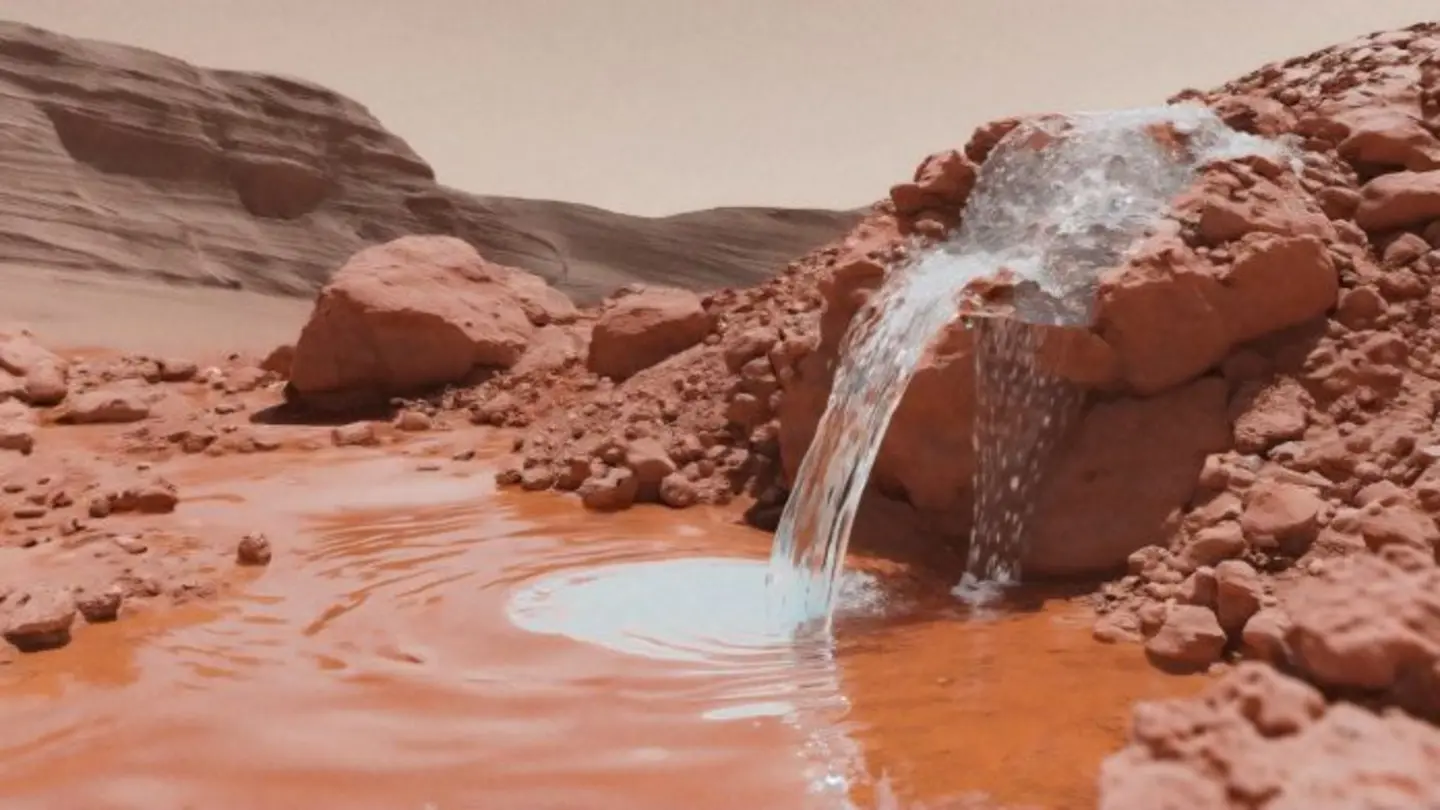
New research indicates that water flowed beneath the surface of Mars for a significantly longer period than previously believed, bolstering the possibility that the red planet could have once supported life. The study, published in a leading scientific journal, analyzed data from Martian meteorites and orbital surveys to paint a more complete picture of the planet’s hydrological history.
Scientists have long known that Mars was once a much wetter place, with evidence of ancient riverbeds, lakes, and possibly even oceans on its surface. However, the duration and extent of subsurface water activity have remained a subject of debate. This new research suggests that groundwater systems were active for hundreds of millions of years longer than previously estimated, potentially providing a stable and habitable environment for microbial life to evolve.
Evidence of Subsurface Water
The research team focused on analyzing the composition of Martian meteorites found on Earth. These meteorites, ejected from Mars by asteroid impacts, provide a valuable window into the planet’s geological past. By examining the mineral composition of these rocks, researchers were able to identify signs of prolonged interaction with liquid water. Specifically, they looked for the presence of hydrated minerals, which form when water chemically reacts with rock.
Furthermore, the team integrated data from orbital surveys conducted by Mars-orbiting spacecraft. These surveys have mapped the distribution of hydrated minerals across the Martian surface, providing a broader context for the meteorite findings. The combined analysis revealed that hydrated minerals are more widespread and abundant than previously thought, suggesting that subsurface water was a pervasive feature of the Martian landscape for an extended period.
The implications of this research are profound. If water was present beneath the Martian surface for a longer time, it would have created a more stable and favorable environment for life to emerge. Subsurface water would have been shielded from the harsh radiation and extreme temperature fluctuations that characterize the Martian surface. This could have provided a refuge for microbial life, allowing it to thrive even as the surface became increasingly inhospitable. Moreover, the extended duration of water activity increases the chances that life could have originated on Mars independently of Earth.
The findings also have implications for future Mars exploration missions. As scientists search for evidence of past or present life on Mars, they may want to focus their efforts on areas where subsurface water is likely to have been present for an extended period. These areas could potentially harbor preserved biosignatures, providing clues about the planet’s biological history. The search for life on Mars is one of the most exciting endeavors in modern science, and this new research provides a valuable roadmap for future exploration.
Further research is planned to refine the timeline of Martian water activity and to identify the most promising locations for future life detection missions. The ongoing exploration of Mars continues to reveal new insights into the planet’s past and its potential to have once supported life. This latest discovery underscores the importance of continued investment in Mars exploration and the pursuit of one of the most fundamental questions in science: are we alone in the universe?
Image Source: Google | Image Credit: Respective Owner