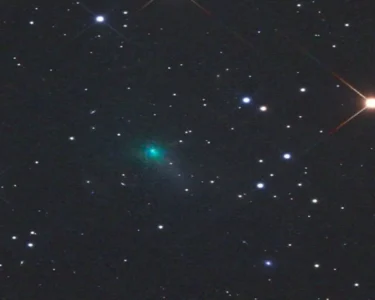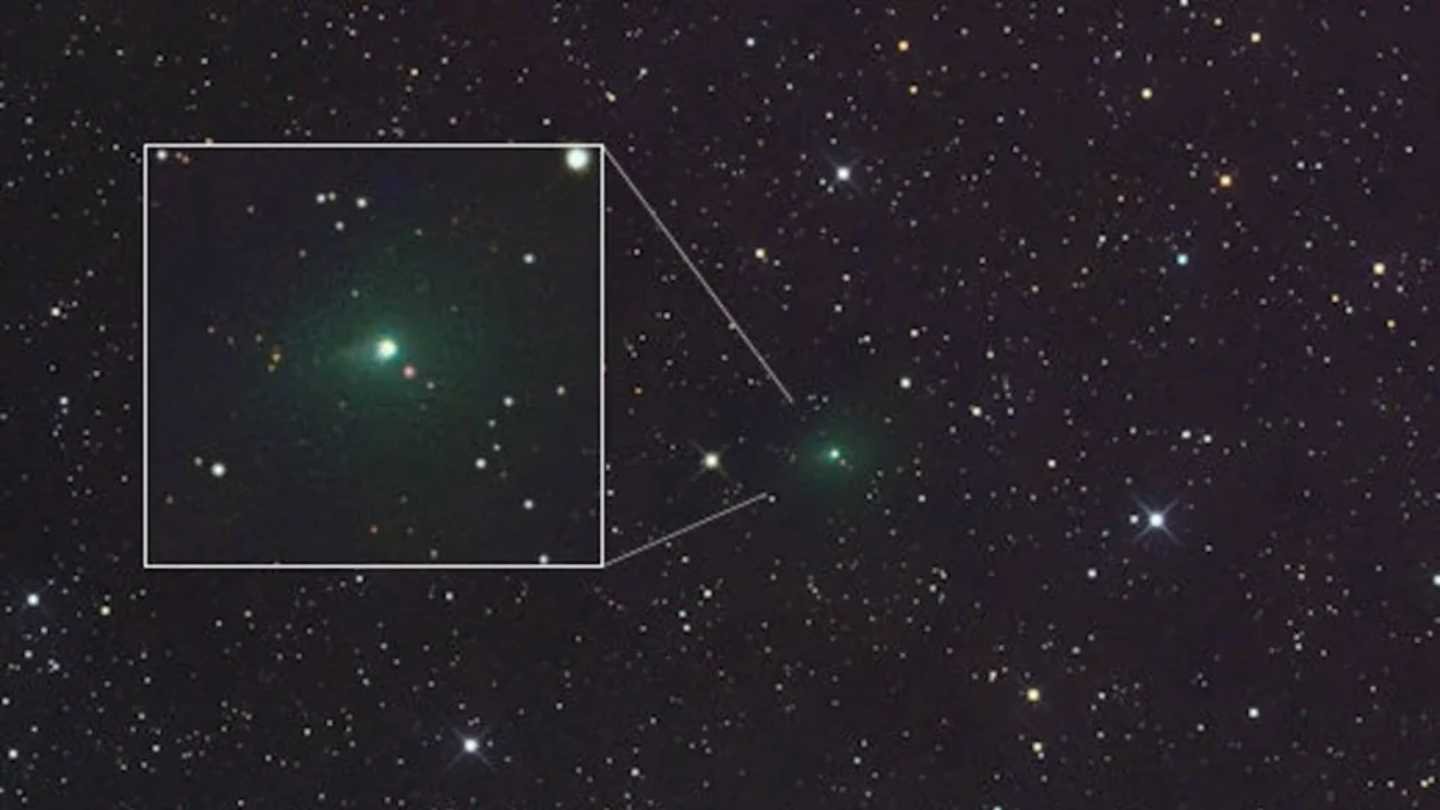
Comet 3I/ATLAS, an interstellar visitor from beyond our solar system, has been captured in a stunning new image showcasing a vibrant green glow. This unusual coloration has intrigued astronomers, leading to a fascinating hypothesis linking it to a common ingredient found in sunscreen.
The Green Comet’s Composition
The green hue is attributed to the presence of diatomic carbon (C2) in the comet’s coma, the cloud of gas and dust surrounding its nucleus. When sunlight interacts with C2 molecules, it causes them to fluoresce, emitting a characteristic green light. However, the exact mechanism by which C2 is released from the comet’s nucleus remains a topic of ongoing research.
One leading theory, proposed by an astronomer, suggests that organic molecules, possibly similar to those found in sunscreen, could be breaking down under the influence of solar radiation, releasing C2 as a byproduct. This hypothesis is based on the observation that many organic compounds contain carbon and readily decompose when exposed to ultraviolet light.
While the sunscreen analogy might seem far-fetched, it highlights the complex chemical processes occurring within comets as they travel through space. These processes can provide valuable insights into the composition of the early solar system and the building blocks of life.
Implications for Astrobiology
The discovery of organic molecules in comets further supports the idea that these celestial bodies may have played a role in delivering the ingredients for life to Earth. Comets, rich in water and organic compounds, could have seeded the early Earth with the necessary components for the emergence of life.
Comet 3I/ATLAS, being an interstellar object, offers a unique opportunity to study the composition of planetary systems beyond our own. By analyzing the gases and dust released by this comet, astronomers can gain a better understanding of the diversity of materials present in other star systems.
Observing the Comet
Unfortunately, Comet 3I/ATLAS is currently too faint to be seen with the naked eye. However, astronomers with access to powerful telescopes continue to monitor its trajectory and spectral characteristics, hoping to unravel more secrets about its origins and composition. The comet’s green glow serves as a reminder of the dynamic and ever-evolving nature of our universe, and the ongoing quest to understand our place within it.
The study of interstellar objects like 3I/ATLAS provides a rare glimpse into the conditions and materials present in other star systems, helping us to piece together the puzzle of how planetary systems form and evolve. It also highlights the interconnectedness of the universe, where even seemingly distant objects can influence the development of life on Earth.
Image Source: Google | Image Credit: Respective Owner