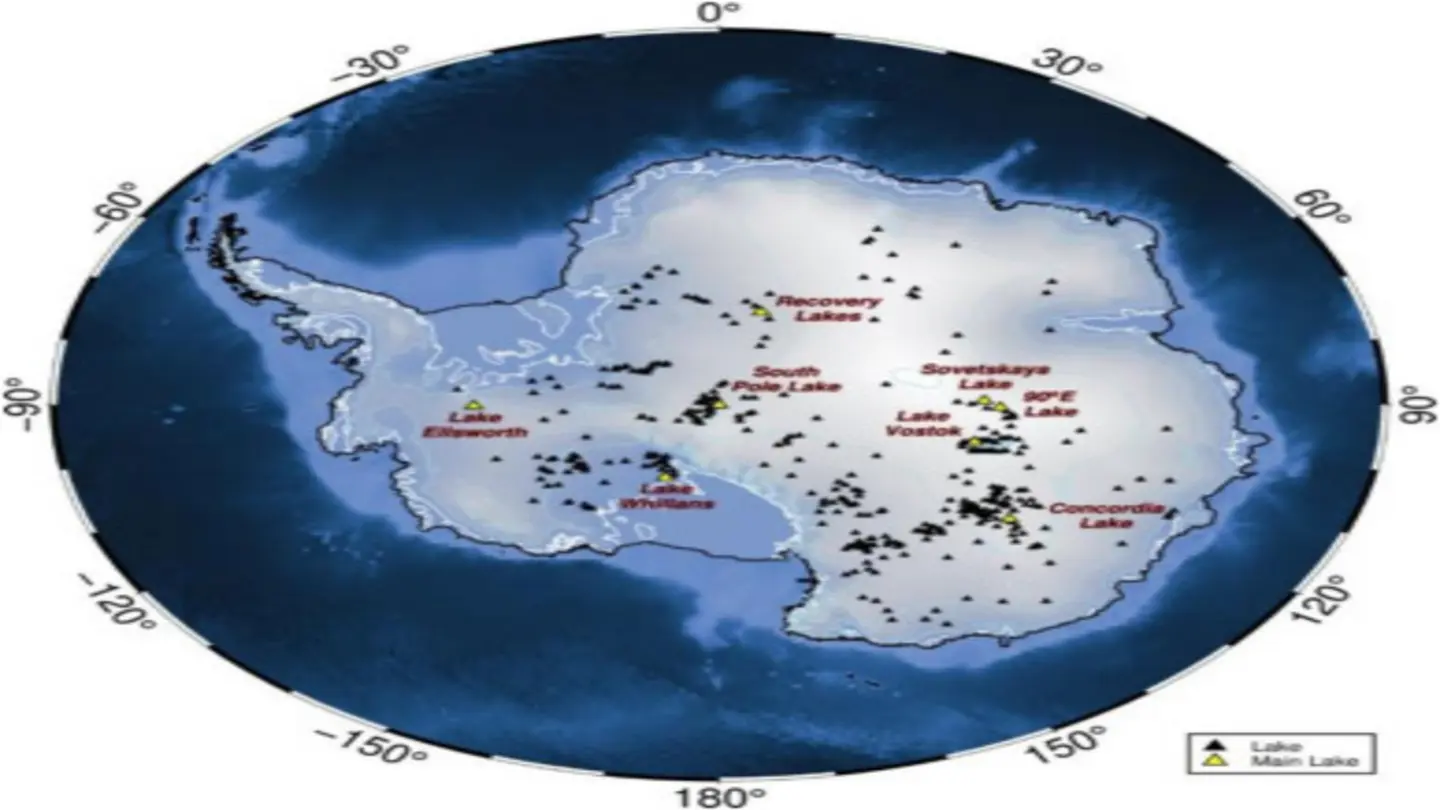
Researchers have employed teleseismic S-wave coda autocorrelation to analyze the structure of the Antarctic icesheet, providing new insights into the distribution of vp/vs ratios. The study, published in ESS Open Archive, utilizes seismic data to probe the subsurface characteristics of this vast polar region. By examining the coda, or trailing portion, of S-waves, scientists can infer properties about the materials through which the waves have traveled.
Seismic waves, generated by earthquakes far from the study area, offer a non-invasive method for investigating the Earth’s interior. S-waves, or shear waves, are particularly sensitive to the rigidity and density of the materials they encounter. The ratio of compressional wave velocity (vp) to shear wave velocity (vs) is a crucial parameter that reflects the composition and physical state of the subsurface. Higher vp/vs ratios often indicate the presence of fluids or less rigid materials, while lower ratios suggest more solid and rigid formations.
Methodology and Data
The research team applied autocorrelation techniques to the S-wave coda, a method that identifies repeating patterns within the seismic signal. These patterns are generated by reflections and scattering of the waves within the complex structure of the icesheet and the underlying bedrock. By analyzing the time delays and amplitudes of these repeating signals, the researchers were able to estimate the vp/vs ratios at various locations across Antarctica.
The data used in the study were collected from a network of seismic stations deployed across the continent. These stations recorded seismic waves from distant earthquakes, providing a comprehensive dataset for analysis. Advanced signal processing techniques were employed to isolate the S-wave coda and enhance the signal-to-noise ratio.
Findings and Implications
The analysis revealed significant variations in vp/vs ratios across the Antarctic icesheet. Regions with thicker ice and subglacial water exhibited higher ratios, indicating the presence of liquid water at the base of the ice. These findings are crucial for understanding the dynamics of the icesheet and its response to climate change. The presence of subglacial water can significantly influence the flow and stability of the ice, potentially leading to accelerated melting and sea-level rise.
Future Research
This study highlights the power of seismic methods for investigating the hidden structures beneath the Antarctic icesheet. Future research could focus on refining the resolution of the vp/vs ratio maps and integrating these data with other geophysical and glaciological observations. Such efforts would provide a more complete picture of the Antarctic subsurface and improve our ability to predict the future behavior of the icesheet in a warming world. Furthermore, the methodology can be applied to other ice-covered regions, enhancing our understanding of global ice dynamics. The research contributes significantly to our knowledge of Earth’s cryosphere and its role in the global climate system.
Image Source: Google | Image Credit: Respective Owner