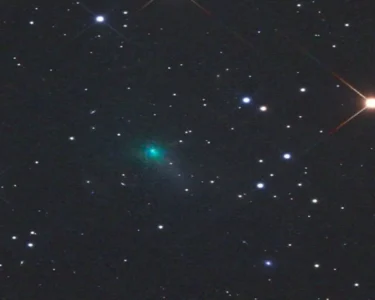
A U.S. lawmaker is demanding answers from NASA regarding the interstellar comet 3I/ATLAS. Representative Mike Waltz, a Republican from Florida, has sent a formal inquiry to NASA, raising concerns about the agency’s understanding and monitoring of the celestial object. Waltz, a member of the House Armed Services Committee and a vocal advocate for space exploration, is specifically seeking clarification on the potential risks and scientific opportunities associated with 3I/ATLAS.
The comet, discovered in 2017, is only the second interstellar object ever observed passing through our solar system. Its unique trajectory and composition have made it a subject of intense study for astronomers worldwide. While 3I/ATLAS poses no immediate threat to Earth, Waltz believes a comprehensive understanding of such objects is crucial for planetary defense and scientific advancement.
Key Questions for NASA
Waltz’s letter to NASA Administrator Bill Nelson outlines several key areas of inquiry. He is particularly interested in the resources NASA has dedicated to studying 3I/ATLAS and the specific scientific instruments used in the observation process. The lawmaker also wants to know about any international collaborations involved in the research and whether NASA is coordinating with other space agencies to share data and insights. He’s pressing for details on the comet’s composition, trajectory analysis, and any observed anomalies during its passage through the solar system.
Furthermore, Waltz is keen to understand how the study of 3I/ATLAS contributes to broader NASA goals, such as understanding the formation of planetary systems and searching for extraterrestrial life. He emphasizes the importance of leveraging the unique opportunity presented by interstellar objects to expand our knowledge of the universe.
The Economic Times reports that the inquiry highlights the growing interest among policymakers in the scientific and strategic implications of space exploration. As space becomes increasingly accessible, both commercially and geopolitically, lawmakers are seeking to ensure that the U.S. maintains its leadership position in space research and technology. Waltz’s focus on 3I/ATLAS underscores the need for continued investment in astronomical observation and planetary defense capabilities. The incident also brings to light the growing awareness of potentially hazardous near-Earth objects, both natural and artificial, and the importance of comprehensive tracking and mitigation efforts.
NASA’s response to Waltz’s inquiry is expected to provide valuable insights into the agency’s approach to studying interstellar objects and its commitment to advancing scientific understanding of the cosmos. The outcome of this exchange could also influence future funding decisions and policy priorities related to space exploration and research.
Image Source: Google | Image Credit: Respective Owner