Diwali, the festival of lights, is a time of joyous celebration, family gatherings, and the exchange of sweets and gifts. Beyond the contemporary festivities, a rich history lies embedded within the cultural traditions of this ancient festival. India Today explores how old paintings offer glimpses into the historical evolution of Diwali celebrations across the Indian subcontinent.
Royal Celebrations
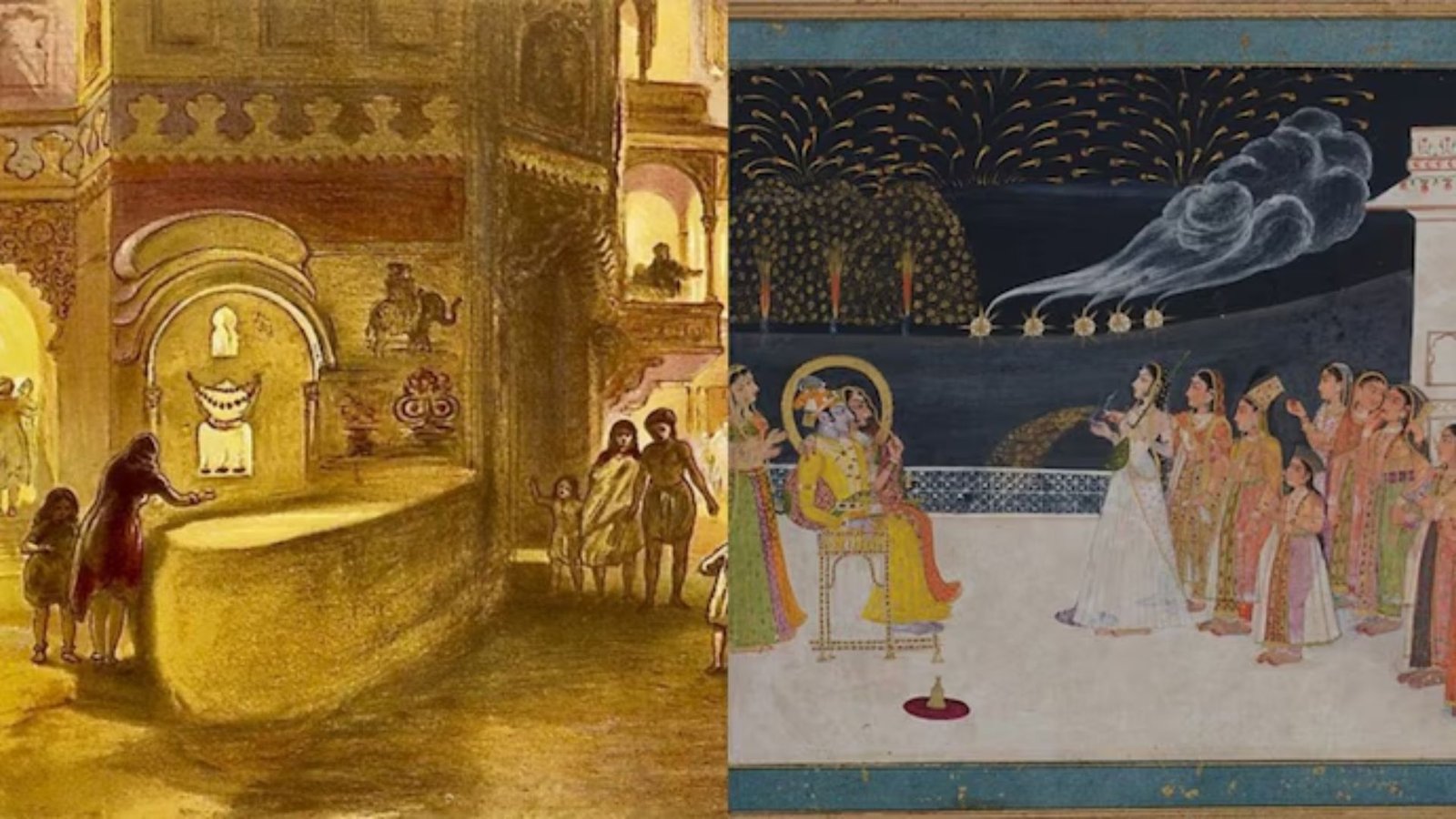
Historical paintings reveal that Diwali was celebrated with great pomp and grandeur in royal courts. Miniature paintings from the Mughal and Rajput eras showcase elaborate displays of fireworks, beautifully lit palaces, and processions featuring elephants and horses. These depictions offer a visual narrative of the festival’s association with prosperity and power. For instance, paintings from the Mughal period often depict emperors participating in Diwali festivities, highlighting the festival’s significance even within a diverse empire.
The artistic representations also provide insights into the clothing, jewelry, and customs prevalent during those times. Details like the types of lamps used, the designs of rangolis, and the styles of clothing worn by people offer a glimpse into the social and cultural milieu of the era. These artistic details serve as valuable historical documents, supplementing textual accounts of Diwali celebrations.
Regional Variations
The paintings also highlight the regional variations in Diwali celebrations. Different schools of art across India depict the festival in unique ways, reflecting the local customs and traditions. For example, paintings from South India may emphasize different deities and rituals compared to those from North India. These variations underscore the diverse cultural tapestry of India and the multifaceted nature of Diwali as a pan-Indian festival.
These artistic interpretations of Diwali also provide a window into the religious and mythological narratives associated with the festival. Paintings often depict scenes from the Ramayana, particularly the return of Lord Rama to Ayodhya after his exile, which is a central theme of Diwali. These visual representations reinforce the festival’s deep-rooted connection with Hindu mythology and spirituality.
Evolution of Traditions
By studying these old paintings, historians and art enthusiasts can trace the evolution of Diwali traditions over time. They can analyze how the festival has adapted to changing social and political landscapes while retaining its core essence. The paintings serve as a reminder of the enduring power of tradition and the ability of festivals like Diwali to connect generations.
In conclusion, old paintings provide a valuable historical perspective on Diwali, offering insights into the festival’s evolution, regional variations, and cultural significance. These artistic treasures serve as a vibrant reminder of the rich heritage and enduring spirit of this beloved festival of lights. They provide a visual narrative that complements historical texts and allows us to appreciate the multifaceted nature of Diwali celebrations throughout history.
Image Source: Google | Image Credit: Respective Owner