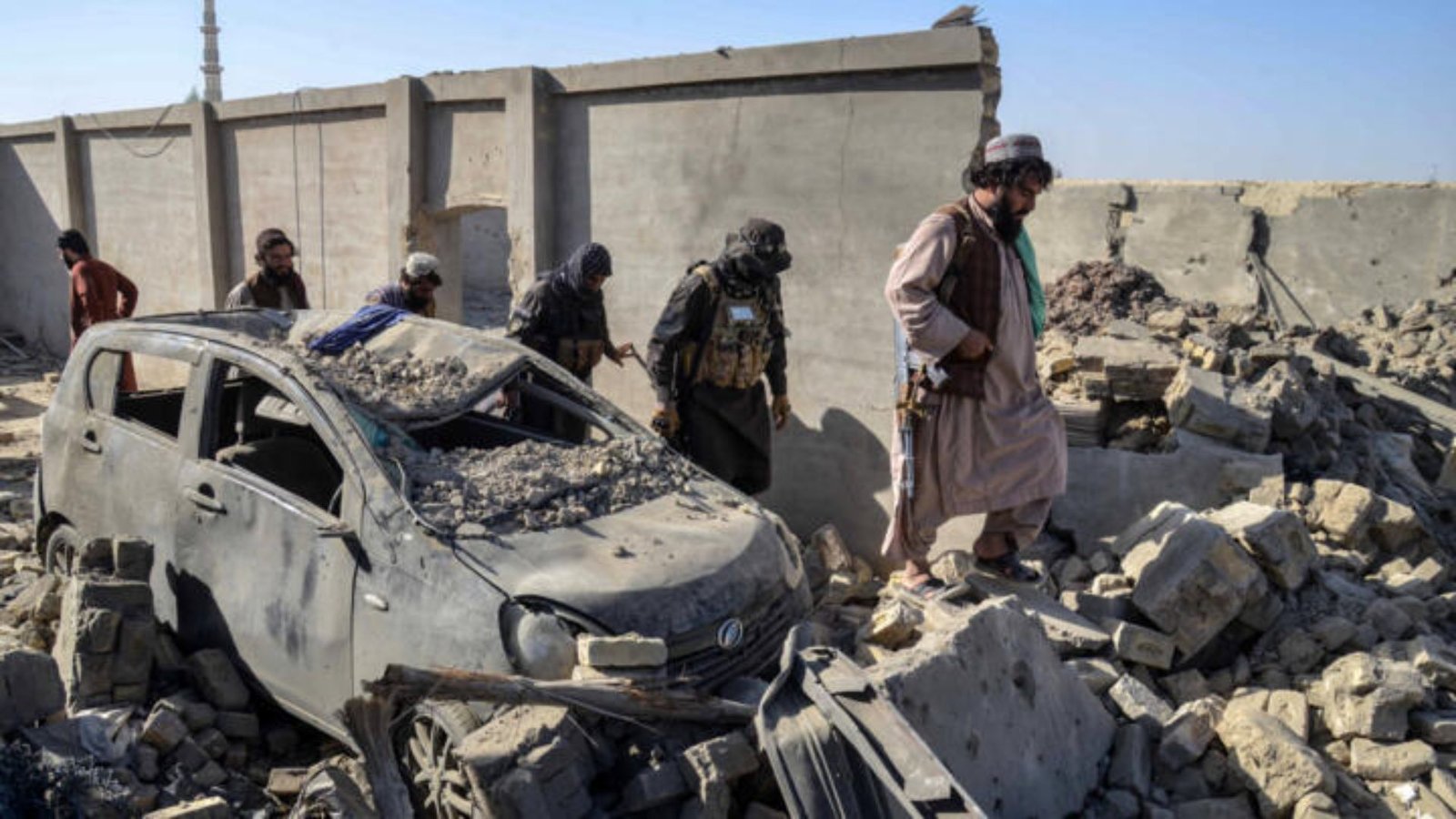
Kabul has accused Pakistan of resuming air strikes within Afghan territory, resulting in the deaths of at least 10 people. The allegations, reported by The Hindu, mark a significant escalation in tensions between the two neighboring nations, already strained by border disputes and mutual accusations of supporting militant groups. While details surrounding the alleged air strikes remain scarce, the Afghan government has strongly condemned the actions, calling them a violation of international law and a breach of Afghanistan’s sovereignty.
According to reports, the strikes purportedly targeted regions along the border, an area known for its rugged terrain and presence of various armed factions. The specific locations and nature of the targets have not been officially disclosed, but local sources suggest the strikes aimed at positions allegedly held by the Tehrik-i-Taliban Pakistan (TTP), a militant group that Islamabad claims operates from Afghan soil. Kabul, however, denies harboring TTP fighters and accuses Pakistan of using the group as a pretext for military incursions into Afghanistan.
Escalating Tensions
The accusations come amidst a backdrop of deteriorating relations between Afghanistan and Pakistan. The border region has witnessed frequent clashes, and both countries have accused each other of cross-border attacks. Islamabad has repeatedly called on the Afghan government to take action against the TTP, while Kabul has accused Pakistan of supporting the Afghan Taliban and interfering in its internal affairs. The recent allegations of air strikes further exacerbate these tensions, raising concerns about the potential for a wider conflict.
The international community has expressed concern over the escalating tensions, urging both countries to exercise restraint and engage in dialogue to resolve their differences peacefully. The United Nations and various international organizations have offered to mediate between the two nations, but progress has been limited. The situation is further complicated by the involvement of various regional and global powers, each with their own strategic interests in the region. The potential for proxy conflicts and external interference adds another layer of complexity to the already volatile situation.
The allegations of air strikes have triggered strong reactions within Afghanistan, with calls for retaliation against Pakistan. However, the Afghan government is facing a difficult dilemma, as any military response could further destabilize the country and potentially lead to a full-blown conflict. Instead, Kabul has opted to pursue diplomatic channels, appealing to international organizations and friendly nations to exert pressure on Pakistan to cease its alleged military operations within Afghanistan. The situation remains fluid, and the potential for further escalation cannot be ruled out.
The long-term implications of the escalating tensions between Afghanistan and Pakistan are significant, not only for the two countries themselves but also for regional stability. A prolonged conflict could have devastating consequences, potentially leading to a humanitarian crisis and further fueling extremism and instability in the region. It is therefore crucial that both countries prioritize dialogue and diplomacy to de-escalate the situation and find a peaceful resolution to their differences.
Image Source: Google | Image Credit: Respective Owner