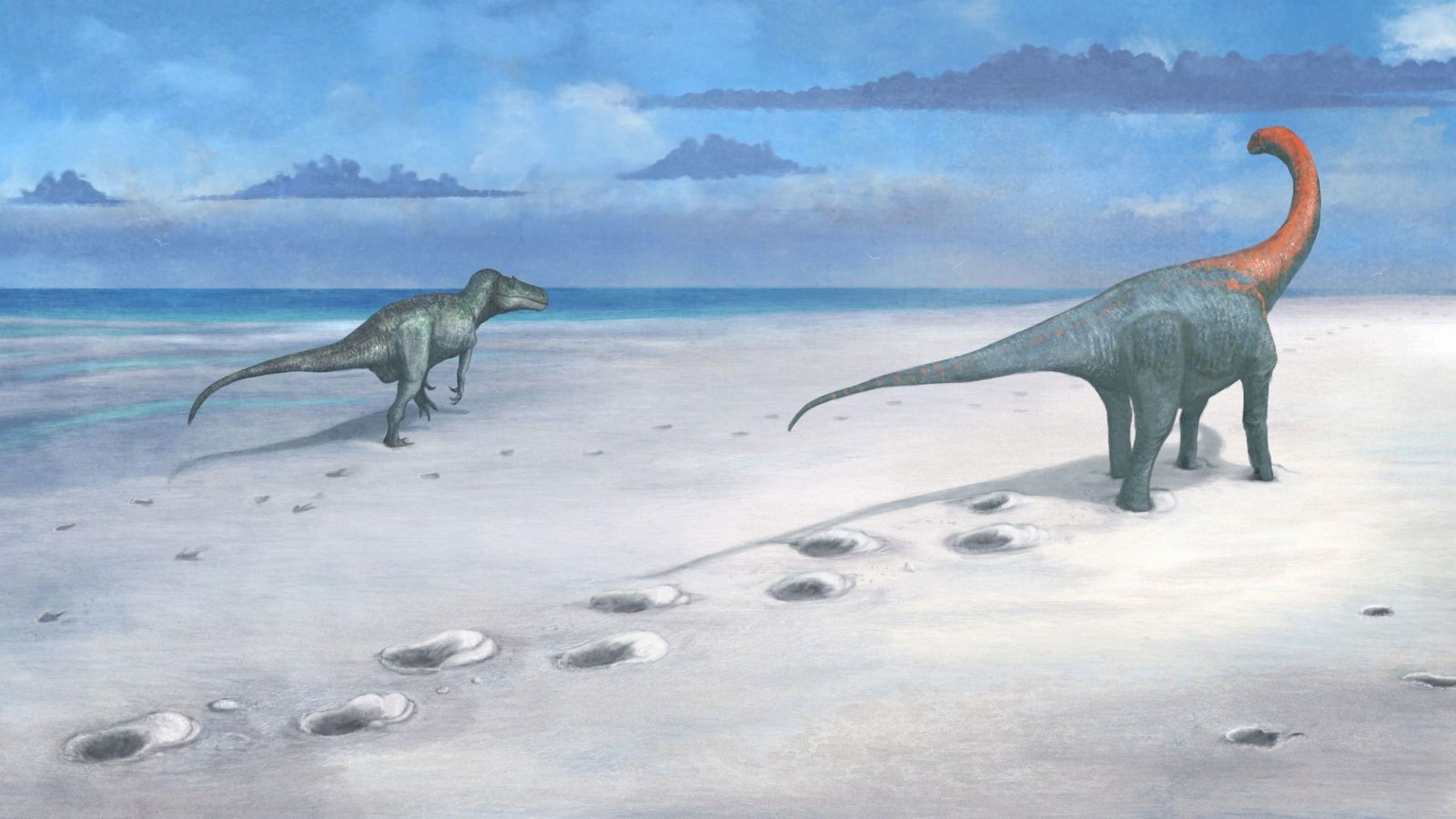
Scientists have unearthed a remarkable collection of dinosaur footprints on the UK coast, revealing what they describe as an ancient “dinosaur superhighway.” The discovery, made along the Vale of Glamorgan coastline in South Wales, includes tracks from various dinosaur species, offering unprecedented insight into their behavior and environment during the Jurassic period.
The footprints, dating back approximately 200 million years, showcase an array of dinosaur types, from large herbivores to smaller, agile predators. Paleontologists are particularly excited by the density and clarity of the tracks, which suggest a bustling ecosystem teeming with diverse dinosaur populations. The sheer number of footprints indicates that this area was a popular route or gathering place for these prehistoric creatures.
Details of the Discovery
Dr. Susannah Maidment, a leading paleontologist involved in the research, emphasized the significance of the find. “These footprints tell a story of a time when dinosaurs roamed freely across what is now the UK. The ‘insanely big footprints,’ as some have described them, provide direct evidence of their size and movement,” she stated. The team used advanced 3D scanning techniques to document and analyze the footprints, creating detailed models that allow them to study the dinosaurs’ gait, weight, and even social interactions.
The discovery site, already known for its fossil-rich geology, has now become a focal point for paleontological research. Researchers are meticulously excavating and preserving the footprints, ensuring they are protected from erosion and other environmental factors. The local community has also been actively involved in the project, with volunteers assisting in the cleaning and documentation of the fossils.
Implications for Understanding Dinosaurs
The dinosaur superhighway provides valuable clues about the dinosaurs’ daily lives, including their feeding habits, migratory patterns, and social behaviors. The presence of both predator and prey tracks in the same area suggests a complex ecological relationship, with dinosaurs constantly navigating the risks and opportunities of their environment. The discovery also highlights the importance of preserving such fossil sites for future generations of scientists and enthusiasts.
The findings have been published in a leading scientific journal, attracting international attention and sparking renewed interest in dinosaur research. Paleontologists from around the world are collaborating to compare the UK footprints with those found in other regions, hoping to gain a more comprehensive understanding of dinosaur distribution and evolution during the Jurassic period. The ongoing research promises to reveal even more about these magnificent creatures and their place in Earth’s history. The site is also being considered for enhanced protection to safeguard it from future damage and ensure its availability for scientific study.
Image Source: Google | Image Credit: Respective Owner