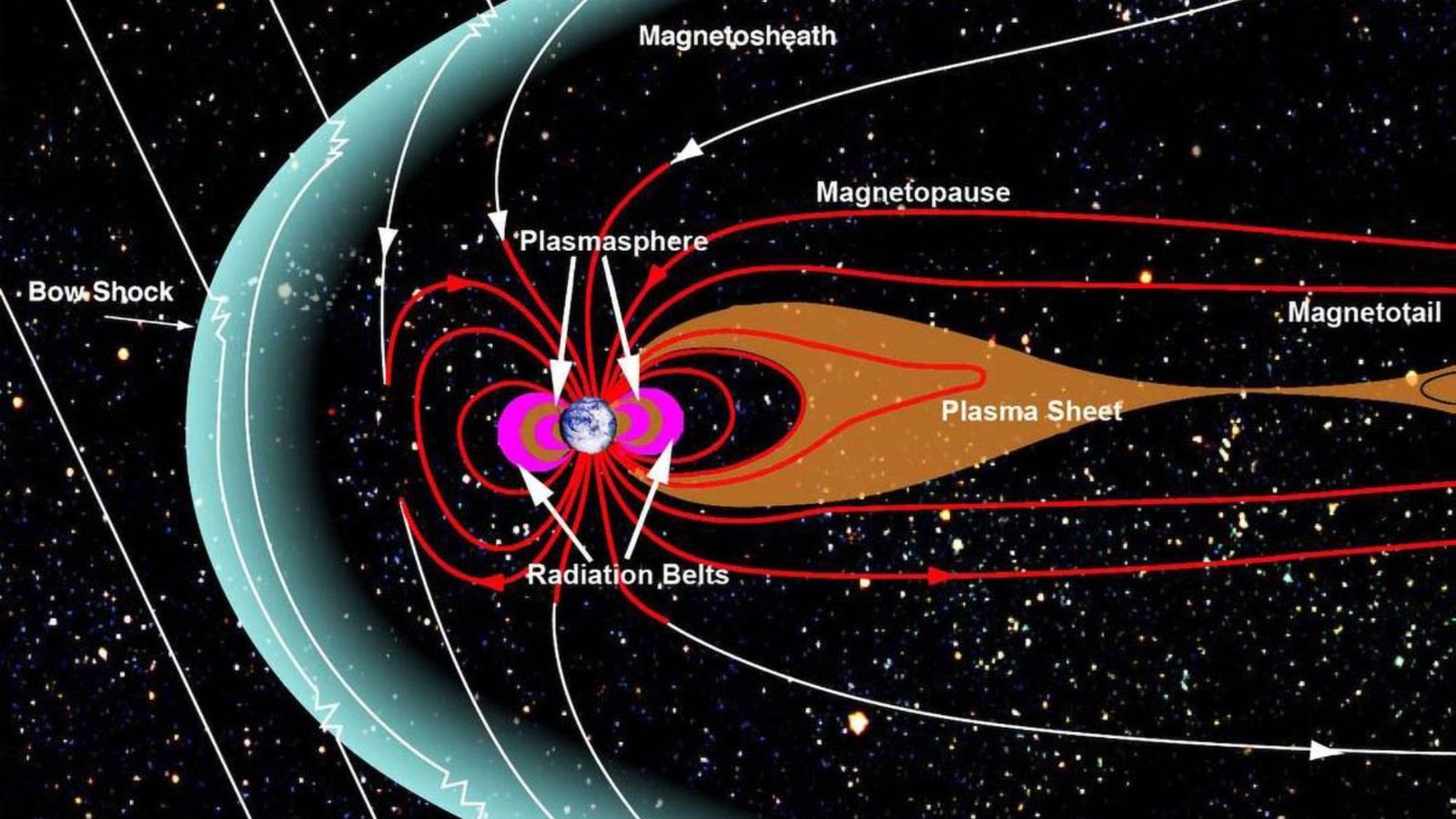
A new study published in ESS Open Archive investigates the polytropic index and thermodynamic behavior of the central plasma sheet near lunar distances. This research delves into the complex dynamics of plasma, a superheated state of matter, within the Earth’s magnetotail, the region of space dominated by Earth’s magnetic field stretching away from the sun. Understanding the properties of plasma in this region is crucial for comprehending space weather phenomena and their impact on satellites and other space-based infrastructure.
The central plasma sheet (CPS) is a key region of the magnetotail, characterized by high-energy particles and complex electromagnetic fields. The polytropic index, a thermodynamic parameter, provides insights into how plasma pressure and density are related during compression or expansion processes. Analyzing this index helps scientists to understand the energy transport and heating mechanisms within the CPS.
Data Analysis and Methodology
The study utilizes data collected from spacecraft orbiting near the Moon. These spacecraft provide valuable measurements of plasma density, temperature, and magnetic field strength. Researchers analyze these data to determine the polytropic index under various conditions within the CPS. The analysis considers factors such as the distance from Earth, the level of geomagnetic activity, and the position relative to the lunar orbit.
The research methodology involves statistical analysis of a large dataset of plasma measurements. Scientists employ various data processing techniques to filter noise and extract meaningful information. They also use sophisticated models to simulate the behavior of plasma in the CPS and compare the simulation results with the observations.
Key Findings and Implications
The study reveals that the polytropic index in the CPS near lunar distances varies depending on several factors, including geomagnetic activity and location within the plasma sheet. The findings suggest that different heating and acceleration mechanisms may be at play in different regions of the CPS. These results contribute to a more comprehensive understanding of the complex thermodynamic processes occurring in the magnetotail.
Furthermore, the research has implications for predicting space weather events. By understanding the thermodynamic behavior of the CPS, scientists can improve models that forecast disturbances in the magnetosphere. These disturbances can affect satellite operations, communication systems, and even ground-based power grids. Improved space weather forecasting is therefore essential for protecting critical infrastructure.
The study also highlights the importance of continued research in space plasma physics. Further investigations using data from multiple spacecraft and advanced simulation techniques are needed to fully unravel the complexities of the magnetotail and its impact on the space environment. This research contributes valuable knowledge to the scientific community and helps advance our understanding of the universe around us.
In conclusion, the investigation of the polytropic index and thermodynamic behaviour of the central plasma sheet near lunar distances enhances our understanding of the Earth’s magnetosphere and its dynamic processes. The findings have implications for space weather forecasting and protecting space-based assets.
Image Source: Google | Image Credit: Respective Owner