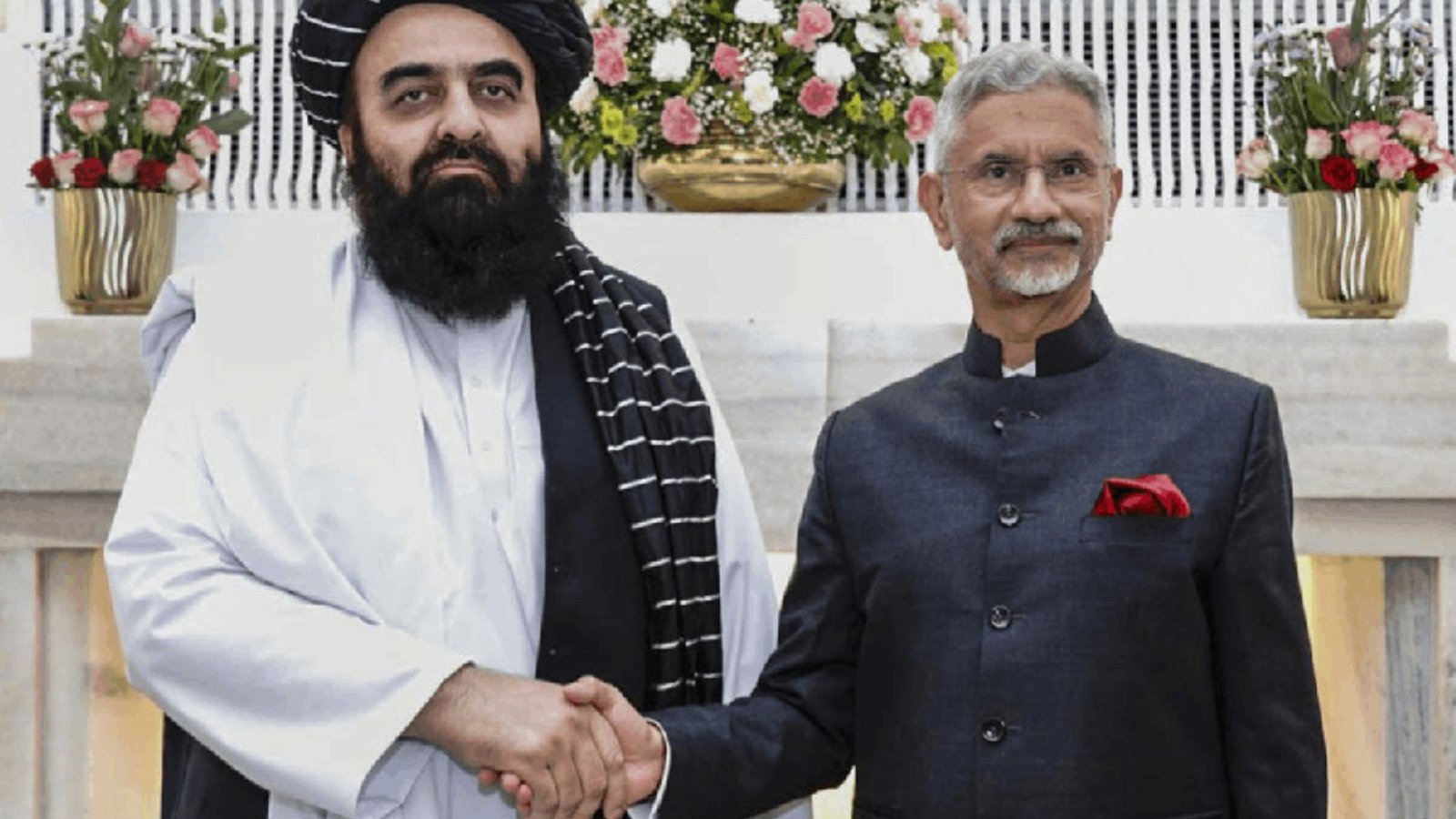
In a significant diplomatic engagement, External Affairs Minister S. Jaishankar met with Amir Khan Muttaqi, the acting Foreign Minister of Afghanistan’s Taliban regime, in Delhi. The meeting, while outwardly cordial, was marked by several symbolic nuances that highlighted the complexities of India’s engagement with the current Afghan government. The presence of two Afghanistan flags – one the official flag and the other the Taliban’s flag – served as a visual representation of the divided international views on the legitimacy of the Taliban’s rule.
The absence of women journalists at the event drew considerable attention and criticism. This omission was seen as a reflection of the restrictions imposed on women’s rights and freedoms in Afghanistan under the Taliban’s governance. Critics argue that such exclusions undermine the principles of inclusivity and gender equality, which are crucial for a stable and progressive society.
Discussion on Bamiyan Buddhas
During the meeting, the issue of the Bamiyan Buddhas, ancient statues destroyed by the Taliban in 2001, was also brought up. The destruction of these historical artifacts was widely condemned as an act of cultural vandalism and a loss for humanity. Jaishankar emphasized the importance of preserving Afghanistan’s cultural heritage and expressed India’s willingness to assist in the restoration efforts of other historical sites within Afghanistan, indicating a commitment to preserving the nation’s rich history despite the current political climate. India has previously offered assistance in restoring these artifacts.
Furthermore, discussions encompassed a range of bilateral issues, including humanitarian aid, trade relations, and regional security. India has been a consistent provider of humanitarian assistance to Afghanistan, especially in the wake of the withdrawal of international forces and the subsequent economic challenges. Trade relations remain a crucial aspect of the relationship, with India seeking to maintain connectivity and ensure the flow of essential goods. The meeting also addressed concerns related to regional security, particularly the threat of terrorism and the need for a stable and secure Afghanistan to prevent the spillover of instability into neighboring countries.
The engagement between Jaishankar and Muttaqi underscores India’s pragmatic approach to Afghanistan. While New Delhi has not formally recognized the Taliban government, it maintains diplomatic channels to address pressing issues and safeguard its interests in the region. This delicate balancing act reflects the broader international dilemma of engaging with a regime that lacks widespread recognition but wields de facto control over the country. It is evident that India seeks to play a constructive role in Afghanistan’s future, emphasizing humanitarian assistance, cultural preservation, and regional stability. The dialogue between Jaishankar and Muttaqi marks a critical point in the ongoing effort to navigate the intricate challenges posed by the evolving situation in Afghanistan, with implications extending far beyond the confines of the meeting room.
Image Source: Google | Image Credit: Respective Owner