A new study published in ESS Open Archive explores the intricate relationship between subglacial hydrology and ice dynamics in the Himalayas, focusing on lake drainages and surging glaciers. The research employs coupled modeling techniques to better understand the complex processes governing glacial behavior in this critical region. The Himalayas, often referred to as the “Water Tower of Asia,” are experiencing accelerated glacial melt due to climate change, making it crucial to comprehend the mechanisms driving these changes.
The Importance of Subglacial Hydrology
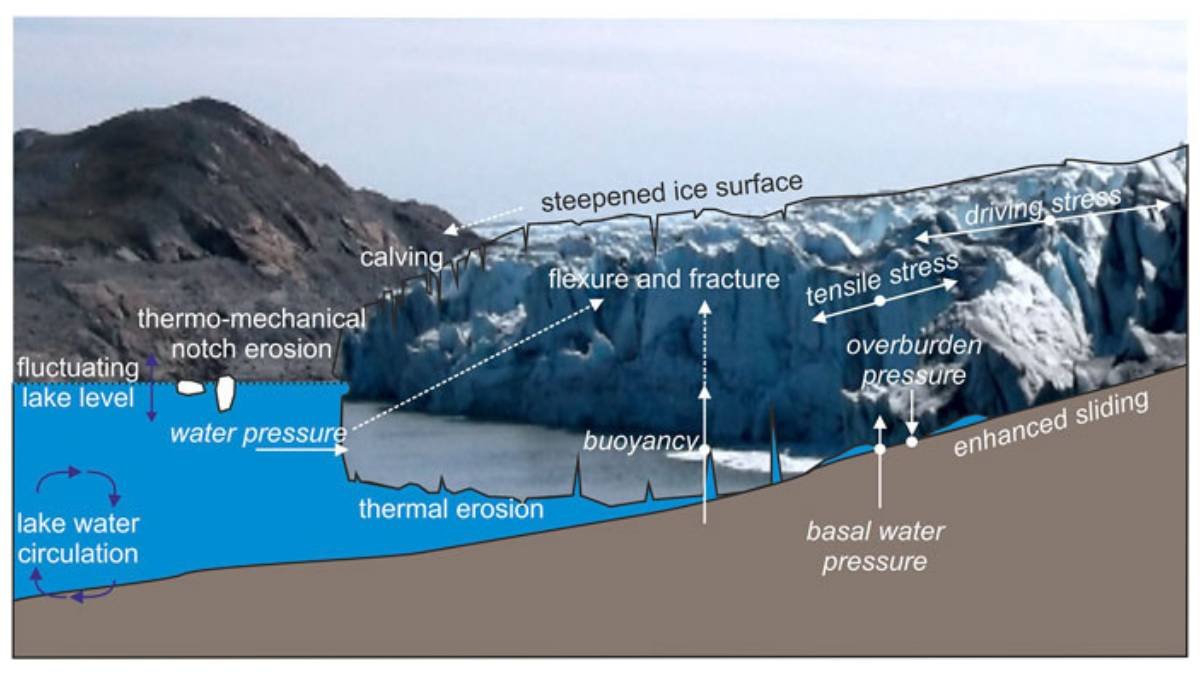
Subglacial hydrology, the study of water beneath glaciers, plays a pivotal role in glacial dynamics. Water at the ice-bed interface can significantly reduce friction, leading to increased ice velocity and potentially contributing to glacial surges and lake drainages. These events can have profound implications for downstream communities, affecting water resources and increasing the risk of glacial lake outburst floods (GLOFs).
The study highlights the significance of accurately representing subglacial hydrological processes in ice dynamics models. Traditional models often simplify these processes, which can lead to inaccuracies in predicting glacial behavior. The research presented in ESS Open Archive utilizes a more sophisticated coupled model that integrates subglacial hydrology with ice dynamics, providing a more realistic representation of glacial systems.
The coupled model allows researchers to simulate the evolution of subglacial drainage systems and their impact on ice flow. By incorporating factors such as water pressure, drainage network connectivity, and the thermal properties of the ice and bedrock, the model can capture the complex feedbacks between hydrology and ice dynamics.
Lake Drainages and Surging Glaciers
The study specifically examines the role of subglacial hydrology in lake drainages and surging glaciers. Lake drainages, particularly GLOFs, pose a significant threat to downstream communities. Understanding the triggers and mechanisms behind these events is essential for developing effective mitigation strategies. The coupled model can help identify areas prone to lake drainages and assess the potential impact of these events.
Surging glaciers, characterized by periods of rapid acceleration, also present unique challenges. The research suggests that subglacial hydrology plays a critical role in regulating glacial surges. Increased water pressure at the ice-bed interface can destabilize the glacier, leading to a surge. The coupled model can simulate the onset and propagation of surges, providing valuable insights into the dynamics of these events.
The findings of this study have important implications for water resource management and disaster preparedness in the Himalayas. By improving our understanding of glacial dynamics, we can better predict the impact of climate change on water availability and reduce the risk of GLOFs. Continued research in this area is crucial for ensuring the long-term sustainability of this vital region.
Furthermore, the advanced modeling techniques employed in this study can be applied to other glaciated regions around the world, enhancing our ability to assess and mitigate the risks associated with glacial melt and instability. The integration of subglacial hydrology and ice dynamics provides a powerful tool for understanding and predicting the behavior of glaciers in a changing climate.
Image Source: Google | Image Credit: Respective Owner